
Drug Information
Drug (ID: DG00133) and It's Reported Resistant Information
| Name |
Vincristine
|
||||
|---|---|---|---|---|---|
| Synonyms |
LCR; Leurocristine; Marqibo; Oncovine; Tecnocris; VCR; VIN; Vincasar; Vincristina; Vincristinum; Vincrstine; Vincrystine; Vinkristin; Indole alkaloid; Liposomal Vincristine; Onco TCS; Vincristina [DCIT]; Oncovin (TN); Tecnocris (TN); Vincristine (INN); Vincristine [INN:BAN]; Vincristinum [INN-Latin]; Lilly37231 (1:1 sulfate salt); Oncovin (1:1 sulfate salt); Vincasar (1:1 sulfate salt); Vincrex (1:1 sulfate salt); Vincaleukoblastine, 22-oxo-22-Oxovincaleukoblastine; Z-D-Val-Lys(Z)-OH; 22-Oxovincaleukoblastine
Click to Show/Hide
|
||||
| Indication |
In total 1 Indication(s)
|
||||
| Structure |
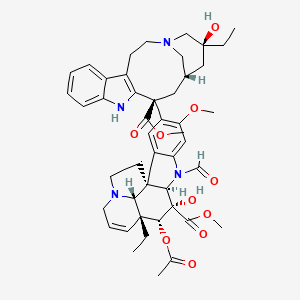
|
||||
| Drug Resistance Disease(s) |
Disease(s) with Clinically Reported Resistance for This Drug
(8 diseases)
 Acute lymphocytic leukemia [ICD-11: 2B33]
[2]
Brain cancer [ICD-11: 2A00]
[3]
Colorectal cancer [ICD-11: 2B91]
[6]
Diffuse large B-cell lymphoma [ICD-11: 2A81]
[7]
Ewing sarcoma [ICD-11: 2B52]
[3]
Hodgkin lymphoma [ICD-11: 2B30]
[9]
Keloid/hypertrophic scars [ICD-11: EE60]
[10]
Mature T-cell lymphoma [ICD-11: 2A90]
[12]
Disease(s) with Resistance Information Discovered by Cell Line Test for This Drug
(14 diseases)
Colon cancer [ICD-11: 2B90]
[4]
Colorectal cancer [ICD-11: 2B91]
[5]
Ewing sarcoma [ICD-11: 2B52]
[5]
Hepatocellular carcinoma [ICD-11: 2C12]
[8]
Laryngeal carcinoma [ICD-11: 2C23]
[11]
Non-small cell lung cancer [ICD-11: 2C25]
[13]
Oral squamous cell carcinoma [ICD-11: 2B6E]
[14]
Acute lymphocytic leukemia [ICD-11: 2B33]
[15]
Brain cancer [ICD-11: 2A00]
[16]
Breast cancer [ICD-11: 2C60]
[17]
Gastric cancer [ICD-11: 2B72]
[18]
Liver cancer [ICD-11: 2C12]
[19]
Lung cancer [ICD-11: 2C25]
[20]
Mature B-cell neoplasms/lymphoma [ICD-11: 2A85]
[21]
|
||||
| Target | Tubulin beta (TUBB) | NOUNIPROTAC | [1] | ||
| Click to Show/Hide the Molecular Information and External Link(s) of This Drug | |||||
| Formula |
C46H56N4O10
|
||||
| IsoSMILES |
CC[C@@]1(C[C@@H]2C[C@@](C3=C(CCN(C2)C1)C4=CC=CC=C4N3)(C5=C(C=C6C(=C5)[C@]78CCN9[C@H]7[C@@](C=CC9)([C@H]([C@@]([C@@H]8N6C=O)(C(=O)OC)O)OC(=O)C)CC)OC)C(=O)OC)O
|
||||
| InChI |
1S/C46H56N4O10/c1-7-42(55)22-28-23-45(40(53)58-5,36-30(14-18-48(24-28)25-42)29-12-9-10-13-33(29)47-36)32-20-31-34(21-35(32)57-4)50(26-51)38-44(31)16-19-49-17-11-15-43(8-2,37(44)49)39(60-27(3)52)46(38,56)41(54)59-6/h9-13,15,20-21,26,28,37-39,47,55-56H,7-8,14,16-19,22-25H2,1-6H3/t28-,37+,38-,39-,42+,43-,44-,45+,46+/m1/s1
|
||||
| InChIKey |
OGWKCGZFUXNPDA-XQKSVPLYSA-N
|
||||
| PubChem CID | |||||
| ChEBI ID | |||||
| TTD Drug ID | |||||
| VARIDT ID | |||||
| DrugBank ID | |||||
Type(s) of Resistant Mechanism of This Drug
 ADTT: Aberration of the Drug's Therapeutic Target
 DISM: Drug Inactivation by Structure Modification
 EADR: Epigenetic Alteration of DNA, RNA or Protein
 IDUE: Irregularity in Drug Uptake and Drug Efflux
 RTDM: Regulation by the Disease Microenvironment
 UAPP: Unusual Activation of Pro-survival Pathway
Drug Resistance Data Categorized by Their Corresponding Diseases
ICD-02: Benign/in-situ/malignant neoplasm
Brain cancer [ICD-11: 2A00]
| Drug Resistance Data Categorized by Their Corresponding Mechanisms | ||||
|
Drug Inactivation by Structure Modification (DISM)
|
||||
| Key Molecule: Glutathione S-transferase P (GSTP1) | [22] | |||
| Resistant Disease | Malignant glioma [ICD-11: 2A00.2] | |||
| Molecule Alteration | Expression | Up-regulation |
||
| Differential expression of the molecule in resistant disease | ||||
| Classification of Disease | Brain cancer [ICD-11: 2A00] | |||
| The Specified Disease | Malignant glioma | |||
| The Studied Tissue | Blood | |||
| The Expression Level of Disease Section Compare with the Healthy Individual Tissue | p-value: 3.99E-02 Fold-change: 1.21E-01 Z-score: 2.07E+00 |
|||
| Experimental Note | Identified from the Human Clinical Data | |||
| In Vitro Model | Malignant gliomas tissue | N.A. | ||
| Experiment for Molecule Alteration |
Immunohistochemistry assay | |||
| Experiment for Drug Resistance |
EDR assay | |||
| Mechanism Description | In vitro drug resistance in malignant gliomas was independent of prior therapy. High-grade glioblastomas showed a lower level of extreme drug resistance than low-grade astrocytomas to cisplatin (11% versus 27%), temozolomide (14% versus 27%), irinotecan (33% versus 53%), and BCNU (29% versus 38%). A substantial percentage of brain tumors overexpressed biomarkers associated with drug resistance, including MGMT (67%), GSTP1 (49%), and mutant p53 (41%). MGMT and GSTP1 overexpression was independently associated with in vitro resistance to BCNU, whereas coexpression of these two markers was associated with the greatest degree of BCNU resistance. | |||
|
Epigenetic Alteration of DNA, RNA or Protein (EADR)
|
||||
| Key Molecule: hsa-mir-125b | [3] | |||
| Resistant Disease | Primitive neuroectodermal tumor [ICD-11: 2A00.08] | |||
| Molecule Alteration | Expression | Up-regulation |
||
| Experimental Note | Identified from the Human Clinical Data | |||
| Cell Pathway Regulation | Cell apoptosis | Inhibition | hsa04210 | |
| miR125b-p53/BAKT signaling pathway | Activation | hsa05206 | ||
| In Vitro Model | RD-ES cells | Bones | Homo sapiens (Human) | CVCL_2169 |
| Sk-ES cells | Bones | Homo sapiens (Human) | CVCL_0627 | |
| Sk-N-MC cells | Bones | Homo sapiens (Human) | CVCL_0530 | |
| TC-71 cells | Bones | Homo sapiens (Human) | CVCL_2213 | |
| VH-64 cells | Bones | Homo sapiens (Human) | CVCL_9672 | |
| WE-68 cells | Bones | Homo sapiens (Human) | CVCL_9717 | |
| Experiment for Molecule Alteration |
qRT-PCR | |||
| Experiment for Drug Resistance |
Celltiter-glo luminescent cell viability assay | |||
| Mechanism Description | miR-125b led to the development of chemoresistance by suppressing the expression of p53 and Bak, and repression of miR-125b sensitized EWS cells to apoptosis induced by treatment with various cytotoxic drugs. | |||
|
Irregularity in Drug Uptake and Drug Efflux (IDUE)
|
||||
| Key Molecule: Multidrug resistance protein 1 (ABCB1) | [16] | |||
| Resistant Disease | Ependymoma [ICD-11: 2A00.05] | |||
| Molecule Alteration | Expression | Up-regulation |
||
| Experimental Note | Revealed Based on the Cell Line Data | |||
| Cell Pathway Regulation | Cell migration | Activation | hsa04670 | |
| Cell invasion | Activation | hsa05200 | ||
| In Vitro Model | BXD-1425EPN cells | Embryo | Homo sapiens (Human) | CVCL_Y105 |
| EPN1 cells | Embryo | Homo sapiens (Human) | N.A. | |
| EPN7 cells | Embryo | Homo sapiens (Human) | N.A. | |
| EPN7R cells | Embryo | Homo sapiens (Human) | N.A. | |
| DKFZ-EP1 cells | Embryo | Homo sapiens (Human) | N.A. | |
| Experiment for Molecule Alteration |
Western blot analysis | |||
| Experiment for Drug Resistance |
MTT assay | |||
| Mechanism Description | ABCB1 gene expression was observed in 4 out of 5 paediatric ependymoma cell lines and increased in stem cell enriched neurospheres. Functional inhibition of ABCB1 using vardenafil or verapamil significantly (p < 0.05-0.001) potentiated the response to three chemotherapeutic drugs (vincristine, etoposide and methotrexate). Both inhibitors were also able to significantly reduce migration (p < 0.001) and invasion (p < 0.001). | |||
| Key Molecule: Multidrug resistance protein 1 (ABCB1) | [22] | |||
| Resistant Disease | Anaplastic astrocytoma [ICD-11: 2A00.04] | |||
| Molecule Alteration | Expression | Up-regulation |
||
| Experimental Note | Identified from the Human Clinical Data | |||
| Cell Pathway Regulation | Protein kinase C signaling pathways | Inhibition | hsa04310 | |
| In Vitro Model | Malignant gliomas tissue | N.A. | ||
| Experiment for Molecule Alteration |
Immunohistochemistry assay | |||
| Experiment for Drug Resistance |
Oncotech EDR assay | |||
| Mechanism Description | On the other hand, the frequency of LDR that we noted for paclitaxel (20%) and vincristine (20%) was similar to the clinical response rates for these compounds. These data suggest that although MDR1 expression by glial tumors may not be the dominant direct cellular process responsible for tumor resistance to natural products, other mechanisms are present that diminish their activity. The clinical mechanisms of natural product resistance may be a multifactorial function of endothelial expression of MDR1 at the blood-brain barrier in conjunction with glial tumor cell expression of alternative efflux pumps, such as MRP, altered tubulin with lower affinity binding sites, and/or protein kinase C signaling pathways that suppress apoptosis. | |||
| Key Molecule: Multidrug resistance protein 1 (ABCB1) | [22] | |||
| Resistant Disease | Malignant glioma [ICD-11: 2A00.2] | |||
| Molecule Alteration | Expression | Up-regulation |
||
| Experimental Note | Identified from the Human Clinical Data | |||
| In Vitro Model | Malignant gliomas tissue | N.A. | ||
| Experiment for Molecule Alteration |
Immunohistochemistry assay | |||
| Experiment for Drug Resistance |
EDR assay | |||
| Mechanism Description | In vitro drug resistance in malignant gliomas was independent of prior therapy. High-grade glioblastomas showed a lower level of extreme drug resistance than low-grade astrocytomas to cisplatin (11% versus 27%), temozolomide (14% versus 27%), irinotecan (33% versus 53%), and BCNU (29% versus 38%). A substantial percentage of brain tumors overexpressed biomarkers associated with drug resistance, including MGMT (67%), GSTP1 (49%), and mutant p53 (41%). MGMT and GSTP1 overexpression was independently associated with in vitro resistance to BCNU, whereas coexpression of these two markers was associated with the greatest degree of BCNU resistance. | |||
|
Unusual Activation of Pro-survival Pathway (UAPP)
|
||||
| Key Molecule: Bcl-2 homologous antagonist/killer (BAK1) | [3] | |||
| Resistant Disease | Primitive neuroectodermal tumor [ICD-11: 2A00.08] | |||
| Molecule Alteration | Expression | Down-regulation |
||
| Experimental Note | Identified from the Human Clinical Data | |||
| Cell Pathway Regulation | Cell apoptosis | Inhibition | hsa04210 | |
| miR125b-p53/BAKT signaling pathway | Activation | hsa05206 | ||
| In Vitro Model | RD-ES cells | Bones | Homo sapiens (Human) | CVCL_2169 |
| Sk-ES cells | Bones | Homo sapiens (Human) | CVCL_0627 | |
| Sk-N-MC cells | Bones | Homo sapiens (Human) | CVCL_0530 | |
| TC-71 cells | Bones | Homo sapiens (Human) | CVCL_2213 | |
| VH-64 cells | Bones | Homo sapiens (Human) | CVCL_9672 | |
| WE-68 cells | Bones | Homo sapiens (Human) | CVCL_9717 | |
| Experiment for Molecule Alteration |
Western blot analysis | |||
| Experiment for Drug Resistance |
Celltiter-glo luminescent cell viability assay | |||
| Mechanism Description | miR-125b led to the development of chemoresistance by suppressing the expression of p53 and Bak, and repression of miR-125b sensitized EWS cells to apoptosis induced by treatment with various cytotoxic drugs. | |||
| Key Molecule: Methylated-DNA--protein-cysteine methyltransferase (MGMT) | [22] | |||
| Resistant Disease | Malignant glioma [ICD-11: 2A00.2] | |||
| Molecule Alteration | Expression | Up-regulation |
||
| Experimental Note | Identified from the Human Clinical Data | |||
| In Vitro Model | Malignant gliomas tissue | N.A. | ||
| Experiment for Molecule Alteration |
Immunohistochemistry assay | |||
| Experiment for Drug Resistance |
EDR assay | |||
| Mechanism Description | In vitro drug resistance in malignant gliomas was independent of prior therapy. High-grade glioblastomas showed a lower level of extreme drug resistance than low-grade astrocytomas to cisplatin (11% versus 27%), temozolomide (14% versus 27%), irinotecan (33% versus 53%), and BCNU (29% versus 38%). A substantial percentage of brain tumors overexpressed biomarkers associated with drug resistance, including MGMT (67%), GSTP1 (49%), and mutant p53 (41%). MGMT and GSTP1 overexpression was independently associated with in vitro resistance to BCNU, whereas coexpression of these two markers was associated with the greatest degree of BCNU resistance. | |||
| Drug Sensitivity Data Categorized by Their Corresponding Mechanisms | ||||
|
Irregularity in Drug Uptake and Drug Efflux (IDUE)
|
||||
| Key Molecule: Multidrug resistance protein 1 (ABCB1) | [16] | |||
| Sensitive Disease | Ependymoma [ICD-11: 2A00.05] | |||
| Molecule Alteration | Expression | Down-regulation |
||
| Differential expression of the molecule in resistant disease | ||||
| Classification of Disease | Brain cancer [ICD-11: 2A00] | |||
| The Specified Disease | Ependymoma | |||
| The Studied Tissue | Nervous tissue | |||
| The Expression Level of Disease Section Compare with the Healthy Individual Tissue | p-value: 2.79E-03 Fold-change: -3.77E-01 Z-score: -3.50E+00 |
|||
| Experimental Note | Revealed Based on the Cell Line Data | |||
| Cell Pathway Regulation | Cell migration | Activation | hsa04670 | |
| Cell invasion | Activation | hsa05200 | ||
| In Vitro Model | BXD-1425EPN cells | Embryo | Homo sapiens (Human) | CVCL_Y105 |
| EPN1 cells | Embryo | Homo sapiens (Human) | N.A. | |
| EPN7 cells | Embryo | Homo sapiens (Human) | N.A. | |
| EPN7R cells | Embryo | Homo sapiens (Human) | N.A. | |
| DKFZ-EP1 cells | Embryo | Homo sapiens (Human) | N.A. | |
| Experiment for Molecule Alteration |
Western blot analysis | |||
| Experiment for Drug Resistance |
MTT assay | |||
| Mechanism Description | ABCB1 gene expression was observed in 4 out of 5 paediatric ependymoma cell lines and increased in stem cell enriched neurospheres. Functional inhibition of ABCB1 using vardenafil or verapamil significantly (p < 0.05-0.001) potentiated the response to three chemotherapeutic drugs (vincristine, etoposide and methotrexate). Both inhibitors were also able to significantly reduce migration (p < 0.001) and invasion (p < 0.001). | |||
| Key Molecule: Multidrug resistance protein 1 (ABCB1) | [16] | |||
| Sensitive Disease | Ependymoma [ICD-11: 2A00.05] | |||
| Molecule Alteration | Expression | Down-regulation |
||
| Differential expression of the molecule in resistant disease | ||||
| Classification of Disease | Brain cancer [ICD-11: 2A00] | |||
| The Specified Disease | Ependymoma | |||
| The Studied Tissue | Nervous tissue | |||
| The Expression Level of Disease Section Compare with the Healthy Individual Tissue | p-value: 2.79E-03 Fold-change: -3.77E-01 Z-score: -3.50E+00 |
|||
| Experimental Note | Revealed Based on the Cell Line Data | |||
| Cell Pathway Regulation | Cell migration | Activation | hsa04670 | |
| Cell invasion | Activation | hsa05200 | ||
| In Vitro Model | BXD-1425EPN cells | Embryo | Homo sapiens (Human) | CVCL_Y105 |
| EPN1 cells | Embryo | Homo sapiens (Human) | N.A. | |
| EPN7 cells | Embryo | Homo sapiens (Human) | N.A. | |
| EPN7R cells | Embryo | Homo sapiens (Human) | N.A. | |
| DKFZ-EP1 cells | Embryo | Homo sapiens (Human) | N.A. | |
| Experiment for Molecule Alteration |
Western blot analysis | |||
| Experiment for Drug Resistance |
MTT assay | |||
| Mechanism Description | ABCB1 gene expression was observed in 4 out of 5 paediatric ependymoma cell lines and increased in stem cell enriched neurospheres. Functional inhibition of ABCB1 using vardenafil or verapamil significantly (p < 0.05-0.001) potentiated the response to three chemotherapeutic drugs (vincristine, etoposide and methotrexate). Both inhibitors were also able to significantly reduce migration (p < 0.001) and invasion (p < 0.001). | |||
Colorectal cancer [ICD-11: 2B91]
| Drug Sensitivity Data Categorized by Their Corresponding Mechanisms | ||||
|
Unusual Activation of Pro-survival Pathway (UAPP)
|
||||
| Key Molecule: Neurogenic locus notch homolog protein 1 (NOTCH1) | [23] | |||
| Sensitive Disease | Colorectal carcinoma [ICD-11: 2B91.3] | |||
| Molecule Alteration | Expression | Down-regulation |
||
| Differential expression of the molecule in resistant disease | ||||
| Classification of Disease | Colorectal cancer [ICD-11: 2B91] | |||
| The Specified Disease | Colorectal carcinoma | |||
| The Studied Tissue | Blood | |||
| The Expression Level of Disease Section Compare with the Healthy Individual Tissue | p-value: 3.67E-06 Fold-change: -9.64E-02 Z-score: -4.72E+00 |
|||
| Experimental Note | Identified from the Human Clinical Data | |||
| In Vitro Model | HCT116 cells | Colon | Homo sapiens (Human) | CVCL_0291 |
| HCT8 cells | Colon | Homo sapiens (Human) | CVCL_2478 | |
| In Vivo Model | Mouse xenograft model | Mus musculus | ||
| Experiment for Molecule Alteration |
Western blot analysis | |||
| Experiment for Drug Resistance |
CCK8 assay; Colony formation assay | |||
| Mechanism Description | miR139-5p reverses CD44+/CD133+-associated multidrug resistance by downregulating NOTCH1 in colorectal carcinoma cells. | |||
Endometrial cancer [ICD-11: 2C76]
| Drug Sensitivity Data Categorized by Their Corresponding Mechanisms | ||||
|
Regulation by the Disease Microenvironment (RTDM)
|
||||
| Key Molecule: Zinc finger E-box-binding homeobox 2 (ZEB2) | [24] | |||
| Sensitive Disease | Endometrial cancer [ICD-11: 2C76.1] | |||
| Molecule Alteration | Expression | Down-regulation |
||
| Differential expression of the molecule in resistant disease | ||||
| Classification of Disease | Endometrial cancer [ICD-11: 2C76] | |||
| The Specified Disease | Endometrial cancer | |||
| The Studied Tissue | Uterus | |||
| The Expression Level of Disease Section Compare with the Healthy Individual Tissue | p-value: 1.99E-35 Fold-change: -9.00E-01 Z-score: -1.66E+01 |
|||
| Experimental Note | Revealed Based on the Cell Line Data | |||
| Cell Pathway Regulation | Cell migration | Inhibition | hsa04670 | |
| In Vitro Model | Hec50 cells | Endometrium | Homo sapiens (Human) | CVCL_2929 |
| Experiment for Molecule Alteration |
Immunoblotting analysis | |||
| Experiment for Drug Resistance |
ELISA assay | |||
| Mechanism Description | Low or absent miR-200c results in aberrant expression of ZEB1 and consequent repression of E-cadherin. Reinstatement of miR-200c to such cells restores E-cadherin and dramatically reduces migration and invasion. One such gene, class IIIbeta-tubulin (TUBB3), which encodes a tubulin isotype normally found only in neuronal cells, is a direct target of miR-200c. Restoration of miR-200c increases sensitivity to microtubule-targeting agents by up to 85%. Since expression of TUBB3 is a common mechanism of resistance to microtubule-binding chemotherapeutic agents in many types of solid tumors, the ability of miR-200c to restore chemosensitivity to such agents may be explained by its ability to reduce TUBB3. | |||
| Key Molecule: Zinc finger E-box-binding homeobox 1 (ZEB1) | [24] | |||
| Sensitive Disease | Endometrial cancer [ICD-11: 2C76.1] | |||
| Molecule Alteration | Expression | Down-regulation |
||
| Differential expression of the molecule in resistant disease | ||||
| Classification of Disease | Endometrial cancer [ICD-11: 2C76] | |||
| The Specified Disease | Endometrial cancer | |||
| The Studied Tissue | Uterus | |||
| The Expression Level of Disease Section Compare with the Healthy Individual Tissue | p-value: 4.45E-43 Fold-change: -1.36E+00 Z-score: -1.98E+01 |
|||
| Experimental Note | Revealed Based on the Cell Line Data | |||
| Cell Pathway Regulation | Cell migration | Inhibition | hsa04670 | |
| In Vitro Model | Hec50 cells | Endometrium | Homo sapiens (Human) | CVCL_2929 |
| Experiment for Molecule Alteration |
Immunoblotting analysis | |||
| Experiment for Drug Resistance |
ELISA assay | |||
| Mechanism Description | Low or absent miR-200c results in aberrant expression of ZEB1 and consequent repression of E-cadherin. Reinstatement of miR-200c to such cells restores E-cadherin and dramatically reduces migration and invasion. One such gene, class IIIbeta-tubulin (TUBB3), which encodes a tubulin isotype normally found only in neuronal cells, is a direct target of miR-200c. Restoration of miR-200c increases sensitivity to microtubule-targeting agents by up to 85%. Since expression of TUBB3 is a common mechanism of resistance to microtubule-binding chemotherapeutic agents in many types of solid tumors, the ability of miR-200c to restore chemosensitivity to such agents may be explained by its ability to reduce TUBB3. | |||
| Key Molecule: Protein quaking (QKI) | [24] | |||
| Sensitive Disease | Endometrial cancer [ICD-11: 2C76.1] | |||
| Molecule Alteration | Expression | Down-regulation |
||
| Differential expression of the molecule in resistant disease | ||||
| Classification of Disease | Endometrial cancer [ICD-11: 2C76] | |||
| The Specified Disease | Endometrial cancer | |||
| The Studied Tissue | Uterus | |||
| The Expression Level of Disease Section Compare with the Healthy Individual Tissue | p-value: 1.05E-34 Fold-change: -6.23E-01 Z-score: -1.68E+01 |
|||
| Experimental Note | Revealed Based on the Cell Line Data | |||
| Cell Pathway Regulation | Cell migration | Inhibition | hsa04670 | |
| In Vitro Model | Hec50 cells | Endometrium | Homo sapiens (Human) | CVCL_2929 |
| Experiment for Molecule Alteration |
Immunoblotting analysis | |||
| Experiment for Drug Resistance |
ELISA assay | |||
| Mechanism Description | Low or absent miR-200c results in aberrant expression of ZEB1 and consequent repression of E-cadherin. Reinstatement of miR-200c to such cells restores E-cadherin and dramatically reduces migration and invasion. One such gene, class IIIbeta-tubulin (TUBB3), which encodes a tubulin isotype normally found only in neuronal cells, is a direct target of miR-200c. Restoration of miR-200c increases sensitivity to microtubule-targeting agents by up to 85%. Since expression of TUBB3 is a common mechanism of resistance to microtubule-binding chemotherapeutic agents in many types of solid tumors, the ability of miR-200c to restore chemosensitivity to such agents may be explained by its ability to reduce TUBB3. | |||
|
Unusual Activation of Pro-survival Pathway (UAPP)
|
||||
| Key Molecule: Fibronectin (FN1) | [24] | |||
| Sensitive Disease | Endometrial cancer [ICD-11: 2C76.1] | |||
| Molecule Alteration | Expression | Down-regulation |
||
| Differential expression of the molecule in resistant disease | ||||
| Classification of Disease | Endometrial cancer [ICD-11: 2C76] | |||
| The Specified Disease | Endometrial cancer | |||
| The Studied Tissue | Uterus | |||
| The Expression Level of Disease Section Compare with the Healthy Individual Tissue | p-value: 8.90E-04 Fold-change: -3.04E-01 Z-score: -3.40E+00 |
|||
| Experimental Note | Revealed Based on the Cell Line Data | |||
| Cell Pathway Regulation | Cell migration | Inhibition | hsa04670 | |
| In Vitro Model | Hec50 cells | Endometrium | Homo sapiens (Human) | CVCL_2929 |
| Experiment for Molecule Alteration |
Immunoblotting analysis | |||
| Experiment for Drug Resistance |
ELISA assay | |||
| Mechanism Description | Low or absent miR-200c results in aberrant expression of ZEB1 and consequent repression of E-cadherin. Reinstatement of miR-200c to such cells restores E-cadherin and dramatically reduces migration and invasion. One such gene, class IIIbeta-tubulin (TUBB3), which encodes a tubulin isotype normally found only in neuronal cells, is a direct target of miR-200c. Restoration of miR-200c increases sensitivity to microtubule-targeting agents by up to 85%. Since expression of TUBB3 is a common mechanism of resistance to microtubule-binding chemotherapeutic agents in many types of solid tumors, the ability of miR-200c to restore chemosensitivity to such agents may be explained by its ability to reduce TUBB3. | |||
Lung cancer [ICD-11: 2C25]
| Drug Resistance Data Categorized by Their Corresponding Mechanisms | ||||
|
Unusual Activation of Pro-survival Pathway (UAPP)
|
||||
| Key Molecule: E3 ubiquitin-protein ligase XIAP (XIAP) | [20] | |||
| Resistant Disease | Lung cancer [ICD-11: 2C25.5] | |||
| Molecule Alteration | Expression | Up-regulation |
||
| Differential expression of the molecule in resistant disease | ||||
| Classification of Disease | Lung cancer [ICD-11: 2C25] | |||
| The Specified Disease | Lung cancer | |||
| The Studied Tissue | Lung tissue | |||
| The Expression Level of Disease Section Compare with the Healthy Individual Tissue | p-value: 1.92E-02 Fold-change: 4.70E-02 Z-score: 2.37E+00 |
|||
| Experimental Note | Revealed Based on the Cell Line Data | |||
| Cell Pathway Regulation | Cell apoptosis | Inhibition | hsa04210 | |
| Fas/FasL signaling pathway | Regulation | N.A. | ||
| In Vitro Model | A549 cells | Lung | Homo sapiens (Human) | CVCL_0023 |
| A549/CDDP cells | Lung | Homo sapiens (Human) | CVCL_0023 | |
| Experiment for Molecule Alteration |
Western blot analysis | |||
| Experiment for Drug Resistance |
MTT assay | |||
| Mechanism Description | The anti-apoptotic protein BCL2 and XIAP were upregulated, while the miR-200bc/429 cluster was downregulated in both SGC7901/VCR and A549/CDDP cells. miR-200bc/429 cluster might play an important role in the development of MDR in human gastric and lung cancer cell lines by targeting the anti-apoptotic genes BCL2 and XIAP. | |||
| Drug Sensitivity Data Categorized by Their Corresponding Mechanisms | ||||
|
Unusual Activation of Pro-survival Pathway (UAPP)
|
||||
| Key Molecule: Apoptosis regulator Bcl-2 (BCL2) | [13] | |||
| Sensitive Disease | Lung cancer [ICD-11: 2C25.5] | |||
| Molecule Alteration | Expression | Down-regulation |
||
| Differential expression of the molecule in resistant disease | ||||
| Classification of Disease | Lung cancer [ICD-11: 2C25] | |||
| The Specified Disease | Lung cancer | |||
| The Studied Tissue | Lung tissue | |||
| The Expression Level of Disease Section Compare with the Healthy Individual Tissue | p-value: 9.45E-01 Fold-change: -4.10E-04 Z-score: -6.86E-02 |
|||
| Experimental Note | Revealed Based on the Cell Line Data | |||
| Cell Pathway Regulation | Cell apoptosis | Activation | hsa04210 | |
| In Vitro Model | A549 cells | Lung | Homo sapiens (Human) | CVCL_0023 |
| A549/CDDP cells | Lung | Homo sapiens (Human) | CVCL_0023 | |
| Experiment for Molecule Alteration |
Western blot analysis | |||
| Experiment for Drug Resistance |
MTT assay | |||
| Mechanism Description | The antiapoptotic protein BCL2 is upregulated, whereas miR-181b is downregulated in both SGC7901/VCR and A549/CDDP cells, compared with SGC7901 and A549 cells, respectively. Enforced miR-181b expression reduced BCL2 protein level and sensitized SGC7901/VCR and A549/CDDP cells to VCR-induced and CDDP-induced apoptosis, respectively. And the antiapoptotic protein BCL2 is upregulated, whereas miR-181b is downregulated in both SGC7901/VCR and A549/CDDP cells, compared with SGC7901 and A549 cells, respectively. Enforced miR-181b expression reduced BCL2 protein level and sensitized SGC7901/VCR and A549/CDDP cells to VCR-induced and CDDP-induced apoptosis, respectively. | |||
Gastric cancer [ICD-11: 2B72]
| Drug Resistance Data Categorized by Their Corresponding Mechanisms | ||||
|
Unusual Activation of Pro-survival Pathway (UAPP)
|
||||
| Key Molecule: Heat shock protein beta-1 (HSPB1) | [25] | |||
| Resistant Disease | Gastric cancer [ICD-11: 2B72.1] | |||
| Molecule Alteration | Expression | Up-regulation |
||
| Differential expression of the molecule in resistant disease | ||||
| Classification of Disease | Gastric cancer [ICD-11: 2B72] | |||
| The Specified Disease | Gastric cancer | |||
| The Studied Tissue | Gastric tissue | |||
| The Expression Level of Disease Section Compare with the Healthy Individual Tissue | p-value: 9.72E-01 Fold-change: 5.64E-03 Z-score: 3.96E-02 |
|||
| Experimental Note | Revealed Based on the Cell Line Data | |||
| In Vitro Model | SGC7901 cells | Gastric | Homo sapiens (Human) | CVCL_0520 |
| Experiment for Molecule Alteration |
Western blot analysis | |||
| Mechanism Description | Increased expression of HSP27 is linked to vincristine-resistance in gastric cancer. | |||
| Key Molecule: Sorcin (SRI) | [18] | |||
| Resistant Disease | Gastric cancer [ICD-11: 2B72.1] | |||
| Molecule Alteration | Expression | Up-regulation |
||
| Differential expression of the molecule in resistant disease | ||||
| Classification of Disease | Gastric cancer [ICD-11: 2B72] | |||
| The Specified Disease | Gastric cancer | |||
| The Studied Tissue | Gastric tissue | |||
| The Expression Level of Disease Section Compare with the Healthy Individual Tissue | p-value: 4.75E-03 Fold-change: 1.64E-01 Z-score: 1.15E+01 |
|||
| Experimental Note | Revealed Based on the Cell Line Data | |||
| In Vitro Model | SGC7901 cells | Gastric | Homo sapiens (Human) | CVCL_0520 |
| Experiment for Molecule Alteration |
Western blot analysis | |||
| Experiment for Drug Resistance |
MTT assay | |||
| Mechanism Description | The elevated sorcin expression could contribute considerably to the vincristine resistance in SGC7901/VCR. The overexpression of sorcin was involved in the MDR phenotype of SGC7901/VCR possibly by inhibiting vincristine-induced cell apoptosis. | |||
| Key Molecule: Sorcin (SRI) | [1] | |||
| Resistant Disease | Gastric cancer [ICD-11: 2B72.1] | |||
| Molecule Alteration | Expression | Up-regulation |
||
| Experimental Note | Revealed Based on the Cell Line Data | |||
| Cell Pathway Regulation | Cell apoptosis | Activation | hsa04210 | |
| Cell proliferation | Inhibition | hsa05200 | ||
| In Vitro Model | SGC7901 cells | Gastric | Homo sapiens (Human) | CVCL_0520 |
| Experiment for Molecule Alteration |
Western blot analysis; RT-qPCR | |||
| Experiment for Drug Resistance |
MTT assay; Flow cytometry assay | |||
| Mechanism Description | miR-1 reverses multidrug resistance in gastric cancer cells via downregulation of sorcin through promoting the accumulation of intracellular drugs and apoptosis of cells. | |||
| Key Molecule: Leucine-rich repeats and immunoglobulin-like domains protein 1 (LRIG1) | [43] | |||
| Resistant Disease | Gastric cancer [ICD-11: 2B72.1] | |||
| Molecule Alteration | Expression | Down-regulation |
||
| Experimental Note | Revealed Based on the Cell Line Data | |||
| Cell Pathway Regulation | Cell apoptosis | Inhibition | hsa04210 | |
| Cell viability | Activation | hsa05200 | ||
| MAPK/ERK signaling pathway | Inhibition | hsa04010 | ||
| PI3K/AKT signaling pathway | Inhibition | hsa04151 | ||
| In Vitro Model | SGC7901 cells | Gastric | Homo sapiens (Human) | CVCL_0520 |
| Experiment for Molecule Alteration |
Western blot analysis | |||
| Experiment for Drug Resistance |
MTT assay; Flow cytometry assay | |||
| Mechanism Description | The restoration of miR-20a expression significantly reduced LRIG1-induced GC cell chemosensitivity. | |||
| Key Molecule: Runt-related transcription factor 3 (RUNX3) | [44] | |||
| Resistant Disease | Gastric cancer [ICD-11: 2B72.1] | |||
| Molecule Alteration | Expression | Down-regulation |
||
| Experimental Note | Revealed Based on the Cell Line Data | |||
| Cell Pathway Regulation | Cell apoptosis | Inhibition | hsa04210 | |
| Cell proliferation | Activation | hsa05200 | ||
| TGF-beta signaling pathway | Regulation | N.A. | ||
| In Vitro Model | SGC7901 cells | Gastric | Homo sapiens (Human) | CVCL_0520 |
| Experiment for Molecule Alteration |
Western blot analysis | |||
| Experiment for Drug Resistance |
MTT assay | |||
| Mechanism Description | miR-106a, elevated in multidrug-resistant GC cell lines, suppressed the sensitivity of GC cells to chemo-therapeutic drugs by accelerating drug efflux and reducing apoptosis. Moreover, we validated RUNX3 as a target of miR-106a in GC cells, indicating that miR-106a might modulate MDR by regulating RUNX3 in GC. | |||
| Key Molecule: Phosphatase and tensin homolog (PTEN) | [45] | |||
| Resistant Disease | Gastric cancer [ICD-11: 2B72.1] | |||
| Molecule Alteration | Expression | Down-regulation |
||
| Experimental Note | Revealed Based on the Cell Line Data | |||
| Cell Pathway Regulation | Cell apoptosis | Inhibition | hsa04210 | |
| PTEN/AKT signaling pathway | Inhibition | hsa05235 | ||
| In Vitro Model | SGC7901 cells | Gastric | Homo sapiens (Human) | CVCL_0520 |
| SGC7901/VCR cells | Gastric | Homo sapiens (Human) | CVCL_VU58 | |
| SGC7901/ADR cells | Gastric | Homo sapiens (Human) | CVCL_VU57 | |
| Experiment for Molecule Alteration |
Western blot analysis | |||
| Experiment for Drug Resistance |
MTT assay | |||
| Mechanism Description | miR-19a/b are upregulated in multidrug-resistant gastric cancer cell line, miR-19a/b suppress the sensitivity of gastric cancer cells to anticancer drugs, miR-19a/b accelerate the efflux of ADR through P-gp upregulation. | |||
| Key Molecule: Apoptosis regulator Bcl-2 (BCL2) | [20] | |||
| Resistant Disease | Gastric adenocarcinoma [ICD-11: 2B72.0] | |||
| Molecule Alteration | Expression | Up-regulation |
||
| Experimental Note | Revealed Based on the Cell Line Data | |||
| Cell Pathway Regulation | Cell apoptosis | Inhibition | hsa04210 | |
| Fas/FasL signaling pathway | Regulation | N.A. | ||
| In Vitro Model | SGC7901 cells | Gastric | Homo sapiens (Human) | CVCL_0520 |
| SGC7901/VCR cells | Gastric | Homo sapiens (Human) | CVCL_VU58 | |
| Experiment for Molecule Alteration |
Western blot analysis | |||
| Experiment for Drug Resistance |
MTT assay | |||
| Mechanism Description | The anti-apoptotic protein BCL2 and XIAP were upregulated, while the miR-200bc/429 cluster was downregulated in both SGC7901/VCR and A549/CDDP cells. miR-200bc/429 cluster might play an important role in the development of MDR in human gastric and lung cancer cell lines by targeting the anti-apoptotic genes BCL2 and XIAP. | |||
|
Epigenetic Alteration of DNA, RNA or Protein (EADR)
|
||||
| Key Molecule: hsa-mir-1 | [1] | |||
| Resistant Disease | Gastric cancer [ICD-11: 2B72.1] | |||
| Molecule Alteration | Expression | Down-regulation |
||
| Experimental Note | Revealed Based on the Cell Line Data | |||
| Cell Pathway Regulation | Cell apoptosis | Activation | hsa04210 | |
| Cell proliferation | Inhibition | hsa05200 | ||
| In Vitro Model | SGC7901 cells | Gastric | Homo sapiens (Human) | CVCL_0520 |
| Experiment for Molecule Alteration |
RT-qPCR | |||
| Experiment for Drug Resistance |
MTT assay; Flow cytometry assay | |||
| Mechanism Description | miR-1 reverses multidrug resistance in gastric cancer cells via downregulation of sorcin through promoting the accumulation of intracellular drugs and apoptosis of cells. | |||
| Key Molecule: hsa-mir-20a | [43] | |||
| Resistant Disease | Gastric cancer [ICD-11: 2B72.1] | |||
| Molecule Alteration | Expression | Up-regulation |
||
| Experimental Note | Revealed Based on the Cell Line Data | |||
| Cell Pathway Regulation | Cell apoptosis | Inhibition | hsa04210 | |
| Cell viability | Activation | hsa05200 | ||
| MAPK/ERK signaling pathway | Inhibition | hsa04010 | ||
| PI3K/AKT signaling pathway | Inhibition | hsa04151 | ||
| In Vitro Model | SGC7901 cells | Gastric | Homo sapiens (Human) | CVCL_0520 |
| Experiment for Molecule Alteration |
qRT-PCR | |||
| Experiment for Drug Resistance |
MTT assay; Flow cytometry assay | |||
| Mechanism Description | The restoration of miR-20a expression significantly reduced LRIG1-induced GC cell chemosensitivity. | |||
| Key Molecule: hsa-mir-106a | [44] | |||
| Resistant Disease | Gastric cancer [ICD-11: 2B72.1] | |||
| Molecule Alteration | Expression | Up-regulation |
||
| Experimental Note | Revealed Based on the Cell Line Data | |||
| Cell Pathway Regulation | Cell apoptosis | Inhibition | hsa04210 | |
| Cell invasion | Activation | hsa05200 | ||
| Cell proliferation | Activation | hsa05200 | ||
| TGF-beta signaling pathway | Regulation | N.A. | ||
| In Vitro Model | SGC7901 cells | Gastric | Homo sapiens (Human) | CVCL_0520 |
| Experiment for Molecule Alteration |
qRT-PCR | |||
| Experiment for Drug Resistance |
MTT assay | |||
| Mechanism Description | miR-106a, elevated in multidrug-resistant GC cell lines, suppressed the sensitivity of GC cells to chemo-therapeutic drugs by accelerating drug efflux and reducing apoptosis. Moreover, we validated RUNX3 as a target of miR-106a in GC cells, indicating that miR-106a might modulate MDR by regulating RUNX3 in GC. | |||
| Key Molecule: hsa-mir-19a | [45] | |||
| Resistant Disease | Gastric cancer [ICD-11: 2B72.1] | |||
| Molecule Alteration | Expression | Up-regulation |
||
| Experimental Note | Revealed Based on the Cell Line Data | |||
| Cell Pathway Regulation | Cell apoptosis | Inhibition | hsa04210 | |
| PTEN/AKT signaling pathway | Inhibition | hsa05235 | ||
| In Vitro Model | SGC7901 cells | Gastric | Homo sapiens (Human) | CVCL_0520 |
| SGC7901/VCR cells | Gastric | Homo sapiens (Human) | CVCL_VU58 | |
| SGC7901/ADR cells | Gastric | Homo sapiens (Human) | CVCL_VU57 | |
| Experiment for Molecule Alteration |
qRT-PCR | |||
| Experiment for Drug Resistance |
MTT assay | |||
| Mechanism Description | miR-19a/b are upregulated in multidrug-resistant gastric cancer cell line, miR-19a/b suppress the sensitivity of gastric cancer cells to anticancer drugs, miR-19a/b accelerate the efflux of ADR through P-gp upregulation. | |||
| Key Molecule: hsa-mir-19b | [45] | |||
| Resistant Disease | Gastric cancer [ICD-11: 2B72.1] | |||
| Molecule Alteration | Expression | Up-regulation |
||
| Experimental Note | Revealed Based on the Cell Line Data | |||
| Cell Pathway Regulation | Cell apoptosis | Inhibition | hsa04210 | |
| PTEN/AKT signaling pathway | Inhibition | hsa05235 | ||
| In Vitro Model | SGC7901 cells | Gastric | Homo sapiens (Human) | CVCL_0520 |
| SGC7901/VCR cells | Gastric | Homo sapiens (Human) | CVCL_VU58 | |
| SGC7901/ADR cells | Gastric | Homo sapiens (Human) | CVCL_VU57 | |
| Experiment for Molecule Alteration |
qRT-PCR | |||
| Experiment for Drug Resistance |
MTT assay | |||
| Mechanism Description | miR-19a/b are upregulated in multidrug-resistant gastric cancer cell line, miR-19a/b suppress the sensitivity of gastric cancer cells to anticancer drugs, miR-19a/b accelerate the efflux of ADR through P-gp upregulation. | |||
| Key Molecule: hsa-mir-200b | [20] | |||
| Resistant Disease | Gastric adenocarcinoma [ICD-11: 2B72.0] | |||
| Molecule Alteration | Expression | Down-regulation |
||
| Experimental Note | Revealed Based on the Cell Line Data | |||
| Cell Pathway Regulation | Cell apoptosis | Inhibition | hsa04210 | |
| Fas/FasL signaling pathway | Regulation | N.A. | ||
| In Vitro Model | SGC7901 cells | Gastric | Homo sapiens (Human) | CVCL_0520 |
| SGC7901/VCR cells | Gastric | Homo sapiens (Human) | CVCL_VU58 | |
| Experiment for Molecule Alteration |
qRT-PCR | |||
| Experiment for Drug Resistance |
MTT assay | |||
| Mechanism Description | The anti-apoptotic protein BCL2 and XIAP were upregulated, while the miR-200bc/429 cluster was downregulated in both SGC7901/VCR and A549/CDDP cells. miR-200bc/429 cluster might play an important role in the development of MDR in human gastric and lung cancer cell lines by targeting the anti-apoptotic genes BCL2 and XIAP. | |||
| Key Molecule: hsa-mir-200c | [20] | |||
| Resistant Disease | Gastric adenocarcinoma [ICD-11: 2B72.0] | |||
| Molecule Alteration | Expression | Down-regulation |
||
| Experimental Note | Revealed Based on the Cell Line Data | |||
| Cell Pathway Regulation | Cell apoptosis | Inhibition | hsa04210 | |
| Fas/FasL signaling pathway | Regulation | N.A. | ||
| In Vitro Model | SGC7901 cells | Gastric | Homo sapiens (Human) | CVCL_0520 |
| SGC7901/VCR cells | Gastric | Homo sapiens (Human) | CVCL_VU58 | |
| Experiment for Molecule Alteration |
qRT-PCR | |||
| Experiment for Drug Resistance |
MTT assay | |||
| Mechanism Description | The anti-apoptotic protein BCL2 and XIAP were upregulated, while the miR-200bc/429 cluster was downregulated in both SGC7901/VCR and A549/CDDP cells. miR-200bc/429 cluster might play an important role in the development of MDR in human gastric and lung cancer cell lines by targeting the anti-apoptotic genes BCL2 and XIAP. | |||
| Key Molecule: hsa-miR-429 | [20] | |||
| Resistant Disease | Gastric adenocarcinoma [ICD-11: 2B72.0] | |||
| Molecule Alteration | Expression | Down-regulation |
||
| Experimental Note | Revealed Based on the Cell Line Data | |||
| Cell Pathway Regulation | Cell apoptosis | Inhibition | hsa04210 | |
| Fas/FasL signaling pathway | Regulation | N.A. | ||
| In Vitro Model | SGC7901 cells | Gastric | Homo sapiens (Human) | CVCL_0520 |
| SGC7901/VCR cells | Gastric | Homo sapiens (Human) | CVCL_VU58 | |
| Experiment for Molecule Alteration |
qRT-PCR | |||
| Experiment for Drug Resistance |
MTT assay | |||
| Mechanism Description | The anti-apoptotic protein BCL2 and XIAP were upregulated, while the miR-200bc/429 cluster was downregulated in both SGC7901/VCR and A549/CDDP cells. miR-200bc/429 cluster might play an important role in the development of MDR in human gastric and lung cancer cell lines by targeting the anti-apoptotic genes BCL2 and XIAP. | |||
| Key Molecule: hsa-miR-100-5p | [31] | |||
| Resistant Disease | Gastric cancer [ICD-11: 2B72.0] | |||
| Molecule Alteration | Expression | Down-regulation |
||
| Experimental Note | Revealed Based on the Cell Line Data | |||
| Cell Pathway Regulation | MAPK signalling pathway | Regulation | N.A. | |
| In Vitro Model | SGC7901 cells | Gastric | Homo sapiens (Human) | CVCL_0520 |
| SGC7901 cells | Gastric | Homo sapiens (Human) | CVCL_0520 | |
| Experiment for Molecule Alteration |
MiRNA microarray analyses, qRT-PCR | |||
| Experiment for Drug Resistance |
MTT assay | |||
| Mechanism Description | In this study, mRNA and miRNA expression profiling of the drug resistant sublines, SGC7901/VCR and SGC7901/ADR, and their parental gastric cancer cell line SGC7901 were performed. A significant number of genes and a limited subset of miRNAs were commonly dysregulated, which were further validated using qRT-PCR. GO and KEGG pathway analyses of the commonly dysregulated genes indicated that the MAPK signalling pathway may be involved in multidrug resistance, which was further validated using immunoblotting and MTT assay. | |||
| Key Molecule: hsa-miR-1246 | [31] | |||
| Resistant Disease | Gastric cancer [ICD-11: 2B72.0] | |||
| Molecule Alteration | Expression | Up-regulation |
||
| Experimental Note | Revealed Based on the Cell Line Data | |||
| Cell Pathway Regulation | MAPK signalling pathway | Regulation | N.A. | |
| In Vitro Model | SGC7901 cells | Gastric | Homo sapiens (Human) | CVCL_0520 |
| SGC7901 cells | Gastric | Homo sapiens (Human) | CVCL_0520 | |
| Experiment for Molecule Alteration |
MiRNA microarray analyses, qRT-PCR | |||
| Experiment for Drug Resistance |
MTT assay | |||
| Mechanism Description | In this study, mRNA and miRNA expression profiling of the drug resistant sublines, SGC7901/VCR and SGC7901/ADR, and their parental gastric cancer cell line SGC7901 were performed. A significant number of genes and a limited subset of miRNAs were commonly dysregulated, which were further validated using qRT-PCR. GO and KEGG pathway analyses of the commonly dysregulated genes indicated that the MAPK signalling pathway may be involved in multidrug resistance, which was further validated using immunoblotting and MTT assay. | |||
| Key Molecule: hsa-miR-125a-5p | [31] | |||
| Resistant Disease | Gastric cancer [ICD-11: 2B72.0] | |||
| Molecule Alteration | Expression | Down-regulation |
||
| Experimental Note | Revealed Based on the Cell Line Data | |||
| Cell Pathway Regulation | MAPK signalling pathway | Regulation | N.A. | |
| In Vitro Model | SGC7901 cells | Gastric | Homo sapiens (Human) | CVCL_0520 |
| SGC7901 cells | Gastric | Homo sapiens (Human) | CVCL_0520 | |
| Experiment for Molecule Alteration |
MiRNA microarray analyses, qRT-PCR | |||
| Experiment for Drug Resistance |
MTT assay | |||
| Mechanism Description | In this study, mRNA and miRNA expression profiling of the drug resistant sublines, SGC7901/VCR and SGC7901/ADR, and their parental gastric cancer cell line SGC7901 were performed. A significant number of genes and a limited subset of miRNAs were commonly dysregulated, which were further validated using qRT-PCR. GO and KEGG pathway analyses of the commonly dysregulated genes indicated that the MAPK signalling pathway may be involved in multidrug resistance, which was further validated using immunoblotting and MTT assay. | |||
| Key Molecule: hsa-miR-148a-3p | [31] | |||
| Resistant Disease | Gastric cancer [ICD-11: 2B72.0] | |||
| Molecule Alteration | Expression | Down-regulation |
||
| Experimental Note | Revealed Based on the Cell Line Data | |||
| Cell Pathway Regulation | MAPK signalling pathway | Regulation | N.A. | |
| In Vitro Model | SGC7901 cells | Gastric | Homo sapiens (Human) | CVCL_0520 |
| SGC7901 cells | Gastric | Homo sapiens (Human) | CVCL_0520 | |
| Experiment for Molecule Alteration |
MiRNA microarray analyses, qRT-PCR | |||
| Experiment for Drug Resistance |
MTT assay | |||
| Mechanism Description | In this study, mRNA and miRNA expression profiling of the drug resistant sublines, SGC7901/VCR and SGC7901/ADR, and their parental gastric cancer cell line SGC7901 were performed. A significant number of genes and a limited subset of miRNAs were commonly dysregulated, which were further validated using qRT-PCR. GO and KEGG pathway analyses of the commonly dysregulated genes indicated that the MAPK signalling pathway may be involved in multidrug resistance, which was further validated using immunoblotting and MTT assay. | |||
| Key Molecule: hsa-miR-181a-5p | [31] | |||
| Resistant Disease | Gastric cancer [ICD-11: 2B72.0] | |||
| Molecule Alteration | Expression | Down-regulation |
||
| Experimental Note | Revealed Based on the Cell Line Data | |||
| Cell Pathway Regulation | MAPK signalling pathway | Regulation | N.A. | |
| In Vitro Model | SGC7901 cells | Gastric | Homo sapiens (Human) | CVCL_0520 |
| SGC7901 cells | Gastric | Homo sapiens (Human) | CVCL_0520 | |
| Experiment for Molecule Alteration |
MiRNA microarray analyses, qRT-PCR | |||
| Experiment for Drug Resistance |
MTT assay | |||
| Mechanism Description | In this study, mRNA and miRNA expression profiling of the drug resistant sublines, SGC7901/VCR and SGC7901/ADR, and their parental gastric cancer cell line SGC7901 were performed. A significant number of genes and a limited subset of miRNAs were commonly dysregulated, which were further validated using qRT-PCR. GO and KEGG pathway analyses of the commonly dysregulated genes indicated that the MAPK signalling pathway may be involved in multidrug resistance, which was further validated using immunoblotting and MTT assay. | |||
| Key Molecule: hsa-miR-181b-5p | [31] | |||
| Resistant Disease | Gastric cancer [ICD-11: 2B72.0] | |||
| Molecule Alteration | Expression | Down-regulation |
||
| Experimental Note | Revealed Based on the Cell Line Data | |||
| Cell Pathway Regulation | MAPK signalling pathway | Regulation | N.A. | |
| In Vitro Model | SGC7901 cells | Gastric | Homo sapiens (Human) | CVCL_0520 |
| SGC7901 cells | Gastric | Homo sapiens (Human) | CVCL_0520 | |
| Experiment for Molecule Alteration |
MiRNA microarray analyses, qRT-PCR | |||
| Experiment for Drug Resistance |
MTT assay | |||
| Mechanism Description | In this study, mRNA and miRNA expression profiling of the drug resistant sublines, SGC7901/VCR and SGC7901/ADR, and their parental gastric cancer cell line SGC7901 were performed. A significant number of genes and a limited subset of miRNAs were commonly dysregulated, which were further validated using qRT-PCR. GO and KEGG pathway analyses of the commonly dysregulated genes indicated that the MAPK signalling pathway may be involved in multidrug resistance, which was further validated using immunoblotting and MTT assay. | |||
| Key Molecule: hsa-miR-342-3p | [31] | |||
| Resistant Disease | Gastric cancer [ICD-11: 2B72.0] | |||
| Molecule Alteration | Expression | Down-regulation |
||
| Experimental Note | Revealed Based on the Cell Line Data | |||
| Cell Pathway Regulation | MAPK signalling pathway | Regulation | N.A. | |
| In Vitro Model | SGC7901 cells | Gastric | Homo sapiens (Human) | CVCL_0520 |
| SGC7901 cells | Gastric | Homo sapiens (Human) | CVCL_0520 | |
| Experiment for Molecule Alteration |
MiRNA microarray analyses, qRT-PCR | |||
| Experiment for Drug Resistance |
MTT assay | |||
| Mechanism Description | In this study, mRNA and miRNA expression profiling of the drug resistant sublines, SGC7901/VCR and SGC7901/ADR, and their parental gastric cancer cell line SGC7901 were performed. A significant number of genes and a limited subset of miRNAs were commonly dysregulated, which were further validated using qRT-PCR. GO and KEGG pathway analyses of the commonly dysregulated genes indicated that the MAPK signalling pathway may be involved in multidrug resistance, which was further validated using immunoblotting and MTT assay. | |||
| Key Molecule: hsa-miR-378a-3p | [31] | |||
| Resistant Disease | Gastric cancer [ICD-11: 2B72.0] | |||
| Molecule Alteration | Expression | Up-regulation |
||
| Experimental Note | Revealed Based on the Cell Line Data | |||
| Cell Pathway Regulation | MAPK signalling pathway | Regulation | N.A. | |
| In Vitro Model | SGC7901 cells | Gastric | Homo sapiens (Human) | CVCL_0520 |
| SGC7901 cells | Gastric | Homo sapiens (Human) | CVCL_0520 | |
| Experiment for Molecule Alteration |
MiRNA microarray analyses, qRT-PCR | |||
| Experiment for Drug Resistance |
MTT assay | |||
| Mechanism Description | In this study, mRNA and miRNA expression profiling of the drug resistant sublines, SGC7901/VCR and SGC7901/ADR, and their parental gastric cancer cell line SGC7901 were performed. A significant number of genes and a limited subset of miRNAs were commonly dysregulated, which were further validated using qRT-PCR. GO and KEGG pathway analyses of the commonly dysregulated genes indicated that the MAPK signalling pathway may be involved in multidrug resistance, which was further validated using immunoblotting and MTT assay. | |||
| Key Molecule: hsa-miR-425-5p | [31] | |||
| Resistant Disease | Gastric cancer [ICD-11: 2B72.0] | |||
| Molecule Alteration | Expression | Up-regulation |
||
| Experimental Note | Revealed Based on the Cell Line Data | |||
| Cell Pathway Regulation | MAPK signalling pathway | Regulation | N.A. | |
| In Vitro Model | SGC7901 cells | Gastric | Homo sapiens (Human) | CVCL_0520 |
| SGC7901 cells | Gastric | Homo sapiens (Human) | CVCL_0520 | |
| Experiment for Molecule Alteration |
MiRNA microarray analyses, qRT-PCR | |||
| Experiment for Drug Resistance |
MTT assay | |||
| Mechanism Description | In this study, mRNA and miRNA expression profiling of the drug resistant sublines, SGC7901/VCR and SGC7901/ADR, and their parental gastric cancer cell line SGC7901 were performed. A significant number of genes and a limited subset of miRNAs were commonly dysregulated, which were further validated using qRT-PCR. GO and KEGG pathway analyses of the commonly dysregulated genes indicated that the MAPK signalling pathway may be involved in multidrug resistance, which was further validated using immunoblotting and MTT assay. | |||
| Key Molecule: hsa-miR-4430 | [31] | |||
| Resistant Disease | Gastric cancer [ICD-11: 2B72.0] | |||
| Molecule Alteration | Expression | Up-regulation |
||
| Experimental Note | Revealed Based on the Cell Line Data | |||
| Cell Pathway Regulation | MAPK signalling pathway | Regulation | N.A. | |
| In Vitro Model | SGC7901 cells | Gastric | Homo sapiens (Human) | CVCL_0520 |
| SGC7901 cells | Gastric | Homo sapiens (Human) | CVCL_0520 | |
| Experiment for Molecule Alteration |
MiRNA microarray analyses, qRT-PCR | |||
| Experiment for Drug Resistance |
MTT assay | |||
| Mechanism Description | In this study, mRNA and miRNA expression profiling of the drug resistant sublines, SGC7901/VCR and SGC7901/ADR, and their parental gastric cancer cell line SGC7901 were performed. A significant number of genes and a limited subset of miRNAs were commonly dysregulated, which were further validated using qRT-PCR. GO and KEGG pathway analyses of the commonly dysregulated genes indicated that the MAPK signalling pathway may be involved in multidrug resistance, which was further validated using immunoblotting and MTT assay. | |||
| Key Molecule: hsa-miR-7-5p | [31] | |||
| Resistant Disease | Gastric cancer [ICD-11: 2B72.0] | |||
| Molecule Alteration | Expression | Down-regulation |
||
| Experimental Note | Revealed Based on the Cell Line Data | |||
| Cell Pathway Regulation | MAPK signalling pathway | Regulation | N.A. | |
| In Vitro Model | SGC7901 cells | Gastric | Homo sapiens (Human) | CVCL_0520 |
| SGC7901 cells | Gastric | Homo sapiens (Human) | CVCL_0520 | |
| Experiment for Molecule Alteration |
MiRNA microarray analyses, qRT-PCR | |||
| Experiment for Drug Resistance |
MTT assay | |||
| Mechanism Description | In this study, mRNA and miRNA expression profiling of the drug resistant sublines, SGC7901/VCR and SGC7901/ADR, and their parental gastric cancer cell line SGC7901 were performed. A significant number of genes and a limited subset of miRNAs were commonly dysregulated, which were further validated using qRT-PCR. GO and KEGG pathway analyses of the commonly dysregulated genes indicated that the MAPK signalling pathway may be involved in multidrug resistance, which was further validated using immunoblotting and MTT assay. | |||
| Key Molecule: hsa-miR-99b-5p | [31] | |||
| Resistant Disease | Gastric cancer [ICD-11: 2B72.0] | |||
| Molecule Alteration | Expression | Down-regulation |
||
| Experimental Note | Revealed Based on the Cell Line Data | |||
| Cell Pathway Regulation | MAPK signalling pathway | Regulation | N.A. | |
| In Vitro Model | SGC7901 cells | Gastric | Homo sapiens (Human) | CVCL_0520 |
| SGC7901 cells | Gastric | Homo sapiens (Human) | CVCL_0520 | |
| Experiment for Molecule Alteration |
MiRNA microarray analyses, qRT-PCR | |||
| Experiment for Drug Resistance |
MTT assay | |||
| Mechanism Description | In this study, mRNA and miRNA expression profiling of the drug resistant sublines, SGC7901/VCR and SGC7901/ADR, and their parental gastric cancer cell line SGC7901 were performed. A significant number of genes and a limited subset of miRNAs were commonly dysregulated, which were further validated using qRT-PCR. GO and KEGG pathway analyses of the commonly dysregulated genes indicated that the MAPK signalling pathway may be involved in multidrug resistance, which was further validated using immunoblotting and MTT assay. | |||
| Key Molecule: hsa-miR-425 | [31] | |||
| Resistant Disease | Gastric cancer [ICD-11: 2B72.0] | |||
| Molecule Alteration | Expression | Up-regulation |
||
| Experimental Note | Revealed Based on the Cell Line Data | |||
| Cell Pathway Regulation | MAPK signalling pathway | Regulation | N.A. | |
| In Vitro Model | SGC7901 cells | Gastric | Homo sapiens (Human) | CVCL_0520 |
| SGC7901 cells | Gastric | Homo sapiens (Human) | CVCL_0520 | |
| Experiment for Molecule Alteration |
MiRNA microarray analyses, qRT-PCR | |||
| Experiment for Drug Resistance |
MTT assay | |||
| Mechanism Description | In this study, mRNA and miRNA expression profiling of the drug resistant sublines, SGC7901/VCR and SGC7901/ADR, and their parental gastric cancer cell line SGC7901 were performed. A significant number of genes and a limited subset of miRNAs were commonly dysregulated, which were further validated using qRT-PCR. GO and KEGG pathway analyses of the commonly dysregulated genes indicated that the MAPK signalling pathway may be involved in multidrug resistance, which was further validated using immunoblotting and MTT assay. | |||
| Key Molecule: hsa-miR-7-1 | [31] | |||
| Resistant Disease | Gastric cancer [ICD-11: 2B72.0] | |||
| Molecule Alteration | Expression | Down-regulation |
||
| Experimental Note | Revealed Based on the Cell Line Data | |||
| Cell Pathway Regulation | MAPK signalling pathway | Regulation | N.A. | |
| In Vitro Model | SGC7901 cells | Gastric | Homo sapiens (Human) | CVCL_0520 |
| SGC7901 cells | Gastric | Homo sapiens (Human) | CVCL_0520 | |
| Experiment for Molecule Alteration |
MiRNA microarray analyses, qRT-PCR | |||
| Experiment for Drug Resistance |
MTT assay | |||
| Mechanism Description | In this study, mRNA and miRNA expression profiling of the drug resistant sublines, SGC7901/VCR and SGC7901/ADR, and their parental gastric cancer cell line SGC7901 were performed. A significant number of genes and a limited subset of miRNAs were commonly dysregulated, which were further validated using qRT-PCR. GO and KEGG pathway analyses of the commonly dysregulated genes indicated that the MAPK signalling pathway may be involved in multidrug resistance, which was further validated using immunoblotting and MTT assay. | |||
| Key Molecule: hsa-let-7e | [31] | |||
| Resistant Disease | Gastric cancer [ICD-11: 2B72.0] | |||
| Molecule Alteration | Expression | Down-regulation |
||
| Experimental Note | Revealed Based on the Cell Line Data | |||
| Cell Pathway Regulation | MAPK signalling pathway | Regulation | N.A. | |
| In Vitro Model | SGC7901 cells | Gastric | Homo sapiens (Human) | CVCL_0520 |
| SGC7901 cells | Gastric | Homo sapiens (Human) | CVCL_0520 | |
| Experiment for Molecule Alteration |
MiRNA microarray analyses, qRT-PCR | |||
| Experiment for Drug Resistance |
MTT assay | |||
| Mechanism Description | In this study, mRNA and miRNA expression profiling of the drug resistant sublines, SGC7901/VCR and SGC7901/ADR, and their parental gastric cancer cell line SGC7901 were performed. A significant number of genes and a limited subset of miRNAs were commonly dysregulated, which were further validated using qRT-PCR. GO and KEGG pathway analyses of the commonly dysregulated genes indicated that the MAPK signalling pathway may be involved in multidrug resistance, which was further validated using immunoblotting and MTT assay. | |||
| Key Molecule: hsa-miR-148a | [31] | |||
| Resistant Disease | Gastric cancer [ICD-11: 2B72.0] | |||
| Molecule Alteration | Expression | Down-regulation |
||
| Experimental Note | Revealed Based on the Cell Line Data | |||
| Cell Pathway Regulation | MAPK signalling pathway | Regulation | N.A. | |
| In Vitro Model | SGC7901 cells | Gastric | Homo sapiens (Human) | CVCL_0520 |
| SGC7901 cells | Gastric | Homo sapiens (Human) | CVCL_0520 | |
| Experiment for Molecule Alteration |
MiRNA microarray analyses, qRT-PCR | |||
| Experiment for Drug Resistance |
MTT assay | |||
| Mechanism Description | In this study, mRNA and miRNA expression profiling of the drug resistant sublines, SGC7901/VCR and SGC7901/ADR, and their parental gastric cancer cell line SGC7901 were performed. A significant number of genes and a limited subset of miRNAs were commonly dysregulated, which were further validated using qRT-PCR. GO and KEGG pathway analyses of the commonly dysregulated genes indicated that the MAPK signalling pathway may be involved in multidrug resistance, which was further validated using immunoblotting and MTT assay. | |||
| Key Molecule: hsa-miR-181b-1 | [31] | |||
| Resistant Disease | Gastric cancer [ICD-11: 2B72.0] | |||
| Molecule Alteration | Expression | Down-regulation |
||
| Experimental Note | Revealed Based on the Cell Line Data | |||
| Cell Pathway Regulation | MAPK signalling pathway | Regulation | N.A. | |
| In Vitro Model | SGC7901 cells | Gastric | Homo sapiens (Human) | CVCL_0520 |
| SGC7901 cells | Gastric | Homo sapiens (Human) | CVCL_0520 | |
| Experiment for Molecule Alteration |
MiRNA microarray analyses, qRT-PCR | |||
| Experiment for Drug Resistance |
MTT assay | |||
| Mechanism Description | In this study, mRNA and miRNA expression profiling of the drug resistant sublines, SGC7901/VCR and SGC7901/ADR, and their parental gastric cancer cell line SGC7901 were performed. A significant number of genes and a limited subset of miRNAs were commonly dysregulated, which were further validated using qRT-PCR. GO and KEGG pathway analyses of the commonly dysregulated genes indicated that the MAPK signalling pathway may be involved in multidrug resistance, which was further validated using immunoblotting and MTT assay. | |||
| Key Molecule: hsa-miR-378a | [31] | |||
| Resistant Disease | Gastric cancer [ICD-11: 2B72.0] | |||
| Molecule Alteration | Expression | Up-regulation |
||
| Experimental Note | Revealed Based on the Cell Line Data | |||
| Cell Pathway Regulation | MAPK signalling pathway | Regulation | N.A. | |
| In Vitro Model | SGC7901 cells | Gastric | Homo sapiens (Human) | CVCL_0520 |
| SGC7901 cells | Gastric | Homo sapiens (Human) | CVCL_0520 | |
| Experiment for Molecule Alteration |
MiRNA microarray analyses, qRT-PCR | |||
| Experiment for Drug Resistance |
MTT assay | |||
| Mechanism Description | In this study, mRNA and miRNA expression profiling of the drug resistant sublines, SGC7901/VCR and SGC7901/ADR, and their parental gastric cancer cell line SGC7901 were performed. A significant number of genes and a limited subset of miRNAs were commonly dysregulated, which were further validated using qRT-PCR. GO and KEGG pathway analyses of the commonly dysregulated genes indicated that the MAPK signalling pathway may be involved in multidrug resistance, which was further validated using immunoblotting and MTT assay. | |||
| Key Molecule: hsa-miR-342 | [31] | |||
| Resistant Disease | Gastric cancer [ICD-11: 2B72.0] | |||
| Molecule Alteration | Expression | Down-regulation |
||
| Experimental Note | Revealed Based on the Cell Line Data | |||
| Cell Pathway Regulation | MAPK signalling pathway | Regulation | N.A. | |
| In Vitro Model | SGC7901 cells | Gastric | Homo sapiens (Human) | CVCL_0520 |
| SGC7901 cells | Gastric | Homo sapiens (Human) | CVCL_0520 | |
| Experiment for Molecule Alteration |
MiRNA microarray analyses, qRT-PCR | |||
| Experiment for Drug Resistance |
MTT assay | |||
| Mechanism Description | In this study, mRNA and miRNA expression profiling of the drug resistant sublines, SGC7901/VCR and SGC7901/ADR, and their parental gastric cancer cell line SGC7901 were performed. A significant number of genes and a limited subset of miRNAs were commonly dysregulated, which were further validated using qRT-PCR. GO and KEGG pathway analyses of the commonly dysregulated genes indicated that the MAPK signalling pathway may be involved in multidrug resistance, which was further validated using immunoblotting and MTT assay. | |||
| Key Molecule: hsa-miR-3162 | [11] | |||
| Resistant Disease | Gastric cancer [ICD-11: 2B72.0] | |||
| Molecule Alteration | Expression | Down-regulation |
||
| Experimental Note | Revealed Based on the Cell Line Data | |||
| In Vitro Model | SGC-7901 cells | Gastric | Homo sapiens (Human) | CVCL_0520 |
| 5-FU cells | Colon | Homo sapiens (Human) | CVCL_1846 | |
| Experiment for Molecule Alteration |
RT-PCR | |||
| Experiment for Drug Resistance |
MTT assay | |||
| Mechanism Description | The miRNA expression profiles between the parental and resistant gastric cancer cells were analyzed by Human miRNA OneArray? v3 and the results were confirmed by quantitative real-time RT-PCR. The expression of 9 miRNAs (miR-10b, -22, -31, -133b, -190, -501, -615, -501-5p and -615-5p) was upregulated while the expression of 18 additional miRNAs (miR-32, -197, -210, -766, -1229, -1238, -3131, -3149, -1224-3p, -3162-3p, -532, -877, -4701-5p, -5096, -4728-3p, -1273d, -486-3p and-4763-3p) was downregulated in the SGC-7901/5-Fu cell line compared with its parental cell line. The results indicate that miRNA expression correlates with MDR in gastric cancer and may serve as biomolecular targets for MDR elimination. | |||
| Key Molecule: hsa-miR-3149 | [11] | |||
| Resistant Disease | Gastric cancer [ICD-11: 2B72.0] | |||
| Molecule Alteration | Expression | Down-regulation |
||
| Experimental Note | Revealed Based on the Cell Line Data | |||
| In Vitro Model | SGC-7901 cells | Gastric | Homo sapiens (Human) | CVCL_0520 |
| 5-FU cells | Colon | Homo sapiens (Human) | CVCL_1846 | |
| Experiment for Molecule Alteration |
RT-PCR | |||
| Experiment for Drug Resistance |
MTT assay | |||
| Mechanism Description | The miRNA expression profiles between the parental and resistant gastric cancer cells were analyzed by Human miRNA OneArray? v3 and the results were confirmed by quantitative real-time RT-PCR. The expression of 9 miRNAs (miR-10b, -22, -31, -133b, -190, -501, -615, -501-5p and -615-5p) was upregulated while the expression of 18 additional miRNAs (miR-32, -197, -210, -766, -1229, -1238, -3131, -3149, -1224-3p, -3162-3p, -532, -877, -4701-5p, -5096, -4728-3p, -1273d, -486-3p and-4763-3p) was downregulated in the SGC-7901/5-Fu cell line compared with its parental cell line. The results indicate that miRNA expression correlates with MDR in gastric cancer and may serve as biomolecular targets for MDR elimination. | |||
| Key Molecule: hsa-miR-3131 | [11] | |||
| Resistant Disease | Gastric cancer [ICD-11: 2B72.0] | |||
| Molecule Alteration | Expression | Down-regulation |
||
| Experimental Note | Revealed Based on the Cell Line Data | |||
| In Vitro Model | SGC-7901 cells | Gastric | Homo sapiens (Human) | CVCL_0520 |
| 5-FU cells | Colon | Homo sapiens (Human) | CVCL_1846 | |
| Experiment for Molecule Alteration |
RT-PCR | |||
| Experiment for Drug Resistance |
MTT assay | |||
| Mechanism Description | The miRNA expression profiles between the parental and resistant gastric cancer cells were analyzed by Human miRNA OneArray? v3 and the results were confirmed by quantitative real-time RT-PCR. The expression of 9 miRNAs (miR-10b, -22, -31, -133b, -190, -501, -615, -501-5p and -615-5p) was upregulated while the expression of 18 additional miRNAs (miR-32, -197, -210, -766, -1229, -1238, -3131, -3149, -1224-3p, -3162-3p, -532, -877, -4701-5p, -5096, -4728-3p, -1273d, -486-3p and-4763-3p) was downregulated in the SGC-7901/5-Fu cell line compared with its parental cell line. The results indicate that miRNA expression correlates with MDR in gastric cancer and may serve as biomolecular targets for MDR elimination. | |||
| Key Molecule: hsa-miR-1238 | [11] | |||
| Resistant Disease | Gastric cancer [ICD-11: 2B72.0] | |||
| Molecule Alteration | Expression | Down-regulation |
||
| Experimental Note | Revealed Based on the Cell Line Data | |||
| In Vitro Model | SGC-7901 cells | Gastric | Homo sapiens (Human) | CVCL_0520 |
| 5-FU cells | Colon | Homo sapiens (Human) | CVCL_1846 | |
| Experiment for Molecule Alteration |
RT-PCR | |||
| Experiment for Drug Resistance |
MTT assay | |||
| Mechanism Description | The miRNA expression profiles between the parental and resistant gastric cancer cells were analyzed by Human miRNA OneArray? v3 and the results were confirmed by quantitative real-time RT-PCR. The expression of 9 miRNAs (miR-10b, -22, -31, -133b, -190, -501, -615, -501-5p and -615-5p) was upregulated while the expression of 18 additional miRNAs (miR-32, -197, -210, -766, -1229, -1238, -3131, -3149, -1224-3p, -3162-3p, -532, -877, -4701-5p, -5096, -4728-3p, -1273d, -486-3p and-4763-3p) was downregulated in the SGC-7901/5-Fu cell line compared with its parental cell line. The results indicate that miRNA expression correlates with MDR in gastric cancer and may serve as biomolecular targets for MDR elimination. | |||
| Key Molecule: hsa-miR-1229 | [11] | |||
| Resistant Disease | Gastric cancer [ICD-11: 2B72.0] | |||
| Molecule Alteration | Expression | Down-regulation |
||
| Experimental Note | Revealed Based on the Cell Line Data | |||
| In Vitro Model | SGC-7901 cells | Gastric | Homo sapiens (Human) | CVCL_0520 |
| 5-FU cells | Colon | Homo sapiens (Human) | CVCL_1846 | |
| Experiment for Molecule Alteration |
RT-PCR | |||
| Experiment for Drug Resistance |
MTT assay | |||
| Mechanism Description | The miRNA expression profiles between the parental and resistant gastric cancer cells were analyzed by Human miRNA OneArray? v3 and the results were confirmed by quantitative real-time RT-PCR. The expression of 9 miRNAs (miR-10b, -22, -31, -133b, -190, -501, -615, -501-5p and -615-5p) was upregulated while the expression of 18 additional miRNAs (miR-32, -197, -210, -766, -1229, -1238, -3131, -3149, -1224-3p, -3162-3p, -532, -877, -4701-5p, -5096, -4728-3p, -1273d, -486-3p and-4763-3p) was downregulated in the SGC-7901/5-Fu cell line compared with its parental cell line. The results indicate that miRNA expression correlates with MDR in gastric cancer and may serve as biomolecular targets for MDR elimination. | |||
| Key Molecule: hsa-miR-766 | [11] | |||
| Resistant Disease | Gastric cancer [ICD-11: 2B72.0] | |||
| Molecule Alteration | Expression | Down-regulation |
||
| Experimental Note | Revealed Based on the Cell Line Data | |||
| In Vitro Model | SGC-7901 cells | Gastric | Homo sapiens (Human) | CVCL_0520 |
| 5-FU cells | Colon | Homo sapiens (Human) | CVCL_1846 | |
| Experiment for Molecule Alteration |
RT-PCR | |||
| Experiment for Drug Resistance |
MTT assay | |||
| Mechanism Description | The miRNA expression profiles between the parental and resistant gastric cancer cells were analyzed by Human miRNA OneArray? v3 and the results were confirmed by quantitative real-time RT-PCR. The expression of 9 miRNAs (miR-10b, -22, -31, -133b, -190, -501, -615, -501-5p and -615-5p) was upregulated while the expression of 18 additional miRNAs (miR-32, -197, -210, -766, -1229, -1238, -3131, -3149, -1224-3p, -3162-3p, -532, -877, -4701-5p, -5096, -4728-3p, -1273d, -486-3p and-4763-3p) was downregulated in the SGC-7901/5-Fu cell line compared with its parental cell line. The results indicate that miRNA expression correlates with MDR in gastric cancer and may serve as biomolecular targets for MDR elimination. | |||
| Key Molecule: hsa-miR-1224 | [11] | |||
| Resistant Disease | Gastric cancer [ICD-11: 2B72.0] | |||
| Molecule Alteration | Expression | Down-regulation |
||
| Experimental Note | Revealed Based on the Cell Line Data | |||
| In Vitro Model | SGC-7901 cells | Gastric | Homo sapiens (Human) | CVCL_0520 |
| 5-FU cells | Colon | Homo sapiens (Human) | CVCL_1846 | |
| Experiment for Molecule Alteration |
RT-PCR | |||
| Experiment for Drug Resistance |
MTT assay | |||
| Mechanism Description | The miRNA expression profiles between the parental and resistant gastric cancer cells were analyzed by Human miRNA OneArray? v3 and the results were confirmed by quantitative real-time RT-PCR. The expression of 9 miRNAs (miR-10b, -22, -31, -133b, -190, -501, -615, -501-5p and -615-5p) was upregulated while the expression of 18 additional miRNAs (miR-32, -197, -210, -766, -1229, -1238, -3131, -3149, -1224-3p, -3162-3p, -532, -877, -4701-5p, -5096, -4728-3p, -1273d, -486-3p and-4763-3p) was downregulated in the SGC-7901/5-Fu cell line compared with its parental cell line. The results indicate that miRNA expression correlates with MDR in gastric cancer and may serve as biomolecular targets for MDR elimination. | |||
| Key Molecule: hsa-miR-615 | [11] | |||
| Resistant Disease | Gastric cancer [ICD-11: 2B72.0] | |||
| Molecule Alteration | Expression | Up-regulation |
||
| Experimental Note | Revealed Based on the Cell Line Data | |||
| In Vitro Model | SGC-7901 cells | Gastric | Homo sapiens (Human) | CVCL_0520 |
| 5-FU cells | Colon | Homo sapiens (Human) | CVCL_1846 | |
| Experiment for Molecule Alteration |
RT-PCR | |||
| Experiment for Drug Resistance |
MTT assay | |||
| Mechanism Description | The miRNA expression profiles between the parental and resistant gastric cancer cells were analyzed by Human miRNA OneArray? v3 and the results were confirmed by quantitative real-time RT-PCR. The expression of 9 miRNAs (miR-10b, -22, -31, -133b, -190, -501, -615, -501-5p and -615-5p) was upregulated while the expression of 18 additional miRNAs (miR-32, -197, -210, -766, -1229, -1238, -3131, -3149, -1224-3p, -3162-3p, -532, -877, -4701-5p, -5096, -4728-3p, -1273d, -486-3p and-4763-3p) was downregulated in the SGC-7901/5-Fu cell line compared with its parental cell line. The results indicate that miRNA expression correlates with MDR in gastric cancer and may serve as biomolecular targets for MDR elimination. | |||
| Key Molecule: hsa-miR-532 | [11] | |||
| Resistant Disease | Gastric cancer [ICD-11: 2B72.0] | |||
| Molecule Alteration | Expression | Down-regulation |
||
| Experimental Note | Revealed Based on the Cell Line Data | |||
| In Vitro Model | SGC-7901 cells | Gastric | Homo sapiens (Human) | CVCL_0520 |
| 5-FU cells | Colon | Homo sapiens (Human) | CVCL_1846 | |
| Experiment for Molecule Alteration |
RT-PCR | |||
| Experiment for Drug Resistance |
MTT assay | |||
| Mechanism Description | The miRNA expression profiles between the parental and resistant gastric cancer cells were analyzed by Human miRNA OneArray? v3 and the results were confirmed by quantitative real-time RT-PCR. The expression of 9 miRNAs (miR-10b, -22, -31, -133b, -190, -501, -615, -501-5p and -615-5p) was upregulated while the expression of 18 additional miRNAs (miR-32, -197, -210, -766, -1229, -1238, -3131, -3149, -1224-3p, -3162-3p, -532, -877, -4701-5p, -5096, -4728-3p, -1273d, -486-3p and-4763-3p) was downregulated in the SGC-7901/5-Fu cell line compared with its parental cell line. The results indicate that miRNA expression correlates with MDR in gastric cancer and may serve as biomolecular targets for MDR elimination. | |||
| Key Molecule: hsa-miR-501 | [11] | |||
| Resistant Disease | Gastric cancer [ICD-11: 2B72.0] | |||
| Molecule Alteration | Expression | Up-regulation |
||
| Experimental Note | Revealed Based on the Cell Line Data | |||
| In Vitro Model | SGC-7901 cells | Gastric | Homo sapiens (Human) | CVCL_0520 |
| 5-FU cells | Colon | Homo sapiens (Human) | CVCL_1846 | |
| Experiment for Molecule Alteration |
RT-PCR | |||
| Experiment for Drug Resistance |
MTT assay | |||
| Mechanism Description | The miRNA expression profiles between the parental and resistant gastric cancer cells were analyzed by Human miRNA OneArray? v3 and the results were confirmed by quantitative real-time RT-PCR. The expression of 9 miRNAs (miR-10b, -22, -31, -133b, -190, -501, -615, -501-5p and -615-5p) was upregulated while the expression of 18 additional miRNAs (miR-32, -197, -210, -766, -1229, -1238, -3131, -3149, -1224-3p, -3162-3p, -532, -877, -4701-5p, -5096, -4728-3p, -1273d, -486-3p and-4763-3p) was downregulated in the SGC-7901/5-Fu cell line compared with its parental cell line. The results indicate that miRNA expression correlates with MDR in gastric cancer and may serve as biomolecular targets for MDR elimination. | |||
| Key Molecule: hsa-miR-486-1 | [11] | |||
| Resistant Disease | Gastric cancer [ICD-11: 2B72.0] | |||
| Molecule Alteration | Expression | . |
||
| Experimental Note | Revealed Based on the Cell Line Data | |||
| In Vitro Model | SGC-7901 cells | Gastric | Homo sapiens (Human) | CVCL_0520 |
| 5-FU cells | Colon | Homo sapiens (Human) | CVCL_1846 | |
| Experiment for Molecule Alteration |
RT-PCR | |||
| Experiment for Drug Resistance |
MTT assay | |||
| Mechanism Description | The miRNA expression profiles between the parental and resistant gastric cancer cells were analyzed by Human miRNA OneArray? v3 and the results were confirmed by quantitative real-time RT-PCR. The expression of 9 miRNAs (miR-10b, -22, -31, -133b, -190, -501, -615, -501-5p and -615-5p) was upregulated while the expression of 18 additional miRNAs (miR-32, -197, -210, -766, -1229, -1238, -3131, -3149, -1224-3p, -3162-3p, -532, -877, -4701-5p, -5096, -4728-3p, -1273d, -486-3p and-4763-3p) was downregulated in the SGC-7901/5-Fu cell line compared with its parental cell line. The results indicate that miRNA expression correlates with MDR in gastric cancer and may serve as biomolecular targets for MDR elimination. | |||
| Key Molecule: hsa-miR-190a | [11] | |||
| Resistant Disease | Gastric cancer [ICD-11: 2B72.0] | |||
| Molecule Alteration | Expression | . |
||
| Experimental Note | Revealed Based on the Cell Line Data | |||
| In Vitro Model | SGC-7901 cells | Gastric | Homo sapiens (Human) | CVCL_0520 |
| 5-FU cells | Colon | Homo sapiens (Human) | CVCL_1846 | |
| Experiment for Molecule Alteration |
RT-PCR | |||
| Experiment for Drug Resistance |
MTT assay | |||
| Mechanism Description | The miRNA expression profiles between the parental and resistant gastric cancer cells were analyzed by Human miRNA OneArray? v3 and the results were confirmed by quantitative real-time RT-PCR. The expression of 9 miRNAs (miR-10b, -22, -31, -133b, -190, -501, -615, -501-5p and -615-5p) was upregulated while the expression of 18 additional miRNAs (miR-32, -197, -210, -766, -1229, -1238, -3131, -3149, -1224-3p, -3162-3p, -532, -877, -4701-5p, -5096, -4728-3p, -1273d, -486-3p and-4763-3p) was downregulated in the SGC-7901/5-Fu cell line compared with its parental cell line. The results indicate that miRNA expression correlates with MDR in gastric cancer and may serve as biomolecular targets for MDR elimination. | |||
| Key Molecule: hsa-miR-4701 | [11] | |||
| Resistant Disease | Gastric cancer [ICD-11: 2B72.0] | |||
| Molecule Alteration | Expression | Down-regulation |
||
| Experimental Note | Revealed Based on the Cell Line Data | |||
| In Vitro Model | SGC-7901 cells | Gastric | Homo sapiens (Human) | CVCL_0520 |
| 5-FU cells | Colon | Homo sapiens (Human) | CVCL_1846 | |
| Experiment for Molecule Alteration |
RT-PCR | |||
| Experiment for Drug Resistance |
MTT assay | |||
| Mechanism Description | The miRNA expression profiles between the parental and resistant gastric cancer cells were analyzed by Human miRNA OneArray? v3 and the results were confirmed by quantitative real-time RT-PCR. The expression of 9 miRNAs (miR-10b, -22, -31, -133b, -190, -501, -615, -501-5p and -615-5p) was upregulated while the expression of 18 additional miRNAs (miR-32, -197, -210, -766, -1229, -1238, -3131, -3149, -1224-3p, -3162-3p, -532, -877, -4701-5p, -5096, -4728-3p, -1273d, -486-3p and-4763-3p) was downregulated in the SGC-7901/5-Fu cell line compared with its parental cell line. The results indicate that miRNA expression correlates with MDR in gastric cancer and may serve as biomolecular targets for MDR elimination. | |||
| Key Molecule: hsa-miR-4728 | [11] | |||
| Resistant Disease | Gastric cancer [ICD-11: 2B72.0] | |||
| Molecule Alteration | Expression | Down-regulation |
||
| Experimental Note | Revealed Based on the Cell Line Data | |||
| In Vitro Model | SGC-7901 cells | Gastric | Homo sapiens (Human) | CVCL_0520 |
| 5-FU cells | Colon | Homo sapiens (Human) | CVCL_1846 | |
| Experiment for Molecule Alteration |
RT-PCR | |||
| Experiment for Drug Resistance |
MTT assay | |||
| Mechanism Description | The miRNA expression profiles between the parental and resistant gastric cancer cells were analyzed by Human miRNA OneArray? v3 and the results were confirmed by quantitative real-time RT-PCR. The expression of 9 miRNAs (miR-10b, -22, -31, -133b, -190, -501, -615, -501-5p and -615-5p) was upregulated while the expression of 18 additional miRNAs (miR-32, -197, -210, -766, -1229, -1238, -3131, -3149, -1224-3p, -3162-3p, -532, -877, -4701-5p, -5096, -4728-3p, -1273d, -486-3p and-4763-3p) was downregulated in the SGC-7901/5-Fu cell line compared with its parental cell line. The results indicate that miRNA expression correlates with MDR in gastric cancer and may serve as biomolecular targets for MDR elimination. | |||
| Key Molecule: hsa-miR-4763 | [11] | |||
| Resistant Disease | Gastric cancer [ICD-11: 2B72.0] | |||
| Molecule Alteration | Expression | Down-regulation |
||
| Experimental Note | Revealed Based on the Cell Line Data | |||
| In Vitro Model | SGC-7901 cells | Gastric | Homo sapiens (Human) | CVCL_0520 |
| 5-FU cells | Colon | Homo sapiens (Human) | CVCL_1846 | |
| Experiment for Molecule Alteration |
RT-PCR | |||
| Experiment for Drug Resistance |
MTT assay | |||
| Mechanism Description | The miRNA expression profiles between the parental and resistant gastric cancer cells were analyzed by Human miRNA OneArray? v3 and the results were confirmed by quantitative real-time RT-PCR. The expression of 9 miRNAs (miR-10b, -22, -31, -133b, -190, -501, -615, -501-5p and -615-5p) was upregulated while the expression of 18 additional miRNAs (miR-32, -197, -210, -766, -1229, -1238, -3131, -3149, -1224-3p, -3162-3p, -532, -877, -4701-5p, -5096, -4728-3p, -1273d, -486-3p and-4763-3p) was downregulated in the SGC-7901/5-Fu cell line compared with its parental cell line. The results indicate that miRNA expression correlates with MDR in gastric cancer and may serve as biomolecular targets for MDR elimination. | |||
| Key Molecule: hsa-miR-877 | [11] | |||
| Resistant Disease | Gastric cancer [ICD-11: 2B72.0] | |||
| Molecule Alteration | Expression | Down-regulation |
||
| Experimental Note | Revealed Based on the Cell Line Data | |||
| In Vitro Model | SGC-7901 cells | Gastric | Homo sapiens (Human) | CVCL_0520 |
| 5-FU cells | Colon | Homo sapiens (Human) | CVCL_1846 | |
| Experiment for Molecule Alteration |
RT-PCR | |||
| Experiment for Drug Resistance |
MTT assay | |||
| Mechanism Description | The miRNA expression profiles between the parental and resistant gastric cancer cells were analyzed by Human miRNA OneArray? v3 and the results were confirmed by quantitative real-time RT-PCR. The expression of 9 miRNAs (miR-10b, -22, -31, -133b, -190, -501, -615, -501-5p and -615-5p) was upregulated while the expression of 18 additional miRNAs (miR-32, -197, -210, -766, -1229, -1238, -3131, -3149, -1224-3p, -3162-3p, -532, -877, -4701-5p, -5096, -4728-3p, -1273d, -486-3p and-4763-3p) was downregulated in the SGC-7901/5-Fu cell line compared with its parental cell line. The results indicate that miRNA expression correlates with MDR in gastric cancer and may serve as biomolecular targets for MDR elimination. | |||
| Key Molecule: hsa-miR-31 | [11] | |||
| Resistant Disease | Gastric cancer [ICD-11: 2B72.0] | |||
| Molecule Alteration | Expression | Up-regulation |
||
| Experimental Note | Revealed Based on the Cell Line Data | |||
| In Vitro Model | SGC-7901 cells | Gastric | Homo sapiens (Human) | CVCL_0520 |
| 5-FU cells | Colon | Homo sapiens (Human) | CVCL_1846 | |
| Experiment for Molecule Alteration |
RT-PCR | |||
| Experiment for Drug Resistance |
MTT assay | |||
| Mechanism Description | The miRNA expression profiles between the parental and resistant gastric cancer cells were analyzed by Human miRNA OneArray? v3 and the results were confirmed by quantitative real-time RT-PCR. The expression of 9 miRNAs (miR-10b, -22, -31, -133b, -190, -501, -615, -501-5p and -615-5p) was upregulated while the expression of 18 additional miRNAs (miR-32, -197, -210, -766, -1229, -1238, -3131, -3149, -1224-3p, -3162-3p, -532, -877, -4701-5p, -5096, -4728-3p, -1273d, -486-3p and-4763-3p) was downregulated in the SGC-7901/5-Fu cell line compared with its parental cell line. The results indicate that miRNA expression correlates with MDR in gastric cancer and may serve as biomolecular targets for MDR elimination. | |||
| Key Molecule: hsa-miR-32 | [11] | |||
| Resistant Disease | Gastric cancer [ICD-11: 2B72.0] | |||
| Molecule Alteration | Expression | Down-regulation |
||
| Experimental Note | Revealed Based on the Cell Line Data | |||
| In Vitro Model | SGC-7901 cells | Gastric | Homo sapiens (Human) | CVCL_0520 |
| 5-FU cells | Colon | Homo sapiens (Human) | CVCL_1846 | |
| Experiment for Molecule Alteration |
RT-PCR | |||
| Experiment for Drug Resistance |
MTT assay | |||
| Mechanism Description | The miRNA expression profiles between the parental and resistant gastric cancer cells were analyzed by Human miRNA OneArray? v3 and the results were confirmed by quantitative real-time RT-PCR. The expression of 9 miRNAs (miR-10b, -22, -31, -133b, -190, -501, -615, -501-5p and -615-5p) was upregulated while the expression of 18 additional miRNAs (miR-32, -197, -210, -766, -1229, -1238, -3131, -3149, -1224-3p, -3162-3p, -532, -877, -4701-5p, -5096, -4728-3p, -1273d, -486-3p and-4763-3p) was downregulated in the SGC-7901/5-Fu cell line compared with its parental cell line. The results indicate that miRNA expression correlates with MDR in gastric cancer and may serve as biomolecular targets for MDR elimination. | |||
| Key Molecule: hsa-miR-197 | [11] | |||
| Resistant Disease | Gastric cancer [ICD-11: 2B72.0] | |||
| Molecule Alteration | Expression | Down-regulation |
||
| Experimental Note | Revealed Based on the Cell Line Data | |||
| In Vitro Model | SGC-7901 cells | Gastric | Homo sapiens (Human) | CVCL_0520 |
| 5-FU cells | Colon | Homo sapiens (Human) | CVCL_1846 | |
| Experiment for Molecule Alteration |
RT-PCR | |||
| Experiment for Drug Resistance |
MTT assay | |||
| Mechanism Description | The miRNA expression profiles between the parental and resistant gastric cancer cells were analyzed by Human miRNA OneArray? v3 and the results were confirmed by quantitative real-time RT-PCR. The expression of 9 miRNAs (miR-10b, -22, -31, -133b, -190, -501, -615, -501-5p and -615-5p) was upregulated while the expression of 18 additional miRNAs (miR-32, -197, -210, -766, -1229, -1238, -3131, -3149, -1224-3p, -3162-3p, -532, -877, -4701-5p, -5096, -4728-3p, -1273d, -486-3p and-4763-3p) was downregulated in the SGC-7901/5-Fu cell line compared with its parental cell line. The results indicate that miRNA expression correlates with MDR in gastric cancer and may serve as biomolecular targets for MDR elimination. | |||
| Key Molecule: hsa-miR-133b | [11] | |||
| Resistant Disease | Gastric cancer [ICD-11: 2B72.0] | |||
| Molecule Alteration | Expression | Up-regulation |
||
| Experimental Note | Revealed Based on the Cell Line Data | |||
| In Vitro Model | SGC-7901 cells | Gastric | Homo sapiens (Human) | CVCL_0520 |
| 5-FU cells | Colon | Homo sapiens (Human) | CVCL_1846 | |
| Experiment for Molecule Alteration |
RT-PCR | |||
| Experiment for Drug Resistance |
MTT assay | |||
| Mechanism Description | The miRNA expression profiles between the parental and resistant gastric cancer cells were analyzed by Human miRNA OneArray? v3 and the results were confirmed by quantitative real-time RT-PCR. The expression of 9 miRNAs (miR-10b, -22, -31, -133b, -190, -501, -615, -501-5p and -615-5p) was upregulated while the expression of 18 additional miRNAs (miR-32, -197, -210, -766, -1229, -1238, -3131, -3149, -1224-3p, -3162-3p, -532, -877, -4701-5p, -5096, -4728-3p, -1273d, -486-3p and-4763-3p) was downregulated in the SGC-7901/5-Fu cell line compared with its parental cell line. The results indicate that miRNA expression correlates with MDR in gastric cancer and may serve as biomolecular targets for MDR elimination. | |||
| Key Molecule: hsa-miR-10a | [13] | |||
| Resistant Disease | Gastric cancer [ICD-11: 2B72.0] | |||
| Molecule Alteration | Expression | Down-regulation |
||
| Experimental Note | Revealed Based on the Cell Line Data | |||
| In Vitro Model | SGC7901 cells | Gastric | Homo sapiens (Human) | CVCL_0520 |
| SGC7901 cells | Gastric | Homo sapiens (Human) | CVCL_0520 | |
| A549 cells | Lung | Homo sapiens (Human) | CVCL_0023 | |
| A549 cells | Lung | Homo sapiens (Human) | CVCL_0023 | |
| Experiment for Molecule Alteration |
miRNA microarray analysis; RT-PCR; Dual luciferase activity assay; Western blot | |||
| Experiment for Drug Resistance |
MTT assay; Apoptosis assay | |||
| Key Molecule: hsa-miR-15a-3p | [13] | |||
| Resistant Disease | Gastric cancer [ICD-11: 2B72.0] | |||
| Molecule Alteration | Expression | Down-regulation |
||
| Experimental Note | Revealed Based on the Cell Line Data | |||
| In Vitro Model | SGC7901 cells | Gastric | Homo sapiens (Human) | CVCL_0520 |
| SGC7901 cells | Gastric | Homo sapiens (Human) | CVCL_0520 | |
| A549 cells | Lung | Homo sapiens (Human) | CVCL_0023 | |
| A549 cells | Lung | Homo sapiens (Human) | CVCL_0023 | |
| Experiment for Molecule Alteration |
miRNA microarray analysis; RT-PCR; Dual luciferase activity assay; Western blot | |||
| Experiment for Drug Resistance |
MTT assay; Apoptosis assay | |||
| Key Molecule: hsa-miR-181c | [13] | |||
| Resistant Disease | Gastric cancer [ICD-11: 2B72.0] | |||
| Molecule Alteration | Expression | Down-regulation |
||
| Experimental Note | Revealed Based on the Cell Line Data | |||
| In Vitro Model | SGC7901 cells | Gastric | Homo sapiens (Human) | CVCL_0520 |
| SGC7901 cells | Gastric | Homo sapiens (Human) | CVCL_0520 | |
| A549 cells | Lung | Homo sapiens (Human) | CVCL_0023 | |
| A549 cells | Lung | Homo sapiens (Human) | CVCL_0023 | |
| Experiment for Molecule Alteration |
miRNA microarray analysis; RT-PCR; Dual luciferase activity assay; Western blot | |||
| Experiment for Drug Resistance |
MTT assay; Apoptosis assay | |||
| Key Molecule: hsa-miR-182-3p | [13] | |||
| Resistant Disease | Gastric cancer [ICD-11: 2B72.0] | |||
| Molecule Alteration | Expression | Up-regulation |
||
| Experimental Note | Revealed Based on the Cell Line Data | |||
| In Vitro Model | SGC7901 cells | Gastric | Homo sapiens (Human) | CVCL_0520 |
| SGC7901 cells | Gastric | Homo sapiens (Human) | CVCL_0520 | |
| A549 cells | Lung | Homo sapiens (Human) | CVCL_0023 | |
| A549 cells | Lung | Homo sapiens (Human) | CVCL_0023 | |
| Experiment for Molecule Alteration |
miRNA microarray analysis; RT-PCR; Dual luciferase activity assay; Western blot | |||
| Experiment for Drug Resistance |
MTT assay; Apoptosis assay | |||
| Key Molecule: hsa-miR-216a | [13] | |||
| Resistant Disease | Gastric cancer [ICD-11: 2B72.0] | |||
| Molecule Alteration | Expression | Down-regulation |
||
| Experimental Note | Revealed Based on the Cell Line Data | |||
| In Vitro Model | SGC7901 cells | Gastric | Homo sapiens (Human) | CVCL_0520 |
| SGC7901 cells | Gastric | Homo sapiens (Human) | CVCL_0520 | |
| A549 cells | Lung | Homo sapiens (Human) | CVCL_0023 | |
| A549 cells | Lung | Homo sapiens (Human) | CVCL_0023 | |
| Experiment for Molecule Alteration |
miRNA microarray analysis; RT-PCR; Dual luciferase activity assay; Western blot | |||
| Experiment for Drug Resistance |
MTT assay; Apoptosis assay | |||
| Key Molecule: hsa-miR-33a | [13] | |||
| Resistant Disease | Gastric cancer [ICD-11: 2B72.0] | |||
| Molecule Alteration | Expression | Down-regulation |
||
| Experimental Note | Revealed Based on the Cell Line Data | |||
| In Vitro Model | SGC7901 cells | Gastric | Homo sapiens (Human) | CVCL_0520 |
| SGC7901 cells | Gastric | Homo sapiens (Human) | CVCL_0520 | |
| A549 cells | Lung | Homo sapiens (Human) | CVCL_0023 | |
| A549 cells | Lung | Homo sapiens (Human) | CVCL_0023 | |
| Experiment for Molecule Alteration |
miRNA microarray analysis; RT-PCR; Dual luciferase activity assay; Western blot | |||
| Experiment for Drug Resistance |
MTT assay; Apoptosis assay | |||
| Key Molecule: hsa-miR-494 | [13] | |||
| Resistant Disease | Gastric cancer [ICD-11: 2B72.0] | |||
| Molecule Alteration | Expression | Up-regulation |
||
| Experimental Note | Revealed Based on the Cell Line Data | |||
| In Vitro Model | SGC7901 cells | Gastric | Homo sapiens (Human) | CVCL_0520 |
| SGC7901 cells | Gastric | Homo sapiens (Human) | CVCL_0520 | |
| A549 cells | Lung | Homo sapiens (Human) | CVCL_0023 | |
| A549 cells | Lung | Homo sapiens (Human) | CVCL_0023 | |
| Experiment for Molecule Alteration |
miRNA microarray analysis; RT-PCR; Dual luciferase activity assay; Western blot | |||
| Experiment for Drug Resistance |
MTT assay; Apoptosis assay | |||
| Key Molecule: hsa-miR-503 | [13] | |||
| Resistant Disease | Gastric cancer [ICD-11: 2B72.0] | |||
| Molecule Alteration | Expression | Up-regulation |
||
| Experimental Note | Revealed Based on the Cell Line Data | |||
| In Vitro Model | SGC7901 cells | Gastric | Homo sapiens (Human) | CVCL_0520 |
| SGC7901 cells | Gastric | Homo sapiens (Human) | CVCL_0520 | |
| A549 cells | Lung | Homo sapiens (Human) | CVCL_0023 | |
| A549 cells | Lung | Homo sapiens (Human) | CVCL_0023 | |
| Experiment for Molecule Alteration |
miRNA microarray analysis; RT-PCR; Dual luciferase activity assay; Western blot | |||
| Experiment for Drug Resistance |
MTT assay; Apoptosis assay | |||
| Key Molecule: hsa-miR-507 | [13] | |||
| Resistant Disease | Gastric cancer [ICD-11: 2B72.0] | |||
| Molecule Alteration | Expression | Down-regulation |
||
| Experimental Note | Revealed Based on the Cell Line Data | |||
| In Vitro Model | SGC7901 cells | Gastric | Homo sapiens (Human) | CVCL_0520 |
| SGC7901 cells | Gastric | Homo sapiens (Human) | CVCL_0520 | |
| A549 cells | Lung | Homo sapiens (Human) | CVCL_0023 | |
| A549 cells | Lung | Homo sapiens (Human) | CVCL_0023 | |
| Experiment for Molecule Alteration |
miRNA microarray analysis; RT-PCR; Dual luciferase activity assay; Western blot | |||
| Experiment for Drug Resistance |
MTT assay; Apoptosis assay | |||
| Key Molecule: hsa-miR-543 | [13] | |||
| Resistant Disease | Gastric cancer [ICD-11: 2B72.0] | |||
| Molecule Alteration | Expression | Down-regulation |
||
| Experimental Note | Revealed Based on the Cell Line Data | |||
| In Vitro Model | SGC7901 cells | Gastric | Homo sapiens (Human) | CVCL_0520 |
| SGC7901 cells | Gastric | Homo sapiens (Human) | CVCL_0520 | |
| A549 cells | Lung | Homo sapiens (Human) | CVCL_0023 | |
| A549 cells | Lung | Homo sapiens (Human) | CVCL_0023 | |
| Experiment for Molecule Alteration |
miRNA microarray analysis; RT-PCR; Dual luciferase activity assay; Western blot | |||
| Experiment for Drug Resistance |
MTT assay; Apoptosis assay | |||
| Key Molecule: hsa-miR-602 | [13] | |||
| Resistant Disease | Gastric cancer [ICD-11: 2B72.0] | |||
| Molecule Alteration | Expression | Up-regulation |
||
| Experimental Note | Revealed Based on the Cell Line Data | |||
| In Vitro Model | SGC7901 cells | Gastric | Homo sapiens (Human) | CVCL_0520 |
| SGC7901 cells | Gastric | Homo sapiens (Human) | CVCL_0520 | |
| A549 cells | Lung | Homo sapiens (Human) | CVCL_0023 | |
| A549 cells | Lung | Homo sapiens (Human) | CVCL_0023 | |
| Experiment for Molecule Alteration |
miRNA microarray analysis; RT-PCR; Dual luciferase activity assay; Western blot | |||
| Experiment for Drug Resistance |
MTT assay; Apoptosis assay | |||
| Key Molecule: hsa-miR-612 | [13] | |||
| Resistant Disease | Gastric cancer [ICD-11: 2B72.0] | |||
| Molecule Alteration | Expression | Down-regulation |
||
| Experimental Note | Revealed Based on the Cell Line Data | |||
| In Vitro Model | SGC7901 cells | Gastric | Homo sapiens (Human) | CVCL_0520 |
| SGC7901 cells | Gastric | Homo sapiens (Human) | CVCL_0520 | |
| A549 cells | Lung | Homo sapiens (Human) | CVCL_0023 | |
| A549 cells | Lung | Homo sapiens (Human) | CVCL_0023 | |
| Experiment for Molecule Alteration |
miRNA microarray analysis; RT-PCR; Dual luciferase activity assay; Western blot | |||
| Experiment for Drug Resistance |
MTT assay; Apoptosis assay | |||
| Key Molecule: hsa-miR-668 | [13] | |||
| Resistant Disease | Gastric cancer [ICD-11: 2B72.0] | |||
| Molecule Alteration | Expression | Up-regulation |
||
| Experimental Note | Revealed Based on the Cell Line Data | |||
| In Vitro Model | SGC7901 cells | Gastric | Homo sapiens (Human) | CVCL_0520 |
| SGC7901 cells | Gastric | Homo sapiens (Human) | CVCL_0520 | |
| A549 cells | Lung | Homo sapiens (Human) | CVCL_0023 | |
| A549 cells | Lung | Homo sapiens (Human) | CVCL_0023 | |
| Experiment for Molecule Alteration |
miRNA microarray analysis; RT-PCR; Dual luciferase activity assay; Western blot | |||
| Experiment for Drug Resistance |
MTT assay; Apoptosis assay | |||
| Key Molecule: hsa-miR-758 | [13] | |||
| Resistant Disease | Gastric cancer [ICD-11: 2B72.0] | |||
| Molecule Alteration | Expression | Down-regulation |
||
| Experimental Note | Revealed Based on the Cell Line Data | |||
| In Vitro Model | SGC7901 cells | Gastric | Homo sapiens (Human) | CVCL_0520 |
| SGC7901 cells | Gastric | Homo sapiens (Human) | CVCL_0520 | |
| A549 cells | Lung | Homo sapiens (Human) | CVCL_0023 | |
| A549 cells | Lung | Homo sapiens (Human) | CVCL_0023 | |
| Experiment for Molecule Alteration |
miRNA microarray analysis; RT-PCR; Dual luciferase activity assay; Western blot | |||
| Experiment for Drug Resistance |
MTT assay; Apoptosis assay | |||
| Key Molecule: hsa-miR-96 | [13] | |||
| Resistant Disease | Gastric cancer [ICD-11: 2B72.0] | |||
| Molecule Alteration | Expression | Down-regulation |
||
| Experimental Note | Revealed Based on the Cell Line Data | |||
| In Vitro Model | SGC7901 cells | Gastric | Homo sapiens (Human) | CVCL_0520 |
| SGC7901 cells | Gastric | Homo sapiens (Human) | CVCL_0520 | |
| A549 cells | Lung | Homo sapiens (Human) | CVCL_0023 | |
| A549 cells | Lung | Homo sapiens (Human) | CVCL_0023 | |
| Experiment for Molecule Alteration |
miRNA microarray analysis; RT-PCR; Dual luciferase activity assay; Western blot | |||
| Experiment for Drug Resistance |
MTT assay; Apoptosis assay | |||
| Key Molecule: hsa-miR-16-1 | [11] | |||
| Resistant Disease | Gastric cancer [ICD-11: 2B72.0] | |||
| Molecule Alteration | Expression | Up-regulation |
||
| Experimental Note | Revealed Based on the Cell Line Data | |||
| In Vitro Model | SGC7901 cells | Gastric | Homo sapiens (Human) | CVCL_0520 |
| In Vivo Model | Specific pathogen-free 8-week-old female BALB/c nude mice | Mus musculus | ||
| Experiment for Molecule Alteration |
qRT-PCR; Western blot | |||
| Experiment for Drug Resistance |
MTT assay; Radioactive iodide uptake assay; In vitro bioluminescence imaging assay | |||
| Mechanism Description | Furthermore, using this reporter gene system, we found that etoposide (VP-16) and 5-fluorouracil (5-FU) activated miRNA-16 expression in vitro and in vivo, and the upregulation of miRNA-16 is p38MAPK dependent but NF-kappaB independent. This dual imaging reporter gene may be served as a novel tool for in vivo imaging of microRNAs in the chemoresistance of cancers, as well as for early detection and diagnosis in clinic. | |||
| Key Molecule: hsa-miR-19b-1 | [11] | |||
| Resistant Disease | Gastric cancer [ICD-11: 2B72.0] | |||
| Molecule Alteration | Expression | Up-regulation |
||
| Experimental Note | Revealed Based on the Cell Line Data | |||
| In Vitro Model | SGC7901 cells | Gastric | Homo sapiens (Human) | CVCL_0520 |
| SGC7901 cells | Gastric | Homo sapiens (Human) | CVCL_0520 | |
| SGC7901 cells | Gastric | Homo sapiens (Human) | CVCL_0520 | |
| Experiment for Molecule Alteration |
qRT-PCR; Fluorescence intensity assay; Western blot | |||
| Experiment for Drug Resistance |
MTT assay; Cell apoptosis assays | |||
| Mechanism Description | Multidrug resistance (MDR) is the major cause of failure of gastric cancer chemotherapy. Members of the miR-17-92 cluster, including miR-19a/b, are considered oncomiRs and influence multiple aspects of the malignant phenotype of gastric cancer. However, the role of miR-19a/b in MDR in gastric cancer and its underlying mechanism remain unclear. In this study, we found that miR-19a/b were upregulated in MDR cell lines. Our results also showed that miR-19a/b upregulation decreased the sensitivity of gastric cancer cells to anticancer drugs. We further confirmed that miR-19a/b accelerated the ADR efflux of gastric cancer cells by increasing the levels of mdr1 and P-gp and that miR-19a/b suppressed drug-induced apoptosis by regulating Bcl-2 and Bax. Finally, we verified that PTEN, an inhibitor of AKT phosphorylation, is the functional target of miR-19a/b. Overall, these findings demonstrated that miR-19a/b promote MDR in gastric cancer cells by targeting PTEN. | |||
| Drug Sensitivity Data Categorized by Their Corresponding Mechanisms | ||||
|
Regulation by the Disease Microenvironment (RTDM)
|
||||
| Key Molecule: Collagenase 72 kDa type IV collagenase (MMP2) | [26] | |||
| Sensitive Disease | Gastric cancer [ICD-11: 2B72.1] | |||
| Molecule Alteration | Expression | Down-regulation |
||
| Differential expression of the molecule in resistant disease | ||||
| Classification of Disease | Gastric cancer [ICD-11: 2B72] | |||
| The Specified Disease | Gastric cancer | |||
| The Studied Tissue | Gastric tissue | |||
| The Expression Level of Disease Section Compare with the Healthy Individual Tissue | p-value: 5.08E-01 Fold-change: -3.40E-02 Z-score: -7.98E-01 |
|||
| Experimental Note | Identified from the Human Clinical Data | |||
| Cell Pathway Regulation | Cell apoptosis | Activation | hsa04210 | |
| Cell invasion | Inhibition | hsa05200 | ||
| Cell migration | Inhibition | hsa04670 | ||
| In Vitro Model | GES-1 cells | Gastric | Homo sapiens (Human) | CVCL_EQ22 |
| SGC7901/VCR cells | Gastric | Homo sapiens (Human) | CVCL_VU58 | |
| Experiment for Molecule Alteration |
qRT-PCR; Western blot analysis | |||
| Experiment for Drug Resistance |
Flow cytometry assay; Wound healing and transwell assay | |||
| Mechanism Description | Overexpression of miR647 sensitizes tumors to chemotherapy in vivo by reducing the expression levels of ANk2, FAk, MMP2, MMP12, CD44 and SNAIL1. | |||
|
Unusual Activation of Pro-survival Pathway (UAPP)
|
||||
| Key Molecule: Focal adhesion kinase 1 (FAK1) | [26] | |||
| Sensitive Disease | Gastric cancer [ICD-11: 2B72.1] | |||
| Molecule Alteration | Expression | Down-regulation |
||
| Differential expression of the molecule in resistant disease | ||||
| Classification of Disease | Gastric cancer [ICD-11: 2B72] | |||
| The Specified Disease | Gastric cancer | |||
| The Studied Tissue | Gastric tissue | |||
| The Expression Level of Disease Section Compare with the Healthy Individual Tissue | p-value: 1.50E-01 Fold-change: -5.24E-02 Z-score: -2.22E+00 |
|||
| Experimental Note | Identified from the Human Clinical Data | |||
| Cell Pathway Regulation | Cell apoptosis | Activation | hsa04210 | |
| Cell invasion | Inhibition | hsa05200 | ||
| Cell migration | Inhibition | hsa04670 | ||
| In Vitro Model | GES-1 cells | Gastric | Homo sapiens (Human) | CVCL_EQ22 |
| SGC7901/VCR cells | Gastric | Homo sapiens (Human) | CVCL_VU58 | |
| Experiment for Molecule Alteration |
qRT-PCR; Western blot analysis | |||
| Experiment for Drug Resistance |
Flow cytometry assay; Wound healing and transwell assay | |||
| Mechanism Description | Overexpression of miR647 sensitizes tumors to chemotherapy in vivo by reducing the expression levels of ANk2, FAk, MMP2, MMP12, CD44 and SNAIL1. | |||
| Key Molecule: Ankyrin-2 (ANK2) | [26] | |||
| Sensitive Disease | Gastric cancer [ICD-11: 2B72.1] | |||
| Molecule Alteration | Expression | Down-regulation |
||
| Differential expression of the molecule in resistant disease | ||||
| Classification of Disease | Gastric cancer [ICD-11: 2B72] | |||
| The Specified Disease | Gastric cancer | |||
| The Studied Tissue | Gastric tissue | |||
| The Expression Level of Disease Section Compare with the Healthy Individual Tissue | p-value: 4.28E-01 Fold-change: -1.53E-01 Z-score: -9.86E-01 |
|||
| Experimental Note | Identified from the Human Clinical Data | |||
| Cell Pathway Regulation | Cell apoptosis | Activation | hsa04210 | |
| Cell invasion | Inhibition | hsa05200 | ||
| Cell migration | Inhibition | hsa04670 | ||
| In Vitro Model | GES-1 cells | Gastric | Homo sapiens (Human) | CVCL_EQ22 |
| SGC7901/VCR cells | Gastric | Homo sapiens (Human) | CVCL_VU58 | |
| Experiment for Molecule Alteration |
qRT-PCR; Western blot analysis | |||
| Experiment for Drug Resistance |
Flow cytometry assay; Wound healing and transwell assay | |||
| Mechanism Description | Overexpression of miR647 sensitizes tumors to chemotherapy in vivo by reducing the expression levels of ANk2, FAk, MMP2, MMP12, CD44 and SNAIL1. | |||
|
Epigenetic Alteration of DNA, RNA or Protein (EADR)
|
||||
| Key Molecule: Cyclin D binding myb like transcription factor 1 (DMTF1) | [29] | |||
| Sensitive Disease | Gastric cancer [ICD-11: 2B72.1] | |||
| Molecule Alteration | Expression | Down-regulation |
||
| Differential expression of the molecule in resistant disease | ||||
| Classification of Disease | Gastric cancer [ICD-11: 2B72] | |||
| The Specified Disease | Stomach adenocarcinoma | |||
| The Studied Tissue | Stomach | |||
| The Expression Level of Disease Section Compare with the Healthy Individual Tissue | p-value: 1.78E-19 Fold-change: -7.45E-01 Z-score: -9.66E+00 |
|||
| Experimental Note | Revealed Based on the Cell Line Data | |||
| Cell Pathway Regulation | Cell apoptosis | Activation | hsa04210 | |
| In Vitro Model | SGC7901 cells | Gastric | Homo sapiens (Human) | CVCL_0520 |
| Experiment for Molecule Alteration |
qRT-PCR | |||
| Experiment for Drug Resistance |
MTT assay; Flow cytometry assay assay | |||
| Mechanism Description | MRUL depletion enhances the chemosensitivity of stomach cancer cells via inhibiting ABCB1 expression and increasing cell apoptosis. | |||
Colon cancer [ICD-11: 2B90]
| Drug Sensitivity Data Categorized by Their Corresponding Mechanisms | ||||
|
Unusual Activation of Pro-survival Pathway (UAPP)
|
||||
| Key Molecule: Apoptosis regulator Bcl-2 (BCL2) | [27] | |||
| Sensitive Disease | Colon cancer [ICD-11: 2B90.1] | |||
| Molecule Alteration | Expression | Down-regulation |
||
| Differential expression of the molecule in resistant disease | ||||
| Classification of Disease | Colon cancer [ICD-11: 2B90] | |||
| The Specified Disease | Colon cancer | |||
| The Studied Tissue | Colon tissue | |||
| The Expression Level of Disease Section Compare with the Healthy Individual Tissue | p-value: 4.01E-51 Fold-change: -1.05E-01 Z-score: -1.95E+01 |
|||
| Experimental Note | Revealed Based on the Cell Line Data | |||
| Cell Pathway Regulation | Cell apoptosis | Activation | hsa04210 | |
| In Vitro Model | HCT8 cells | Colon | Homo sapiens (Human) | CVCL_2478 |
| In Vivo Model | Nude mouse xenograft model | Mus musculus | ||
| Experiment for Molecule Alteration |
Western blot analysis | |||
| Experiment for Drug Resistance |
CCK8 assay | |||
| Mechanism Description | miR-15a and Mir-16 reverse drug resistance in colon cancer cells, possibly by down-regulating the expression of Bcl-2 protein. | |||
Kidney cancer [ICD-11: 2C90]
| Drug Sensitivity Data Categorized by Their Corresponding Mechanisms | ||||
|
Irregularity in Drug Uptake and Drug Efflux (IDUE)
|
||||
| Key Molecule: Multidrug resistance protein 1 (ABCB1) | [28] | |||
| Sensitive Disease | Renal cell carcinoma [ICD-11: 2C90.0] | |||
| Molecule Alteration | Expression | Down-regulation |
||
| Differential expression of the molecule in resistant disease | ||||
| Classification of Disease | Kidney cancer [ICD-11: 2C90] | |||
| The Specified Disease | Renal cancer | |||
| The Studied Tissue | Kidney | |||
| The Expression Level of Disease Section Compare with the Healthy Individual Tissue | p-value: 2.04E-02 Fold-change: -1.96E-01 Z-score: -2.71E+00 |
|||
| Experimental Note | Revealed Based on the Cell Line Data | |||
| In Vitro Model | Flp-In-293/Mock cells | Kidney | Homo sapiens (Human) | CVCL_U421 |
| Flp-In-293/ABCB1 cells | Kidney | Homo sapiens (Human) | CVCL_U421 | |
| Experiment for Molecule Alteration |
ATPase assay | |||
| Experiment for Drug Resistance |
MTT assay | |||
| Mechanism Description | Through calcein assays, we found that epimagnolin A inhibited the ABCB1-mediated export of calcein. This result suggests that epimagnolin A behaved as inhibitor or substrate for ABCB1. In ATPase assays, epimagnolin A stimulated ABCB1-dependent ATPase activity. This result indicates that epimagnolin A was recognised as a substrate by ABCB1, since ABCB1 utilises energy derived from ATP hydrolysis for substrate transport. Furthermore, in MTT assays we found that the cytotoxicity of daunorubicin, doxorubicin, vinblastine, and vincristine was enhanced by epimagnolin A in a manner comparable to verapamil, a typical substrate for ABCB1. | |||
Acute lymphoblastic leukaemia [ICD-11: 2A70]
| Drug Sensitive Data Categorized by Their Corresponding Mechanisms | ||||
|
Epigenetic Alteration of DNA, RNA or Protein (EADR)
|
||||
| Key Molecule: hsa-miR-652-3p | [30] | |||
| Sensitive Disease | Lymphoblastic lymphoma [ICD-11: 2A70.0] | |||
| Molecule Alteration | Expression | Up-regulation |
||
| Experimental Note | Identified from the Human Clinical Data | |||
| In Vivo Model | Pediatric ALL patients | Homo sapiens | ||
| Experiment for Molecule Alteration |
qRT-PCR | |||
| Experiment for Drug Resistance |
Drug Sensitivity Assay | |||
| Mechanism Description | Overexpression of miR-652-3p using agomir increased the sensitivity to vincristine and cytarabine (all p<0.05) and promoted apoptosis (both p<0.05) in Reh and RS4:11 cells. | |||
Diffuse large B-cell lymphoma [ICD-11: 2A81]
| Drug Resistance Data Categorized by Their Corresponding Mechanisms | ||||
|
Epigenetic Alteration of DNA, RNA or Protein (EADR)
|
||||
| Key Molecule: hsa-mir-155 | [32] | |||
| Resistant Disease | Diffuse large B-cell lymphoma [ICD-11: 2A81.0] | |||
| Molecule Alteration | Expression | Down-regulation |
||
| Experimental Note | Identified from the Human Clinical Data | |||
| In Vitro Model | OCI-Ly7 cells | N.A. | Homo sapiens (Human) | CVCL_1881 |
| SU-DHL-5 cells | N.A. | Homo sapiens (Human) | CVCL_1735 | |
| Experiment for Molecule Alteration |
RT-qPCR | |||
| Experiment for Drug Resistance |
Dose-response assays | |||
| Mechanism Description | Down-regulation of miR-155 promotes vincristine resistance via upregulating Week1. | |||
| Key Molecule: hsa-mir-148b | [7] | |||
| Resistant Disease | Diffuse large B-cell lymphoma [ICD-11: 2A81.0] | |||
| Molecule Alteration | Acetylation | Down-regulation |
||
| Experimental Note | Identified from the Human Clinical Data | |||
| Cell Pathway Regulation | Cell viability | Activation | hsa05200 | |
| HDAC6/miR148b/Ezrin signaling pathway | Regulation | N.A. | ||
| In Vitro Model | CRL2631 cells | Bone marrow | Homo sapiens (Human) | CVCL_3611 |
| CRL2631/CHOP cells | Bone marrow | Homo sapiens (Human) | CVCL_3611 | |
| In Vivo Model | Nude mouse xenograft model | Mus musculus | ||
| Experiment for Molecule Alteration |
RT-PCR | |||
| Experiment for Drug Resistance |
CCK8 assay | |||
| Mechanism Description | The high level of HDAC6 inhibited miR-148b via maintaining the low acetylation of histones H3 and H4 in the miR-148b promoter, thus rescuing Ezrin expression and promoting CHOP resistance in DLBCL. | |||
| Key Molecule: hsa-miR-1236 | [31] | |||
| Resistant Disease | Diffuse large B-cell lymphoma [ICD-11: 2A81.1] | |||
| Molecule Alteration | Expression | Up-regulation |
||
| Experimental Note | Identified from the Human Clinical Data | |||
| In Vivo Model | Diffuse large B cell lymphoma patients | Homo sapiens | ||
| Experiment for Molecule Alteration |
RT-qPCR | |||
| Experiment for Drug Resistance |
Cell viability assay | |||
| Mechanism Description | MicroRNAs (miRNAs) are small, non-coding RNAs that posttranscriptionally regulate gene expression via suppression of specific target mRNAs. | |||
| Key Molecule: hsa-miR-224 | [31] | |||
| Resistant Disease | Diffuse large B-cell lymphoma [ICD-11: 2A81.1] | |||
| Molecule Alteration | Expression | Up-regulation |
||
| Experimental Note | Identified from the Human Clinical Data | |||
| In Vivo Model | Diffuse large B cell lymphoma patients | Homo sapiens | ||
| Experiment for Molecule Alteration |
RT-qPCR | |||
| Experiment for Drug Resistance |
Cell viability assay | |||
| Mechanism Description | MicroRNAs (miRNAs) are small, non-coding RNAs that posttranscriptionally regulate gene expression via suppression of specific target mRNAs. | |||
| Key Molecule: hsa-miR-520d-3p | [31] | |||
| Resistant Disease | Diffuse large B-cell lymphoma [ICD-11: 2A81.1] | |||
| Molecule Alteration | Expression | Up-regulation |
||
| Experimental Note | Identified from the Human Clinical Data | |||
| In Vivo Model | Diffuse large B cell lymphoma patients | Homo sapiens | ||
| Experiment for Molecule Alteration |
RT-qPCR | |||
| Experiment for Drug Resistance |
Cell viability assay | |||
| Mechanism Description | MicroRNAs (miRNAs) are small, non-coding RNAs that posttranscriptionally regulate gene expression via suppression of specific target mRNAs. | |||
|
Regulation by the Disease Microenvironment (RTDM)
|
||||
| Key Molecule: hsa-miR-125b-5p | [33] | |||
| Resistant Disease | Diffuse large B-cell lymphoma [ICD-11: 2A81.0] | |||
| Molecule Alteration | Expression | Up-regulation |
||
| Experimental Note | Identified from the Human Clinical Data | |||
| In Vitro Model | SU-DHL-2 cells | Pleural effusion | Homo sapiens (Human) | CVCL_9550 |
| Experiment for Molecule Alteration |
qRT-PCR | |||
| Experiment for Drug Resistance |
MTS assay | |||
| Mechanism Description | Expression levels of exosomal miR-99a-5p/miR-125b-5p & their correlation with clinicopathological features in DLBCL patients, the expression levels of miR-99a-5p and miR-125b-5p were significantly higher in the chemoresistant group than in the chemosensitive group. | |||
| Key Molecule: hsa-miR-99a-5p | [33] | |||
| Resistant Disease | Diffuse large B-cell lymphoma [ICD-11: 2A81.0] | |||
| Molecule Alteration | Expression | Up-regulation |
||
| Experimental Note | Identified from the Human Clinical Data | |||
| In Vitro Model | SU-DHL-2 cells | Pleural effusion | Homo sapiens (Human) | CVCL_9550 |
| Experiment for Molecule Alteration |
qRT-PCR | |||
| Experiment for Drug Resistance |
MTS assay | |||
| Mechanism Description | Expression levels of exosomal miR-99a-5p/miR-125b-5p & their correlation with clinicopathological features in DLBCL patients, the expression levels of miR-99a-5p and miR-125b-5p were significantly higher in the chemoresistant group than in the chemosensitive group. | |||
|
Unusual Activation of Pro-survival Pathway (UAPP)
|
||||
| Key Molecule: Wee1-like protein kinase (WEE1) | [32] | |||
| Resistant Disease | Diffuse large B-cell lymphoma [ICD-11: 2A81.0] | |||
| Molecule Alteration | Expression | Up-regulation |
||
| Experimental Note | Identified from the Human Clinical Data | |||
| In Vitro Model | OCI-Ly7 cells | N.A. | Homo sapiens (Human) | CVCL_1881 |
| SU-DHL-5 cells | N.A. | Homo sapiens (Human) | CVCL_1735 | |
| Experiment for Molecule Alteration |
Western blot analysis | |||
| Experiment for Drug Resistance |
Dose-response assays | |||
| Mechanism Description | Down-regulation of miR-155 promotes vincristine resistance via upregulating Week1. | |||
| Key Molecule: Ezrin (EZR) | [7] | |||
| Resistant Disease | Diffuse large B-cell lymphoma [ICD-11: 2A81.0] | |||
| Molecule Alteration | Expression | Up-regulation |
||
| Experimental Note | Identified from the Human Clinical Data | |||
| Cell Pathway Regulation | Cell viability | Activation | hsa05200 | |
| HDAC6/miR148b/Ezrin signaling pathway | Regulation | N.A. | ||
| In Vitro Model | CRL2631 cells | Bone marrow | Homo sapiens (Human) | CVCL_3611 |
| CRL2631/CHOP cells | Bone marrow | Homo sapiens (Human) | CVCL_3611 | |
| In Vivo Model | Nude mouse xenograft model | Mus musculus | ||
| Experiment for Molecule Alteration |
Western blot analysis | |||
| Experiment for Drug Resistance |
CCK8 assay | |||
| Mechanism Description | The high level of HDAC6 inhibited miR-148b via maintaining the low acetylation of histones H3 and H4 in the miR-148b promoter, thus rescuing Ezrin expression and promoting CHOP resistance in DLBCL. | |||
| Drug Sensitive Data Categorized by Their Corresponding Mechanisms | ||||
|
Epigenetic Alteration of DNA, RNA or Protein (EADR)
|
||||
| Key Molecule: hsa-miR-455-3p | [31] | |||
| Sensitive Disease | Diffuse large B-cell lymphoma [ICD-11: 2A81.1] | |||
| Molecule Alteration | Expression | Down-regulation |
||
| Experimental Note | Identified from the Human Clinical Data | |||
| In Vivo Model | Diffuse large B cell lymphoma patients | Homo sapiens | ||
| Experiment for Molecule Alteration |
RT-qPCR | |||
| Experiment for Drug Resistance |
Cell viability assay | |||
| Mechanism Description | MicroRNAs (miRNAs) are small, non-coding RNAs that posttranscriptionally regulate gene expression via suppression of specific target mRNAs. | |||
| Drug Sensitivity Data Categorized by Their Corresponding Mechanisms | ||||
|
Epigenetic Alteration of DNA, RNA or Protein (EADR)
|
||||
| Key Molecule: hsa-mir-199a | [34] | |||
| Sensitive Disease | Diffuse large B-cell lymphoma [ICD-11: 2A81.0] | |||
| Molecule Alteration | Expression | Up-regulation |
||
| Experimental Note | Revealed Based on the Cell Line Data | |||
| Cell Pathway Regulation | Cell apoptosis | Activation | hsa04210 | |
| Cell migration | Inhibition | hsa04670 | ||
| Cell proliferation | Inhibition | hsa05200 | ||
| In Vitro Model | SUDHL-4 cells | Peritoneal effusion | Homo sapiens (Human) | CVCL_0539 |
| Karpas-422 cells | Peritoneal effusion | Homo sapiens (Human) | CVCL_1325 | |
| RI-1 cells | Peritoneal effusion | Homo sapiens (Human) | CVCL_1885 | |
| U2932 cells | Peritoneal effusion | Homo sapiens (Human) | CVCL_1896 | |
| In Vivo Model | Nude mouse xenograft model | Mus musculus | ||
| Experiment for Molecule Alteration |
RT-PCR | |||
| Experiment for Drug Resistance |
MTS assay | |||
| Mechanism Description | High expression of miR-497 or miR-199a was associated with better overall survival (p = 0.042 and p = 0.007). Overexpression of miR-199a and miR-497 led to a statistically significant decrease in viable cells in a dose-dependent fashion after exposure to rituximab and various chemotherapeutics relevant in multi-agent lymphoma therapy. Our data indicate that elevated miR-199a and miR-497 levels are associated with improved survival in aggressive lymphoma patients most likely by modifying drug sensitivity to immunochemotherapy. This functional impairment may serve as a potential novel therapeutic target in future treatment of patients with DLBCL. Overexpression of the individual miRNAs did not result in any difference in cell viability, cell growth or apoptosis. | |||
| Key Molecule: hsa-mir-497 | [34] | |||
| Sensitive Disease | Diffuse large B-cell lymphoma [ICD-11: 2A81.0] | |||
| Molecule Alteration | Expression | Up-regulation |
||
| Experimental Note | Revealed Based on the Cell Line Data | |||
| Cell Pathway Regulation | Cell apoptosis | Activation | hsa04210 | |
| Cell migration | Inhibition | hsa04670 | ||
| Cell proliferation | Inhibition | hsa05200 | ||
| In Vitro Model | SUDHL-4 cells | Peritoneal effusion | Homo sapiens (Human) | CVCL_0539 |
| Karpas-422 cells | Peritoneal effusion | Homo sapiens (Human) | CVCL_1325 | |
| RI-1 cells | Peritoneal effusion | Homo sapiens (Human) | CVCL_1885 | |
| U2932 cells | Peritoneal effusion | Homo sapiens (Human) | CVCL_1896 | |
| Experiment for Molecule Alteration |
RT-PCR | |||
| Experiment for Drug Resistance |
MTS assay | |||
| Mechanism Description | High expression of miR-497 or miR-199a was associated with better overall survival (p = 0.042 and p = 0.007). Overexpression of miR-199a and miR-497 led to a statistically significant decrease in viable cells in a dose-dependent fashion after exposure to rituximab and various chemotherapeutics relevant in multi-agent lymphoma therapy. Our data indicate that elevated miR-199a and miR-497 levels are associated with improved survival in aggressive lymphoma patients most likely by modifying drug sensitivity to immunochemotherapy. This functional impairment may serve as a potential novel therapeutic target in future treatment of patients with DLBCL. Overexpression of the individual miRNAs did not result in any difference in cell viability, cell growth or apoptosis. | |||
| Key Molecule: hsa-mir-21 | [35] | |||
| Sensitive Disease | Diffuse large B-cell lymphoma [ICD-11: 2A81.0] | |||
| Molecule Alteration | Expression | Down-regulation |
||
| Experimental Note | Revealed Based on the Cell Line Data | |||
| Cell Pathway Regulation | PI3K/AKT signaling pathway | Inhibition | hsa04151 | |
| In Vitro Model | CRL2631 cells | Bone marrow | Homo sapiens (Human) | CVCL_3611 |
| Experiment for Molecule Alteration |
qPCR | |||
| Experiment for Drug Resistance |
MTT assay | |||
| Mechanism Description | miR-21 impacts the PI3k/AkT signaling pathway through the regulation of PTEN, thereby affecting cellular sensitivity to the CHOP chemotherapeutic regimen. | |||
| Key Molecule: hsa-miR-199a-1 | [36] | |||
| Sensitive Disease | Diffuse large B-cell lymphoma [ICD-11: 2A81.1] | |||
| Molecule Alteration | Expression | Up-regulation |
||
| Experimental Note | Identified from the Human Clinical Data | |||
| Experiment for Molecule Alteration |
RT-PCR | |||
| Experiment for Drug Resistance |
Cell Viability; Apoptosis Assay | |||
| Mechanism Description | Our data indicate that elevated miR-199a and miR-497 levels are associated with improved survival in aggressive lymphoma patients most likely by modifying drug sensitivity to immunochemotherapy. This functional impairment may serve as a potential novel therapeutic target in future treatment of patients with DLBCL. | |||
|
Unusual Activation of Pro-survival Pathway (UAPP)
|
||||
| Key Molecule: Phosphatase and tensin homolog (PTEN) | [35] | |||
| Sensitive Disease | Diffuse large B-cell lymphoma [ICD-11: 2A81.0] | |||
| Molecule Alteration | Expression | Up-regulation |
||
| Experimental Note | Revealed Based on the Cell Line Data | |||
| Cell Pathway Regulation | PI3K/AKT signaling pathway | Inhibition | hsa04151 | |
| In Vitro Model | CRL2631 cells | Bone marrow | Homo sapiens (Human) | CVCL_3611 |
| Experiment for Molecule Alteration |
Western blot analysis | |||
| Experiment for Drug Resistance |
MTT assay | |||
| Mechanism Description | miR-21 impacts the PI3k/AkT signaling pathway through the regulation of PTEN, thereby affecting cellular sensitivity to the CHOP chemotherapeutic regimen. | |||
Mature B-cell neoplasms/lymphoma [ICD-11: 2A85]
| Drug Resistance Data Categorized by Their Corresponding Mechanisms | ||||
|
Irregularity in Drug Uptake and Drug Efflux (IDUE)
|
||||
| Key Molecule: Multidrug resistance protein 1 (ABCB1) | [21] | |||
| Resistant Disease | Burkitt lymphoma [ICD-11: 2A85.6] | |||
| Molecule Alteration | Expression | Up-regulation |
||
| Experimental Note | Revealed Based on the Cell Line Data | |||
| In Vitro Model | HS-Sultan cells | Ascites | Homo sapiens (Human) | CVCL_2516 |
| Experiment for Molecule Alteration |
Western blot analysis | |||
| Experiment for Drug Resistance |
Trypan blue dye exclusion assay | |||
| Mechanism Description | MDR1 and Survivin upregulation are responsible for resistance to conventional drugs and dasatinib can restore drug sensitivity by reducing MDR1 and Survivin expression in drug-resistant BL cells. Src inhibitors could therefore be a novel treatment strategy for patients with drug resistant BL. | |||
|
Unusual Activation of Pro-survival Pathway (UAPP)
|
||||
| Key Molecule: Baculoviral IAP repeat-containing protein 5 (BIRC5) | [21] | |||
| Resistant Disease | Burkitt lymphoma [ICD-11: 2A85.6] | |||
| Molecule Alteration | Expression | Up-regulation |
||
| Experimental Note | Revealed Based on the Cell Line Data | |||
| In Vitro Model | HS-Sultan cells | Ascites | Homo sapiens (Human) | CVCL_2516 |
| Experiment for Molecule Alteration |
Western blot analysis | |||
| Experiment for Drug Resistance |
Trypan blue dye exclusion assay | |||
| Mechanism Description | MDR1 and Survivin upregulation are responsible for resistance to conventional drugs and dasatinib can restore drug sensitivity by reducing MDR1 and Survivin expression in drug-resistant BL cells. Src inhibitors could therefore be a novel treatment strategy for patients with drug resistant BL. | |||
| Drug Sensitivity Data Categorized by Their Corresponding Mechanisms | ||||
|
Irregularity in Drug Uptake and Drug Efflux (IDUE)
|
||||
| Key Molecule: Multidrug resistance protein 1 (ABCB1) | [21] | |||
| Sensitive Disease | Burkitt lymphoma [ICD-11: 2A85.6] | |||
| Molecule Alteration | Expression | Down-regulation |
||
| Experimental Note | Revealed Based on the Cell Line Data | |||
| In Vitro Model | HS-Sultan cells | Ascites | Homo sapiens (Human) | CVCL_2516 |
| Experiment for Molecule Alteration |
Western blot analysis | |||
| Experiment for Drug Resistance |
Trypan blue dye exclusion assay | |||
| Mechanism Description | MDR1 and Survivin upregulation are responsible for resistance to conventional drugs and dasatinib can restore drug sensitivity by reducing MDR1 and Survivin expression in drug-resistant BL cells. Src inhibitors could therefore be a novel treatment strategy for patients with drug resistant BL. | |||
|
Unusual Activation of Pro-survival Pathway (UAPP)
|
||||
| Key Molecule: Baculoviral IAP repeat-containing protein 5 (BIRC5) | [21] | |||
| Sensitive Disease | Burkitt lymphoma [ICD-11: 2A85.6] | |||
| Molecule Alteration | Expression | Down-regulation |
||
| Experimental Note | Revealed Based on the Cell Line Data | |||
| In Vitro Model | HS-Sultan cells | Ascites | Homo sapiens (Human) | CVCL_2516 |
| Experiment for Molecule Alteration |
Western blot analysis | |||
| Experiment for Drug Resistance |
Trypan blue dye exclusion assay | |||
| Mechanism Description | MDR1 and Survivin upregulation are responsible for resistance to conventional drugs and dasatinib can restore drug sensitivity by reducing MDR1 and Survivin expression in drug-resistant BL cells. Src inhibitors could therefore be a novel treatment strategy for patients with drug resistant BL. | |||
Mature T-cell lymphoma [ICD-11: 2A90]
| Drug Resistance Data Categorized by Their Corresponding Mechanisms | ||||
|
Aberration of the Drug's Therapeutic Target (ADTT)
|
||||
| Key Molecule: CAMPATH-1 antigen (CD52) | [12] | |||
| Resistant Disease | t-cell prolymphocytic leukemia [ICD-11: 2A90.0] | |||
| Molecule Alteration | Expressiom | Up-regulation |
||
| Experimental Note | Identified from the Human Clinical Data | |||
| In Vivo Model | T-cell prolymphocytic leukemia patient | Homo sapiens | ||
| Experiment for Molecule Alteration |
Flow cytometry | |||
| Experiment for Drug Resistance |
Overall survival assay | |||
| Mechanism Description | MTX-HOPE is a combination of classical chemotherapy agents originally developed for palliative chemotherapy in frail patients with refractory lymphoma. MTX-HOPE has been reported to be effective against T-cell tumors. Severe nonhematologic adverse events are rarely reported; however, bone marrow suppression is commonly observed. | |||
| Drug Sensitivity Data Categorized by Their Corresponding Mechanisms | ||||
|
Aberration of the Drug's Therapeutic Target (ADTT)
|
||||
| Key Molecule: CAMPATH-1 antigen (CD52) | [12] | |||
| Sensitive Disease | t-cell prolymphocytic leukemia [ICD-11: 2A90.0] | |||
| Molecule Alteration | Expressiom | Up-regulation |
||
| Experimental Note | Identified from the Human Clinical Data | |||
| In Vivo Model | T-cell prolymphocytic leukemia patient | Homo sapiens | ||
| Experiment for Molecule Alteration |
Flow cytometry | |||
| Experiment for Drug Resistance |
Overall survival assay | |||
| Mechanism Description | MTX-HOPE is a combination of classical chemotherapy agents originally developed for palliative chemotherapy in frail patients with refractory lymphoma. MTX-HOPE has been reported to be effective against T-cell tumors. Severe nonhematologic adverse events are rarely reported; however, bone marrow suppression is commonly observed. | |||
Acute lymphocytic leukemia [ICD-11: 2B33]
| Drug Resistance Data Categorized by Their Corresponding Mechanisms | ||||
|
Epigenetic Alteration of DNA, RNA or Protein (EADR)
|
||||
| Key Molecule: hsa-mir-100 | [37] | |||
| Resistant Disease | Acute lymphocytic leukemia [ICD-11: 2B33.0] | |||
| Molecule Alteration | Expression | Up-regulation |
||
| Experimental Note | Identified from the Human Clinical Data | |||
| Cell Pathway Regulation | Cell apoptosis | Inhibition | hsa04210 | |
| Cell proliferation | Activation | hsa05200 | ||
| In Vitro Model | ETV6-RUNX1-positive Reh cells | Blood | Homo sapiens (Human) | CVCL_1650 |
| Experiment for Molecule Alteration |
RT-qPCR | |||
| Experiment for Drug Resistance |
MTT assay | |||
| Mechanism Description | microRNA-125b (miR-125b), miR-99a and miR-100 are overexpressed in vincristine-resistant acute lymphoblastic leukemia (ALL). | |||
| Key Molecule: hsa-mir-125b | [37] | |||
| Resistant Disease | Acute lymphocytic leukemia [ICD-11: 2B33.0] | |||
| Molecule Alteration | Expression | Up-regulation |
||
| Experimental Note | Identified from the Human Clinical Data | |||
| Cell Pathway Regulation | Cell apoptosis | Inhibition | hsa04210 | |
| Cell proliferation | Activation | hsa05200 | ||
| In Vitro Model | ETV6-RUNX1-positive Reh cells | Blood | Homo sapiens (Human) | CVCL_1650 |
| Experiment for Molecule Alteration |
RT-qPCR | |||
| Experiment for Drug Resistance |
MTT assay | |||
| Mechanism Description | microRNA-125b (miR-125b), miR-99a and miR-100 are overexpressed in vincristine-resistant acute lymphoblastic leukemia (ALL). | |||
| Key Molecule: hsa-mir-99a | [37] | |||
| Resistant Disease | Acute lymphocytic leukemia [ICD-11: 2B33.0] | |||
| Molecule Alteration | Expression | Up-regulation |
||
| Experimental Note | Identified from the Human Clinical Data | |||
| Cell Pathway Regulation | Cell apoptosis | Inhibition | hsa04210 | |
| Cell proliferation | Activation | hsa05200 | ||
| In Vitro Model | ETV6-RUNX1-positive Reh cells | Blood | Homo sapiens (Human) | CVCL_1650 |
| Experiment for Molecule Alteration |
RT-qPCR | |||
| Experiment for Drug Resistance |
MTT assay | |||
| Mechanism Description | microRNA-125b (miR-125b), miR-99a and miR-100 are overexpressed in vincristine-resistant acute lymphoblastic leukemia (ALL). | |||
| Key Molecule: H19, imprinted maternally expressed transcript (H19) | [15] | |||
| Resistant Disease | Leukemia [ICD-11: 2B33.6] | |||
| Molecule Alteration | Expression | Up-regulation |
||
| Experimental Note | Revealed Based on the Cell Line Data | |||
| In Vitro Model | MCF-7 cells | Breast | Homo sapiens (Human) | CVCL_0031 |
| MCF-7/AdrVp cells | Breast | Homo sapiens (Human) | CVCL_4Y46 | |
| Experiment for Molecule Alteration |
RT-PCR; Northern blotting analysis | |||
| Experiment for Drug Resistance |
Clonogenic assay | |||
| Mechanism Description | The mRNA of the H19 gene is overexpressed in MCF-7/AdrVp cells relative toparental MCF-7 cells or drug-sensitive MCF-7/AdrVp revertant cells. H19is an imprinted gene with an important role in fetal differentiation, as well as a postulated function as a tumor suppressor gene. Another p95-over-expressing multidrug-resistant cell line, human lung carcinoma NCI-H1688, also displays high levels of 1119 mRNA. | |||
| Key Molecule: hsa-miR-9-1 | [2] | |||
| Resistant Disease | Acute lymphocytic leukemia [ICD-11: 2B33.0] | |||
| Molecule Alteration | Expression | Up-regulation |
||
| Experimental Note | Identified from the Human Clinical Data | |||
| Experiment for Molecule Alteration |
RT-qPCR; RT-PCR | |||
| Experiment for Drug Resistance |
Flow cytometry; MTT assay | |||
| Mechanism Description | Resistance to vincristine and daunorubicin was characterized by an approximately 20-fold up-regulation of miR-125b, miR-99a and miR-100 (P(FDR)<=0.002). No discriminative microRNA were found for prednisolone response and only one microRNA was linked to resistance to L-asparaginase. A combined expression profile based on 14 microRNA that were individually associated with prognosis, was highly predictive of clinical outcome in pediatric acute lymphoblastic leukemia (5-year disease-free survival of 89.4%+-7% versus 60.8+-12%, P=0.001). | |||
| Key Molecule: hsa-miR-625 | [2] | |||
| Resistant Disease | Acute lymphocytic leukemia [ICD-11: 2B33.0] | |||
| Molecule Alteration | Expression | Down-regulation |
||
| Experimental Note | Identified from the Human Clinical Data | |||
| Experiment for Molecule Alteration |
RT-qPCR; RT-PCR | |||
| Experiment for Drug Resistance |
Flow cytometry; MTT assay | |||
| Mechanism Description | Resistance to vincristine and daunorubicin was characterized by an approximately 20-fold up-regulation of miR-125b, miR-99a and miR-100 (P(FDR)<=0.002). No discriminative microRNA were found for prednisolone response and only one microRNA was linked to resistance to L-asparaginase. A combined expression profile based on 14 microRNA that were individually associated with prognosis, was highly predictive of clinical outcome in pediatric acute lymphoblastic leukemia (5-year disease-free survival of 89.4%+-7% versus 60.8+-12%, P=0.001). | |||
| Key Molecule: hsa-miR-125b-1 | [2] | |||
| Resistant Disease | Acute lymphocytic leukemia [ICD-11: 2B33.0] | |||
| Molecule Alteration | Expression | Up-regulation |
||
| Experimental Note | Identified from the Human Clinical Data | |||
| Experiment for Molecule Alteration |
RT-qPCR; RT-PCR | |||
| Experiment for Drug Resistance |
Flow cytometry; MTT assay | |||
| Mechanism Description | Resistance to vincristine and daunorubicin was characterized by an approximately 20-fold up-regulation of miR-125b, miR-99a and miR-100 (P(FDR)<=0.002). No discriminative microRNA were found for prednisolone response and only one microRNA was linked to resistance to L-asparaginase. A combined expression profile based on 14 microRNA that were individually associated with prognosis, was highly predictive of clinical outcome in pediatric acute lymphoblastic leukemia (5-year disease-free survival of 89.4%+-7% versus 60.8+-12%, P=0.001). | |||
| Key Molecule: hsa-miR-141 | [2] | |||
| Resistant Disease | Acute lymphocytic leukemia [ICD-11: 2B33.0] | |||
| Molecule Alteration | Expression | Down-regulation |
||
| Experimental Note | Identified from the Human Clinical Data | |||
| Experiment for Molecule Alteration |
RT-qPCR; RT-PCR | |||
| Experiment for Drug Resistance |
Flow cytometry; MTT assay | |||
| Mechanism Description | Resistance to vincristine and daunorubicin was characterized by an approximately 20-fold up-regulation of miR-125b, miR-99a and miR-100 (P(FDR)<=0.002). No discriminative microRNA were found for prednisolone response and only one microRNA was linked to resistance to L-asparaginase. A combined expression profile based on 14 microRNA that were individually associated with prognosis, was highly predictive of clinical outcome in pediatric acute lymphoblastic leukemia (5-year disease-free survival of 89.4%+-7% versus 60.8+-12%, P=0.001). | |||
| Key Molecule: hsa-miR-629 | [2] | |||
| Resistant Disease | Acute lymphocytic leukemia [ICD-11: 2B33.0] | |||
| Molecule Alteration | Expression | Up-regulation |
||
| Experimental Note | Identified from the Human Clinical Data | |||
| Experiment for Molecule Alteration |
RT-qPCR; RT-PCR | |||
| Experiment for Drug Resistance |
Flow cytometry; MTT assay | |||
| Mechanism Description | Resistance to vincristine and daunorubicin was characterized by an approximately 20-fold up-regulation of miR-125b, miR-99a and miR-100 (P(FDR)<=0.002). No discriminative microRNA were found for prednisolone response and only one microRNA was linked to resistance to L-asparaginase. A combined expression profile based on 14 microRNA that were individually associated with prognosis, was highly predictive of clinical outcome in pediatric acute lymphoblastic leukemia (5-year disease-free survival of 89.4%+-7% versus 60.8+-12%, P=0.001). | |||
| Drug Sensitivity Data Categorized by Their Corresponding Mechanisms | ||||
|
Epigenetic Alteration of DNA, RNA or Protein (EADR)
|
||||
| Key Molecule: hsa-mir-210 | [38] | |||
| Sensitive Disease | Paediatric acute lymphocytic leukemia [ICD-11: 2B33.4] | |||
| Molecule Alteration | Expression | Up-regulation |
||
| Experimental Note | Identified from the Human Clinical Data | |||
| Cell Pathway Regulation | Cell proliferation | Inhibition | hsa05200 | |
| In Vitro Model | MLL/AF4+ RS4 cells | Blood | Homo sapiens (Human) | CVCL_0093 |
| TEL/AML1+ Reh cells | Blood | Homo sapiens (Human) | CVCL_ZV66 | |
| In Vivo Model | Nude mouse xenograft model | Mus musculus | ||
| Experiment for Molecule Alteration |
RT-PCR | |||
| Experiment for Drug Resistance |
CellTiter 96 aqueous one solution cell proliferation assay | |||
| Mechanism Description | Functioning as a hypoxamir (i.e. a microRNA whose expression is upregulated by hypoxia), miR-210 targets many genes involved in a wide range of physiological processes, such as cell survival/proliferation, mitochondrial metabolism, protein modification/transport, DNA damage repair and angiogenesis. Increasing/decreasing miR-210 expression using agomir/antagomir could enhance or reduce the response of Reh cells and RS4;11 cells to daunorubicin/dexamethasone/L-asparaginase and daunorubicin/dexamethasone/vincristine, respectively. miR-210 may be a good prognostic factor and a useful predictor of drug sensitivity, and is a potential therapeutic target for pediatric ALL. | |||
| Key Molecule: hsa-mir-138 | [39] | |||
| Sensitive Disease | Leukemia [ICD-11: 2B33.6] | |||
| Molecule Alteration | Expression | Up-regulation |
||
| Experimental Note | Revealed Based on the Cell Line Data | |||
| Cell Pathway Regulation | Cell apoptosis | Activation | hsa04210 | |
| In Vitro Model | HL60 cells | Peripheral blood | Homo sapiens (Human) | CVCL_0002 |
| Experiment for Molecule Alteration |
qRT-PCR; Northern blotting analysis | |||
| Experiment for Drug Resistance |
MTT assay | |||
| Mechanism Description | miR-138 was found up-regulated in the vincristine-induced multidrug resistance (MDR) leukemia cell line HL-60/VCR as compared with HL-60 cells. Up-regulation of miR-138 could reverse resistance of both P-glycoprotein-related and P-glycoprotein-non-related drugs on HL-60/VCR cells, and promote adriamycin-induced apoptosis, accompanied by increased accumulation and decreased releasing amount of adriamycin. | |||
|
Irregularity in Drug Uptake and Drug Efflux (IDUE)
|
||||
| Key Molecule: Multidrug resistance protein 1 (ABCB1) | [39] | |||
| Sensitive Disease | Leukemia [ICD-11: 2B33.6] | |||
| Molecule Alteration | Expression | Down-regulation |
||
| Experimental Note | Revealed Based on the Cell Line Data | |||
| Cell Pathway Regulation | Cell apoptosis | Activation | hsa04210 | |
| In Vitro Model | HL60 cells | Peripheral blood | Homo sapiens (Human) | CVCL_0002 |
| Experiment for Molecule Alteration |
Western blot analysis | |||
| Experiment for Drug Resistance |
MTT assay | |||
| Mechanism Description | miR-138 was found up-regulated in the vincristine-induced multidrug resistance (MDR) leukemia cell line HL-60/VCR as compared with HL-60 cells. Up-regulation of miR-138 could reverse resistance of both P-glycoprotein-related and P-glycoprotein-non-related drugs on HL-60/VCR cells, and promote adriamycin-induced apoptosis, accompanied by increased accumulation and decreased releasing amount of adriamycin. | |||
Ewing sarcoma [ICD-11: 2B52]
| Drug Resistance Data Categorized by Their Corresponding Mechanisms | ||||
|
Epigenetic Alteration of DNA, RNA or Protein (EADR)
|
||||
| Key Molecule: hsa-mir-125b | [3] | |||
| Resistant Disease | Ewing sarcoma [ICD-11: 2B52.0] | |||
| Molecule Alteration | Expression | Up-regulation |
||
| Experimental Note | Identified from the Human Clinical Data | |||
| Cell Pathway Regulation | Cell apoptosis | Inhibition | hsa04210 | |
| miR125b-p53/BAKT signaling pathway | Activation | hsa05206 | ||
| In Vitro Model | RD-ES cells | Bones | Homo sapiens (Human) | CVCL_2169 |
| Sk-ES cells | Bones | Homo sapiens (Human) | CVCL_0627 | |
| Sk-N-MC cells | Bones | Homo sapiens (Human) | CVCL_0530 | |
| TC-71 cells | Bones | Homo sapiens (Human) | CVCL_2213 | |
| VH-64 cells | Bones | Homo sapiens (Human) | CVCL_9672 | |
| WE-68 cells | Bones | Homo sapiens (Human) | CVCL_9717 | |
| Experiment for Molecule Alteration |
qRT-PCR | |||
| Experiment for Drug Resistance |
Celltiter-glo luminescent cell viability assay | |||
| Mechanism Description | miR-125b led to the development of chemoresistance by suppressing the expression of p53 and Bak, and repression of miR-125b sensitized EWS cells to apoptosis induced by treatment with various cytotoxic drugs. | |||
| Key Molecule: hsa-miR-34a | [5] | |||
| Resistant Disease | Ewing sarcoma [ICD-11: 2B52.0] | |||
| Molecule Alteration | Expression | Down-regulation |
||
| Experimental Note | Revealed Based on the Cell Line Data | |||
| Experiment for Molecule Alteration |
Microarray analysis; qRT-PCR; Northern blot analysis; Immunoprecipitation; Luciferase assays | |||
| Experiment for Drug Resistance |
Flow cytometry assay; Chemosensitivity assays | |||
| Mechanism Description | Results were particularly robust for miR-34a, which appeared associated with either event-free or overall survival and emerged as a significant predictor also after multivariate analysis | |||
|
Unusual Activation of Pro-survival Pathway (UAPP)
|
||||
| Key Molecule: Cellular tumor antigen p53 (TP53) | [3] | |||
| Resistant Disease | Ewing sarcoma [ICD-11: 2B52.0] | |||
| Molecule Alteration | Expression | Down-regulation |
||
| Experimental Note | Identified from the Human Clinical Data | |||
| Cell Pathway Regulation | Cell apoptosis | Inhibition | hsa04210 | |
| miR125b-p53/BAKT signaling pathway | Activation | hsa05206 | ||
| In Vitro Model | RD-ES cells | Bones | Homo sapiens (Human) | CVCL_2169 |
| Sk-ES cells | Bones | Homo sapiens (Human) | CVCL_0627 | |
| Sk-N-MC cells | Bones | Homo sapiens (Human) | CVCL_0530 | |
| TC-71 cells | Bones | Homo sapiens (Human) | CVCL_2213 | |
| VH-64 cells | Bones | Homo sapiens (Human) | CVCL_9672 | |
| WE-68 cells | Bones | Homo sapiens (Human) | CVCL_9717 | |
| Experiment for Molecule Alteration |
Western blot analysis | |||
| Experiment for Drug Resistance |
Celltiter-glo luminescent cell viability assay | |||
| Mechanism Description | miR-125b led to the development of chemoresistance by suppressing the expression of p53 and Bak, and repression of miR-125b sensitized EWS cells to apoptosis induced by treatment with various cytotoxic drugs. | |||
| Drug Sensitivity Data Categorized by Their Corresponding Mechanisms | ||||
|
Epigenetic Alteration of DNA, RNA or Protein (EADR)
|
||||
| Key Molecule: hsa-mir-34 | [40] | |||
| Sensitive Disease | Ewing sarcoma [ICD-11: 2B52.0] | |||
| Molecule Alteration | Expression | Up-regulation |
||
| Experimental Note | Revealed Based on the Cell Line Data | |||
| Cell Pathway Regulation | Cell apoptosis | Activation | hsa04210 | |
| Cell migration | Activation | hsa04670 | ||
| In Vitro Model | Sk-ES-1 cells | Bone | Homo sapiens (Human) | CVCL_0627 |
| Sk-N-MC cells | Bones | Homo sapiens (Human) | CVCL_0530 | |
| TC-71 cells | Bones | Homo sapiens (Human) | CVCL_2213 | |
| IOR/CAR cells | Sarcoma | Homo sapiens (Human) | CVCL_H725 | |
| Experiment for Molecule Alteration |
qRT-PCR; Northern blotting analysis | |||
| Experiment for Drug Resistance |
Flow cytometry assay | |||
| Mechanism Description | Increased chemo-sensitivity and decreased aggressiveness of EWS cells after enforced expression of miR-34a. | |||
Oral squamous cell carcinoma [ICD-11: 2B6E]
| Drug Resistance Data Categorized by Their Corresponding Mechanisms | ||||
|
Irregularity in Drug Uptake and Drug Efflux (IDUE)
|
||||
| Key Molecule: Multidrug resistance protein 1 (ABCB1) | [14] | |||
| Resistant Disease | Oral squamous cell carcinoma [ICD-11: 2B6E.0] | |||
| Molecule Alteration | Expression | Ubc7 |
||
| Experimental Note | Revealed Based on the Cell Line Data | |||
| In Vitro Model | KBV20C cells | Oral epithelium | Homo sapiens (Human) | N.A. |
| Experiment for Drug Resistance |
Cell viability assay | |||
| Mechanism Description | KBV20 cells were highly resistant to Vincristine | |||
| Key Molecule: Multidrug resistance protein 1 (ABCB1) | [14] | |||
| Resistant Disease | Oral squamous cell carcinoma [ICD-11: 2B6E.0] | |||
| Molecule Alteration | Expression | Ubc6 |
||
| Experimental Note | Revealed Based on the Cell Line Data | |||
| In Vitro Model | KBV20C cells | Oral epithelium | Homo sapiens (Human) | N.A. |
| Experiment for Drug Resistance |
Microscopic assay | |||
| Mechanism Description | KBV20 cells were highly resistant to Vincristine | |||
Esophageal cancer [ICD-11: 2B70]
| Drug Sensitivity Data Categorized by Their Corresponding Mechanisms | ||||
|
Epigenetic Alteration of DNA, RNA or Protein (EADR)
|
||||
| Key Molecule: hsa-mir-296 | [41] | |||
| Sensitive Disease | Esophageal squamous cell carcinoma [ICD-11: 2B70.3] | |||
| Molecule Alteration | Expression | Down-regulation |
||
| Experimental Note | Identified from the Human Clinical Data | |||
| Cell Pathway Regulation | Cell apoptosis | Activation | hsa04210 | |
| Cell growth | Inhibition | hsa05200 | ||
| In Vitro Model | ECA-109 cells | Esophagus | Homo sapiens (Human) | CVCL_6898 |
| Experiment for Molecule Alteration |
RT-PCR; Northern blotting analysis | |||
| Experiment for Drug Resistance |
WST-1 assay | |||
| Mechanism Description | Down-regulation of miR-296 could confer sensitivity of both P-glycoprotein-related and P-glycoprotein-nonrelated drugs on esophageal cancer cells, and might promote ADR-induced apoptosis, accompanied by increased accumulation and decreased releasing amount of ADR. Down-regulation of miR-296 could significantly decrease the expression of P-glycoprotein, Bcl-2, and the transcription of MDR1, but up-regulate the expression of Bax. | |||
| Key Molecule: hsa-mir-27a | [42] | |||
| Sensitive Disease | Esophageal squamous cell carcinoma [ICD-11: 2B70.3] | |||
| Molecule Alteration | Expression | Down-regulation |
||
| Experimental Note | Revealed Based on the Cell Line Data | |||
| In Vitro Model | ECA-109 cells | Esophagus | Homo sapiens (Human) | CVCL_6898 |
| TE13 cells | Esophageal | Homo sapiens (Human) | CVCL_4463 | |
| Experiment for Molecule Alteration |
qRT-PCR; Northern blotting analysis | |||
| Experiment for Drug Resistance |
MTT assay | |||
| Mechanism Description | Down-regulation of miR-27a significantly decreased expression of MDR1, but did not alter the expression of MRP, miR-27a could possibly mediate drug resistance, at least in part through regulation of MDR1 and apoptosis. | |||
|
Irregularity in Drug Uptake and Drug Efflux (IDUE)
|
||||
| Key Molecule: Multidrug resistance protein 1 (ABCB1) | [41], [42] | |||
| Sensitive Disease | Esophageal squamous cell carcinoma [ICD-11: 2B70.3] | |||
| Molecule Alteration | Expression | Down-regulation |
||
| Experimental Note | Identified from the Human Clinical Data | |||
| Cell Pathway Regulation | Cell apoptosis | Activation | hsa04210 | |
| Cell growth | Inhibition | hsa05200 | ||
| Cell proliferation | Inhibition | hsa05200 | ||
| In Vitro Model | ECA-109 cells | Esophagus | Homo sapiens (Human) | CVCL_6898 |
| TE13 cells | Esophageal | Homo sapiens (Human) | CVCL_4463 | |
| Experiment for Molecule Alteration |
Western blot analysis | |||
| Experiment for Drug Resistance |
WST-1 assay | |||
| Mechanism Description | Down-regulation of miR-296 could confer sensitivity of both P-glycoprotein-related and P-glycoprotein-nonrelated drugs on esophageal cancer cells, and might promote ADR-induced apoptosis, accompanied by increased accumulation and decreased releasing amount of ADR. Down-regulation of miR-296 could significantly decrease the expression of P-glycoprotein, Bcl-2, and the transcription of MDR1, but up-regulate the expression of Bax. And down-regulation of miR-27a significantly decreased expression of MDR1, but did not alter the expression of MRP, miR-27a could possibly mediate drug resistance, at least in part through regulation of MDR1 and apoptosis. | |||
References
If you find any error in data or bug in web service, please kindly report it to Dr. Sun and Dr. Yu.