
Drug Information
Drug (ID: DG00297) and It's Reported Resistant Information
| Name |
Mitomycin
|
||||
|---|---|---|---|---|---|
| Synonyms |
Mitomycin C; mitomycin C; 1950/7/7; Mutamycin; Ametycine; Mitocin-C; Ametycin; Mitomycin-C; Mytozytrex; Mitomycinum; Mytomycin; Mitozytrex; Mitomycinum C; Mitocin C; Mitomycins; Mitamycin; MMC; Mitosol; Mitomycyna C; 7-Amino-9alpha-methoxymitosane; NSC-26980; Mitomycyna C [Polish]; Mito-C; Mit-C; Mitomycin (TN); Mitomycinum [INN-Latin]; Mitomycine [INN-French]; Mitomicina [INN-Spanish]; NCI-C04706; RCRA waste number U010; NSC26980; NSC 26980; Mitomycine; CCRIS 414; UNII-50SG953SK6; HSDB 3239; C15H18N4O5; EINECS 200-008-6; Mitomycin C,; Ametycin; Mitomicina; Muamycin; Mitomycin C from Streptomyces caespitosus; Mitomycin C (JP15); Mitomycin C, Streptomyces caespitosus; Muamycin (TN); Mitomycin (USP/INN); Mitomycin [USAN:INN:BAN]; Mitomycin C, Streptomyces caespitosus, Carrier-Free
Click to Show/Hide
|
||||
| Indication |
In total 3 Indication(s)
|
||||
| Structure |
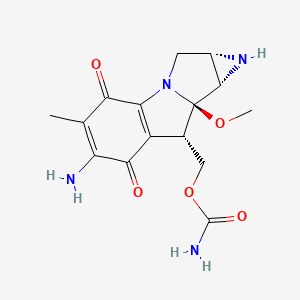
|
||||
| Drug Resistance Disease(s) |
Disease(s) with Clinically Reported Resistance for This Drug
(1 diseases)
 Colon cancer [ICD-11: 2B90]
[2]
Disease(s) with Resistance Information Discovered by Cell Line Test for This Drug
(4 diseases)
Colorectal cancer [ICD-11: 2B91]
[3]
Hepatocellular carcinoma [ICD-11: 2C12]
[4]
Gastric cancer [ICD-11: 2B72]
[5]
Liver cancer [ICD-11: 2C12]
[6]
|
||||
| Target | Human Deoxyribonucleic acid (hDNA) | NOUNIPROTAC | [1] | ||
| Click to Show/Hide the Molecular Information and External Link(s) of This Drug | |||||
| Formula |
C15H18N4O5
|
||||
| IsoSMILES |
CC1=C(C(=O)C2=C(C1=O)N3C[C@H]4[C@@H]([C@@]3([C@@H]2COC(=O)N)OC)N4)N
|
||||
| InChI |
1S/C15H18N4O5/c1-5-9(16)12(21)8-6(4-24-14(17)22)15(23-2)13-7(18-13)3-19(15)10(8)11(5)20/h6-7,13,18H,3-4,16H2,1-2H3,(H2,17,22)/t6-,7+,13+,15-/m1/s1
|
||||
| InChIKey |
NWIBSHFKIJFRCO-WUDYKRTCSA-N
|
||||
| PubChem CID | |||||
| ChEBI ID | |||||
| TTD Drug ID | |||||
| VARIDT ID | |||||
| DrugBank ID | |||||
Type(s) of Resistant Mechanism of This Drug
 EADR: Epigenetic Alteration of DNA, RNA or Protein
 UAPP: Unusual Activation of Pro-survival Pathway
Drug Resistance Data Categorized by Their Corresponding Diseases
ICD-02: Benign/in-situ/malignant neoplasm
Brain cancer [ICD-11: 2A00]
| Drug Sensitivity Data Categorized by Their Corresponding Mechanisms | ||||
|
Epigenetic Alteration of DNA, RNA or Protein (EADR)
|
||||
| Key Molecule: hsa-mir-34 | [2] | |||
| Sensitive Disease | Medulloblastoma [ICD-11: 2A00.10] | |||
| Molecule Alteration | Expression | Up-regulation |
||
| Experimental Note | Identified from the Human Clinical Data | |||
| Cell Pathway Regulation | Cell apoptosis | Activation | hsa04210 | |
| p53 signaling pathway | Activation | hsa04115 | ||
| In Vitro Model | UW228 cells | Brain | Homo sapiens (Human) | CVCL_8585 |
| R262 cells | Bone marrow | Homo sapiens (Human) | CVCL_VU83 | |
| R300 cells | Bone marrow | Homo sapiens (Human) | CVCL_VU84 | |
| UW426 cells | Bone marrow | Homo sapiens (Human) | CVCL_DH82 | |
| Experiment for Molecule Alteration |
qRT-PCR | |||
| Experiment for Drug Resistance |
MTS assay | |||
| Mechanism Description | The repression of MAGE-A by miR-34a results in increased expression of p53 thus lead to resistance. | |||
|
Unusual Activation of Pro-survival Pathway (UAPP)
|
||||
| Key Molecule: Melanoma-associated antigen 12 (MAGEA12) | [2] | |||
| Sensitive Disease | Medulloblastoma [ICD-11: 2A00.10] | |||
| Molecule Alteration | Expression | Down-regulation |
||
| Experimental Note | Identified from the Human Clinical Data | |||
| Cell Pathway Regulation | Cell apoptosis | Activation | hsa04210 | |
| p53 signaling pathway | Activation | hsa04115 | ||
| In Vitro Model | UW228 cells | Brain | Homo sapiens (Human) | CVCL_8585 |
| R262 cells | Bone marrow | Homo sapiens (Human) | CVCL_VU83 | |
| R300 cells | Bone marrow | Homo sapiens (Human) | CVCL_VU84 | |
| UW426 cells | Bone marrow | Homo sapiens (Human) | CVCL_DH82 | |
| Experiment for Molecule Alteration |
Western blot analysis | |||
| Experiment for Drug Resistance |
MTS assay | |||
| Mechanism Description | The repression of MAGE-A by miR-34a results in increased expression of p53 thus lead to resistance. | |||
| Key Molecule: Melanoma-associated antigen 2 (MAGEA2) | [2] | |||
| Sensitive Disease | Medulloblastoma [ICD-11: 2A00.10] | |||
| Molecule Alteration | Expression | Down-regulation |
||
| Experimental Note | Identified from the Human Clinical Data | |||
| Cell Pathway Regulation | Cell apoptosis | Activation | hsa04210 | |
| p53 signaling pathway | Activation | hsa04115 | ||
| In Vitro Model | UW228 cells | Brain | Homo sapiens (Human) | CVCL_8585 |
| R262 cells | Bone marrow | Homo sapiens (Human) | CVCL_VU83 | |
| R300 cells | Bone marrow | Homo sapiens (Human) | CVCL_VU84 | |
| UW426 cells | Bone marrow | Homo sapiens (Human) | CVCL_DH82 | |
| Experiment for Molecule Alteration |
Western blot analysis | |||
| Experiment for Drug Resistance |
MTS assay | |||
| Mechanism Description | The repression of MAGE-A by miR-34a results in increased expression of p53 thus lead to resistance. | |||
| Key Molecule: Melanoma-associated antigen 3 (MAGEA3) | [2] | |||
| Sensitive Disease | Medulloblastoma [ICD-11: 2A00.10] | |||
| Molecule Alteration | Expression | Down-regulation |
||
| Experimental Note | Identified from the Human Clinical Data | |||
| Cell Pathway Regulation | Cell apoptosis | Activation | hsa04210 | |
| p53 signaling pathway | Activation | hsa04115 | ||
| In Vitro Model | UW228 cells | Brain | Homo sapiens (Human) | CVCL_8585 |
| R262 cells | Bone marrow | Homo sapiens (Human) | CVCL_VU83 | |
| R300 cells | Bone marrow | Homo sapiens (Human) | CVCL_VU84 | |
| UW426 cells | Bone marrow | Homo sapiens (Human) | CVCL_DH82 | |
| Experiment for Molecule Alteration |
Western blot analysis | |||
| Experiment for Drug Resistance |
MTS assay | |||
| Mechanism Description | The repression of MAGE-A by miR-34a results in increased expression of p53 thus lead to resistance. | |||
| Key Molecule: Melanoma-associated antigen 6 (MAGEA6) | [2] | |||
| Sensitive Disease | Medulloblastoma [ICD-11: 2A00.10] | |||
| Molecule Alteration | Expression | Down-regulation |
||
| Experimental Note | Identified from the Human Clinical Data | |||
| Cell Pathway Regulation | Cell apoptosis | Activation | hsa04210 | |
| p53 signaling pathway | Activation | hsa04115 | ||
| In Vitro Model | UW228 cells | Brain | Homo sapiens (Human) | CVCL_8585 |
| R262 cells | Bone marrow | Homo sapiens (Human) | CVCL_VU83 | |
| R300 cells | Bone marrow | Homo sapiens (Human) | CVCL_VU84 | |
| UW426 cells | Bone marrow | Homo sapiens (Human) | CVCL_DH82 | |
| Experiment for Molecule Alteration |
Western blot analysis | |||
| Experiment for Drug Resistance |
MTS assay | |||
| Mechanism Description | The repression of MAGE-A by miR-34a results in increased expression of p53 thus lead to resistance. | |||
Esophageal cancer [ICD-11: 2B70]
| Drug Sensitivity Data Categorized by Their Corresponding Mechanisms | ||||
|
Epigenetic Alteration of DNA, RNA or Protein (EADR)
|
||||
| Key Molecule: hsa-mir-223 | [7] | |||
| Sensitive Disease | Esophageal adenocarcinoma [ICD-11: 2B70.2] | |||
| Molecule Alteration | Expression | Up-regulation |
||
| Experimental Note | Identified from the Human Clinical Data | |||
| Cell Pathway Regulation | Cell apoptosis | Activation | hsa04210 | |
| Cell migration | Inhibition | hsa04670 | ||
| Cell proliferation | Inhibition | hsa05200 | ||
| Cell viability | Inhibition | hsa05200 | ||
| In Vitro Model | OE33 cellss | Esophagus | Homo sapiens (Human) | CVCL_0471 |
| HEEpiC cells | Esophagus | Homo sapiens (Human) | N.A. | |
| JHesoAD1 cells | Esophagus | Homo sapiens (Human) | CVCL_8098 | |
| Experiment for Molecule Alteration |
qRT-PCR | |||
| Experiment for Drug Resistance |
MTS assay | |||
| Mechanism Description | The DNA damage repair protein poly(ADP-ribose) polymerase 1 (PARP1) is a bona fide target of miR-223, miR-223 up-regulation is also associated with reduced PARP1 transcripts, and an increased sensitivity to cis-diamminedichloroplatinum (II) (Cisplatin), Doxorubicin and Mitomycin C. | |||
|
Unusual Activation of Pro-survival Pathway (UAPP)
|
||||
| Key Molecule: Poly[ADP-ribose] synthase 1 (PARP1) | [7] | |||
| Sensitive Disease | Esophageal adenocarcinoma [ICD-11: 2B70.2] | |||
| Molecule Alteration | Expression | Down-regulation |
||
| Experimental Note | Identified from the Human Clinical Data | |||
| Cell Pathway Regulation | Cell migration | Activation | hsa04670 | |
| Cell proliferation | Inhibition | hsa05200 | ||
| In Vitro Model | OE33 cellss | Esophagus | Homo sapiens (Human) | CVCL_0471 |
| HEEpiC cells | Esophagus | Homo sapiens (Human) | N.A. | |
| JHesoAD1 cells | Esophagus | Homo sapiens (Human) | CVCL_8098 | |
| Experiment for Molecule Alteration |
Luciferase reporter assay | |||
| Experiment for Drug Resistance |
MTS assay | |||
| Mechanism Description | The DNA damage repair protein poly(ADP-ribose) polymerase 1 (PARP1) is a bona fide target of miR-223, miR-223 up-regulation is also associated with reduced PARP1 transcripts, and an increased sensitivity to cis-diamminedichloroplatinum (II) (Cisplatin), Doxorubicin and Mitomycin C. | |||
Gastric cancer [ICD-11: 2B72]
| Drug Resistance Data Categorized by Their Corresponding Mechanisms | ||||
|
Unusual Activation of Pro-survival Pathway (UAPP)
|
||||
| Key Molecule: Hypoxia-inducible factor 2-alpha (EPAS1) | [5] | |||
| Resistant Disease | Gastric cancer [ICD-11: 2B72.1] | |||
| Molecule Alteration | Expression | Up-regulation |
||
| Experimental Note | Revealed Based on the Cell Line Data | |||
| In Vitro Model | BGC-823 cells | Gastric | Homo sapiens (Human) | CVCL_3360 |
| BEL-7402 cells | Liver | Homo sapiens (Human) | CVCL_5492 | |
| HepG2 cells | Liver | Homo sapiens (Human) | CVCL_0027 | |
| HEK293 cells | Kidney | Homo sapiens (Human) | CVCL_0045 | |
| Experiment for Molecule Alteration |
Western blotting assay | |||
| Experiment for Drug Resistance |
Flow cytometry assay | |||
| Mechanism Description | Over-expression of EPAS-1 increased the expression of PXR responsive genes, enhanced the proliferation of BGC-823 cells and boosted the resistance of BGC-823 cells against the cytotoxicity of chemotherapeutic drugs, e.g. Mitomycin C and Paclitaxel.EPAS-1 reduces BGC-823 cell apoptosis induced by Mitomycin C and Paclitaxel. | |||
| Drug Sensitivity Data Categorized by Their Corresponding Mechanisms | ||||
|
Epigenetic Alteration of DNA, RNA or Protein (EADR)
|
||||
| Key Molecule: hsa-mir-495 | [1] | |||
| Sensitive Disease | Gastric cancer [ICD-11: 2B72.1] | |||
| Molecule Alteration | Expression | Up-regulation |
||
| Experimental Note | Revealed Based on the Cell Line Data | |||
| Cell Pathway Regulation | Cell apoptosis | Activation | hsa04210 | |
| Cell proliferation | Inhibition | hsa05200 | ||
| mTOR signaling pathway | Inhibition | hsa04150 | ||
| In Vitro Model | SGC7901 cells | Gastric | Homo sapiens (Human) | CVCL_0520 |
| Experiment for Molecule Alteration |
RT-qPCR | |||
| Experiment for Drug Resistance |
MTT assay; Flow cytometry assay | |||
| Mechanism Description | The miR-495 exerts promotive effects on GC chemosensitivity via inactivation of the mTOR signaling pathway by suppressing ERBB2. | |||
|
Unusual Activation of Pro-survival Pathway (UAPP)
|
||||
| Key Molecule: Receptor tyrosine-protein kinase erbB-2 (ERBB2) | [1] | |||
| Sensitive Disease | Gastric cancer [ICD-11: 2B72.1] | |||
| Molecule Alteration | Expression | Down-regulation |
||
| Experimental Note | Revealed Based on the Cell Line Data | |||
| Cell Pathway Regulation | Cell apoptosis | Activation | hsa04210 | |
| Cell proliferation | Inhibition | hsa05200 | ||
| mTOR signaling pathway | Inhibition | hsa04150 | ||
| In Vitro Model | SGC7901 cells | Gastric | Homo sapiens (Human) | CVCL_0520 |
| Experiment for Molecule Alteration |
Western blot analysis | |||
| Experiment for Drug Resistance |
MTT assay; Flow cytometry assay | |||
| Mechanism Description | The miR-495 exerts promotive effects on GC chemosensitivity via inactivation of the mTOR signaling pathway by suppressing ERBB2. | |||
Colon cancer [ICD-11: 2B90]
| Drug Resistance Data Categorized by Their Corresponding Mechanisms | ||||
|
Epigenetic Alteration of DNA, RNA or Protein (EADR)
|
||||
| Key Molecule: hsa-miR-34a | [2] | |||
| Resistant Disease | Colon cancer [ICD-11: 2B90.1] | |||
| Molecule Alteration | Expression | Down-regulation |
||
| Experimental Note | Identified from the Human Clinical Data | |||
| Cell Pathway Regulation | miR-34a/Sirt1/E2F3 | Regulation | N.A. | |
| In Vitro Model | DLD-1 cells | Colon | Homo sapiens (Human) | CVCL_0248 |
| Experiment for Molecule Alteration |
Array hybridization assay; qRT-PCR; Western blot | |||
| Experiment for Drug Resistance |
Cell viability assay | |||
| Mechanism Description | Recent studies have established miR-34a as a key effector of the p53 signaling pathway and have implicated its role in multiple cancer types | |||
Colorectal cancer [ICD-11: 2B91]
| Drug Resistance Data Categorized by Their Corresponding Mechanisms | ||||
|
Epigenetic Alteration of DNA, RNA or Protein (EADR)
|
||||
| Key Molecule: hsa-miR-1915 | [3] | |||
| Resistant Disease | Colorectal cancer [ICD-11: 2B91.1] | |||
| Molecule Alteration | Expression | Down-regulation |
||
| Experimental Note | Revealed Based on the Cell Line Data | |||
| In Vitro Model | HCT-116 cells | Colon | Homo sapiens (Human) | CVCL_0291 |
| HCT-116 cells | Colon | Homo sapiens (Human) | CVCL_0291 | |
| Experiment for Molecule Alteration |
miRNA Microarray Analysis; qRT-PCR; Luciferase Activity Assay; Western Blot; Semi-Quantitative RT-PCR | |||
| Experiment for Drug Resistance |
Caspase-3 Activity Assay; In Vitro Drug Sensitivity Assay; Flow Cytometric | |||
| Mechanism Description | Taken together, our findings suggest that miR-1915 could play a role in the development of MDR in colorectal carcinoma cells at least in part by modulation of apoptosis via targeting Bcl-2. | |||
| Key Molecule: hsa-miR-297 | [3] | |||
| Resistant Disease | Colorectal cancer [ICD-11: 2B91.1] | |||
| Molecule Alteration | Expression | Down-regulation |
||
| Experimental Note | Revealed Based on the Cell Line Data | |||
| In Vitro Model | HCT-116 cells | Colon | Homo sapiens (Human) | CVCL_0291 |
| HCT-116 cells | Colon | Homo sapiens (Human) | CVCL_0291 | |
| Experiment for Molecule Alteration |
miRNA Microarray Analysis; qRT-PCR; Luciferase Activity Assay; Western Blot; Semi-Quantitative RT-PCR | |||
| Experiment for Drug Resistance |
Caspase-3 Activity Assay; In Vitro Drug Sensitivity Assay; Flow Cytometric | |||
| Mechanism Description | Taken together, our findings suggest that miR-1915 could play a role in the development of MDR in colorectal carcinoma cells at least in part by modulation of apoptosis via targeting Bcl-2. | |||
Liver cancer [ICD-11: 2C12]
| Drug Resistance Data Categorized by Their Corresponding Mechanisms | ||||
|
Epigenetic Alteration of DNA, RNA or Protein (EADR)
|
||||
| Key Molecule: hsa-mir-146a | [6] | |||
| Resistant Disease | Hepatocellular carcinoma [ICD-11: 2C12.2] | |||
| Molecule Alteration | Expression | Up-regulation |
||
| Experimental Note | Revealed Based on the Cell Line Data | |||
| In Vitro Model | HCC Huh-7 cells | Liver | Homo sapiens (Human) | CVCL_0336 |
| Experiment for Molecule Alteration |
qRT-PCR | |||
| Experiment for Drug Resistance |
MTT assay | |||
| Mechanism Description | The HCC Huh-7 cell line was treated with adramycin (ADM), cisplatin (DDP), carboplatin (CBP), mitomycin C (MMC) or vincristine (VCR) at increasing concentrations to develop drug-resistant sublines. Among these 51 upregulated and downregulated miRNAs, 12 miRNAs were upregulated and 13 miRNAs were downregulated in Huh-7/VCR. Upregulation of miR-27b, miR-181a, miR-146b-5p, miR-181d and miR-146a expression was verified using real-time RT-PCR in the parental and the five drug-resistant cell lines. | |||
| Key Molecule: hsa-miR-146b-5p | [6] | |||
| Resistant Disease | Hepatocellular carcinoma [ICD-11: 2C12.2] | |||
| Molecule Alteration | Expression | Up-regulation |
||
| Experimental Note | Revealed Based on the Cell Line Data | |||
| In Vitro Model | HCC Huh-7 cells | Liver | Homo sapiens (Human) | CVCL_0336 |
| Experiment for Molecule Alteration |
qRT-PCR | |||
| Experiment for Drug Resistance |
MTT assay | |||
| Mechanism Description | The HCC Huh-7 cell line was treated with adramycin (ADM), cisplatin (DDP), carboplatin (CBP), mitomycin C (MMC) or vincristine (VCR) at increasing concentrations to develop drug-resistant sublines. Among these 51 upregulated and downregulated miRNAs, 12 miRNAs were upregulated and 13 miRNAs were downregulated in Huh-7/VCR. Upregulation of miR-27b, miR-181a, miR-146b-5p, miR-181d and miR-146a expression was verified using real-time RT-PCR in the parental and the five drug-resistant cell lines. | |||
| Key Molecule: hsa-mir-181a | [6] | |||
| Resistant Disease | Hepatocellular carcinoma [ICD-11: 2C12.2] | |||
| Molecule Alteration | Expression | Up-regulation |
||
| Experimental Note | Revealed Based on the Cell Line Data | |||
| In Vitro Model | HCC Huh-7 cells | Liver | Homo sapiens (Human) | CVCL_0336 |
| Experiment for Molecule Alteration |
qRT-PCR | |||
| Experiment for Drug Resistance |
MTT assay | |||
| Mechanism Description | The HCC Huh-7 cell line was treated with adramycin (ADM), cisplatin (DDP), carboplatin (CBP), mitomycin C (MMC) or vincristine (VCR) at increasing concentrations to develop drug-resistant sublines. Among these 51 upregulated and downregulated miRNAs, 12 miRNAs were upregulated and 13 miRNAs were downregulated in Huh-7/VCR. Upregulation of miR-27b, miR-181a, miR-146b-5p, miR-181d and miR-146a expression was verified using real-time RT-PCR in the parental and the five drug-resistant cell lines. | |||
| Key Molecule: hsa-mir-181d | [6] | |||
| Resistant Disease | Hepatocellular carcinoma [ICD-11: 2C12.2] | |||
| Molecule Alteration | Expression | Up-regulation |
||
| Experimental Note | Revealed Based on the Cell Line Data | |||
| In Vitro Model | HCC Huh-7 cells | Liver | Homo sapiens (Human) | CVCL_0336 |
| Experiment for Molecule Alteration |
qRT-PCR | |||
| Experiment for Drug Resistance |
MTT assay | |||
| Mechanism Description | The HCC Huh-7 cell line was treated with adramycin (ADM), cisplatin (DDP), carboplatin (CBP), mitomycin C (MMC) or vincristine (VCR) at increasing concentrations to develop drug-resistant sublines. Among these 51 upregulated and downregulated miRNAs, 12 miRNAs were upregulated and 13 miRNAs were downregulated in Huh-7/VCR. Upregulation of miR-27b, miR-181a, miR-146b-5p, miR-181d and miR-146a expression was verified using real-time RT-PCR in the parental and the five drug-resistant cell lines. | |||
| Key Molecule: hsa-mir-27b | [6] | |||
| Resistant Disease | Hepatocellular carcinoma [ICD-11: 2C12.2] | |||
| Molecule Alteration | Expression | Up-regulation |
||
| Experimental Note | Revealed Based on the Cell Line Data | |||
| In Vitro Model | HCC Huh-7 cells | Liver | Homo sapiens (Human) | CVCL_0336 |
| Experiment for Molecule Alteration |
qRT-PCR | |||
| Experiment for Drug Resistance |
MTT assay | |||
| Mechanism Description | The HCC Huh-7 cell line was treated with adramycin (ADM), cisplatin (DDP), carboplatin (CBP), mitomycin C (MMC) or vincristine (VCR) at increasing concentrations to develop drug-resistant sublines. Among these 51 upregulated and downregulated miRNAs, 12 miRNAs were upregulated and 13 miRNAs were downregulated in Huh-7/VCR. Upregulation of miR-27b, miR-181a, miR-146b-5p, miR-181d and miR-146a expression was verified using real-time RT-PCR in the parental and the five drug-resistant cell lines. | |||
| Key Molecule: hsa-miR-181a-2 | [4] | |||
| Resistant Disease | Hepatocellular carcinoma [ICD-11: 2C12.0] | |||
| Molecule Alteration | Expression | Up-regulation |
||
| Experimental Note | Revealed Based on the Cell Line Data | |||
| In Vitro Model | Huh-7 cells | Liver | Homo sapiens (Human) | CVCL_0336 |
| Experiment for Molecule Alteration |
Microarray analysis; qRT-PCR | |||
| Experiment for Drug Resistance |
MTT assay | |||
| Mechanism Description | MiRNA microarray analysis showed that there were 53 upregulated miRNAs in Huh-7/ADM, 56 in Huh-7/CBP, 58 in Huh-7/DDP, 58 in Huh-7/MMC and 49 in Huh-7/VCR, whereas there were 52 downregulated miRNAs in Huh-7/ADM, 50 in Huh-7/CBP, 41 in Huh-7/DDP, 55 in Huh-7/MMC and 56 in Huh-7/VCR. Moreover, 26 simultaneously upregulated and 25 simultaneously downregulated miRNAs were noted in the Huh-7/ADM, Huh-7/CBP, Huh-7/DDP and Huh-7/MMC sublines compared to the parental Huh-7 cell line. In contrast, among these 51 upregulated and downregulated miRNAs, 12 miRNAs were upregulated and 13 miRNAs were downregulated in Huh-7/VCR. Upregulation of miR-27b, miR-181a, miR-146b-5p, miR-181d and miR-146a expression was verified using real-time RT-PCR in the parental and the five drug-resistant cell lines. In conclusion, the present study demonstrates that the differentially expressed miRNA profiles in these five drug-resistant HCC sublines could be useful to further investigate the association of miRNA expression with drug resistance in HCC. | |||
| Key Molecule: hsa-miR-30c-2 | [4] | |||
| Resistant Disease | Hepatocellular carcinoma [ICD-11: 2C12.0] | |||
| Molecule Alteration | Expression | Up-regulation |
||
| Experimental Note | Revealed Based on the Cell Line Data | |||
| In Vitro Model | Huh-7 cells | Liver | Homo sapiens (Human) | CVCL_0336 |
| Experiment for Molecule Alteration |
Microarray analysis; qRT-PCR | |||
| Experiment for Drug Resistance |
MTT assay | |||
| Mechanism Description | MiRNA microarray analysis showed that there were 53 upregulated miRNAs in Huh-7/ADM, 56 in Huh-7/CBP, 58 in Huh-7/DDP, 58 in Huh-7/MMC and 49 in Huh-7/VCR, whereas there were 52 downregulated miRNAs in Huh-7/ADM, 50 in Huh-7/CBP, 41 in Huh-7/DDP, 55 in Huh-7/MMC and 56 in Huh-7/VCR. Moreover, 26 simultaneously upregulated and 25 simultaneously downregulated miRNAs were noted in the Huh-7/ADM, Huh-7/CBP, Huh-7/DDP and Huh-7/MMC sublines compared to the parental Huh-7 cell line. In contrast, among these 51 upregulated and downregulated miRNAs, 12 miRNAs were upregulated and 13 miRNAs were downregulated in Huh-7/VCR. Upregulation of miR-27b, miR-181a, miR-146b-5p, miR-181d and miR-146a expression was verified using real-time RT-PCR in the parental and the five drug-resistant cell lines. In conclusion, the present study demonstrates that the differentially expressed miRNA profiles in these five drug-resistant HCC sublines could be useful to further investigate the association of miRNA expression with drug resistance in HCC. | |||
| Key Molecule: hsa-miR-3183 | [4] | |||
| Resistant Disease | Hepatocellular carcinoma [ICD-11: 2C12.0] | |||
| Molecule Alteration | Expression | Down-regulation |
||
| Experimental Note | Revealed Based on the Cell Line Data | |||
| In Vitro Model | Huh-7 cells | Liver | Homo sapiens (Human) | CVCL_0336 |
| Experiment for Molecule Alteration |
Microarray analysis; qRT-PCR | |||
| Experiment for Drug Resistance |
MTT assay | |||
| Mechanism Description | MiRNA microarray analysis showed that there were 53 upregulated miRNAs in Huh-7/ADM, 56 in Huh-7/CBP, 58 in Huh-7/DDP, 58 in Huh-7/MMC and 49 in Huh-7/VCR, whereas there were 52 downregulated miRNAs in Huh-7/ADM, 50 in Huh-7/CBP, 41 in Huh-7/DDP, 55 in Huh-7/MMC and 56 in Huh-7/VCR. Moreover, 26 simultaneously upregulated and 25 simultaneously downregulated miRNAs were noted in the Huh-7/ADM, Huh-7/CBP, Huh-7/DDP and Huh-7/MMC sublines compared to the parental Huh-7 cell line. In contrast, among these 51 upregulated and downregulated miRNAs, 12 miRNAs were upregulated and 13 miRNAs were downregulated in Huh-7/VCR. Upregulation of miR-27b, miR-181a, miR-146b-5p, miR-181d and miR-146a expression was verified using real-time RT-PCR in the parental and the five drug-resistant cell lines. In conclusion, the present study demonstrates that the differentially expressed miRNA profiles in these five drug-resistant HCC sublines could be useful to further investigate the association of miRNA expression with drug resistance in HCC. | |||
| Key Molecule: hsa-miR-1908 | [4] | |||
| Resistant Disease | Hepatocellular carcinoma [ICD-11: 2C12.0] | |||
| Molecule Alteration | Expression | Down-regulation |
||
| Experimental Note | Revealed Based on the Cell Line Data | |||
| In Vitro Model | Huh-7 cells | Liver | Homo sapiens (Human) | CVCL_0336 |
| Experiment for Molecule Alteration |
Microarray analysis; qRT-PCR | |||
| Experiment for Drug Resistance |
MTT assay | |||
| Mechanism Description | MiRNA microarray analysis showed that there were 53 upregulated miRNAs in Huh-7/ADM, 56 in Huh-7/CBP, 58 in Huh-7/DDP, 58 in Huh-7/MMC and 49 in Huh-7/VCR, whereas there were 52 downregulated miRNAs in Huh-7/ADM, 50 in Huh-7/CBP, 41 in Huh-7/DDP, 55 in Huh-7/MMC and 56 in Huh-7/VCR. Moreover, 26 simultaneously upregulated and 25 simultaneously downregulated miRNAs were noted in the Huh-7/ADM, Huh-7/CBP, Huh-7/DDP and Huh-7/MMC sublines compared to the parental Huh-7 cell line. In contrast, among these 51 upregulated and downregulated miRNAs, 12 miRNAs were upregulated and 13 miRNAs were downregulated in Huh-7/VCR. Upregulation of miR-27b, miR-181a, miR-146b-5p, miR-181d and miR-146a expression was verified using real-time RT-PCR in the parental and the five drug-resistant cell lines. In conclusion, the present study demonstrates that the differentially expressed miRNA profiles in these five drug-resistant HCC sublines could be useful to further investigate the association of miRNA expression with drug resistance in HCC. | |||
| Key Molecule: hsa-miR-300 | [4] | |||
| Resistant Disease | Hepatocellular carcinoma [ICD-11: 2C12.0] | |||
| Molecule Alteration | Expression | Down-regulation |
||
| Experimental Note | Revealed Based on the Cell Line Data | |||
| In Vitro Model | Huh-7 cells | Liver | Homo sapiens (Human) | CVCL_0336 |
| Experiment for Molecule Alteration |
Microarray analysis; qRT-PCR | |||
| Experiment for Drug Resistance |
MTT assay | |||
| Mechanism Description | MiRNA microarray analysis showed that there were 53 upregulated miRNAs in Huh-7/ADM, 56 in Huh-7/CBP, 58 in Huh-7/DDP, 58 in Huh-7/MMC and 49 in Huh-7/VCR, whereas there were 52 downregulated miRNAs in Huh-7/ADM, 50 in Huh-7/CBP, 41 in Huh-7/DDP, 55 in Huh-7/MMC and 56 in Huh-7/VCR. Moreover, 26 simultaneously upregulated and 25 simultaneously downregulated miRNAs were noted in the Huh-7/ADM, Huh-7/CBP, Huh-7/DDP and Huh-7/MMC sublines compared to the parental Huh-7 cell line. In contrast, among these 51 upregulated and downregulated miRNAs, 12 miRNAs were upregulated and 13 miRNAs were downregulated in Huh-7/VCR. Upregulation of miR-27b, miR-181a, miR-146b-5p, miR-181d and miR-146a expression was verified using real-time RT-PCR in the parental and the five drug-resistant cell lines. In conclusion, the present study demonstrates that the differentially expressed miRNA profiles in these five drug-resistant HCC sublines could be useful to further investigate the association of miRNA expression with drug resistance in HCC. | |||
| Key Molecule: hsa-miR-612 | [4] | |||
| Resistant Disease | Hepatocellular carcinoma [ICD-11: 2C12.0] | |||
| Molecule Alteration | Expression | Down-regulation |
||
| Experimental Note | Revealed Based on the Cell Line Data | |||
| In Vitro Model | Huh-7 cells | Liver | Homo sapiens (Human) | CVCL_0336 |
| Experiment for Molecule Alteration |
Microarray analysis; qRT-PCR | |||
| Experiment for Drug Resistance |
MTT assay | |||
| Mechanism Description | MiRNA microarray analysis showed that there were 53 upregulated miRNAs in Huh-7/ADM, 56 in Huh-7/CBP, 58 in Huh-7/DDP, 58 in Huh-7/MMC and 49 in Huh-7/VCR, whereas there were 52 downregulated miRNAs in Huh-7/ADM, 50 in Huh-7/CBP, 41 in Huh-7/DDP, 55 in Huh-7/MMC and 56 in Huh-7/VCR. Moreover, 26 simultaneously upregulated and 25 simultaneously downregulated miRNAs were noted in the Huh-7/ADM, Huh-7/CBP, Huh-7/DDP and Huh-7/MMC sublines compared to the parental Huh-7 cell line. In contrast, among these 51 upregulated and downregulated miRNAs, 12 miRNAs were upregulated and 13 miRNAs were downregulated in Huh-7/VCR. Upregulation of miR-27b, miR-181a, miR-146b-5p, miR-181d and miR-146a expression was verified using real-time RT-PCR in the parental and the five drug-resistant cell lines. In conclusion, the present study demonstrates that the differentially expressed miRNA profiles in these five drug-resistant HCC sublines could be useful to further investigate the association of miRNA expression with drug resistance in HCC. | |||
| Key Molecule: hsa-miR-146b | [4] | |||
| Resistant Disease | Hepatocellular carcinoma [ICD-11: 2C12.0] | |||
| Molecule Alteration | Expression | Up-regulation |
||
| Experimental Note | Revealed Based on the Cell Line Data | |||
| In Vitro Model | Huh-7 cells | Liver | Homo sapiens (Human) | CVCL_0336 |
| Experiment for Molecule Alteration |
Microarray analysis; qRT-PCR | |||
| Experiment for Drug Resistance |
MTT assay | |||
| Mechanism Description | MiRNA microarray analysis showed that there were 53 upregulated miRNAs in Huh-7/ADM, 56 in Huh-7/CBP, 58 in Huh-7/DDP, 58 in Huh-7/MMC and 49 in Huh-7/VCR, whereas there were 52 downregulated miRNAs in Huh-7/ADM, 50 in Huh-7/CBP, 41 in Huh-7/DDP, 55 in Huh-7/MMC and 56 in Huh-7/VCR. Moreover, 26 simultaneously upregulated and 25 simultaneously downregulated miRNAs were noted in the Huh-7/ADM, Huh-7/CBP, Huh-7/DDP and Huh-7/MMC sublines compared to the parental Huh-7 cell line. In contrast, among these 51 upregulated and downregulated miRNAs, 12 miRNAs were upregulated and 13 miRNAs were downregulated in Huh-7/VCR. Upregulation of miR-27b, miR-181a, miR-146b-5p, miR-181d and miR-146a expression was verified using real-time RT-PCR in the parental and the five drug-resistant cell lines. In conclusion, the present study demonstrates that the differentially expressed miRNA profiles in these five drug-resistant HCC sublines could be useful to further investigate the association of miRNA expression with drug resistance in HCC. | |||
| Key Molecule: hsa-miR-485 | [4] | |||
| Resistant Disease | Hepatocellular carcinoma [ICD-11: 2C12.0] | |||
| Molecule Alteration | Expression | Down-regulation |
||
| Experimental Note | Revealed Based on the Cell Line Data | |||
| In Vitro Model | Huh-7 cells | Liver | Homo sapiens (Human) | CVCL_0336 |
| Experiment for Molecule Alteration |
Microarray analysis; qRT-PCR | |||
| Experiment for Drug Resistance |
MTT assay | |||
| Mechanism Description | MiRNA microarray analysis showed that there were 53 upregulated miRNAs in Huh-7/ADM, 56 in Huh-7/CBP, 58 in Huh-7/DDP, 58 in Huh-7/MMC and 49 in Huh-7/VCR, whereas there were 52 downregulated miRNAs in Huh-7/ADM, 50 in Huh-7/CBP, 41 in Huh-7/DDP, 55 in Huh-7/MMC and 56 in Huh-7/VCR. Moreover, 26 simultaneously upregulated and 25 simultaneously downregulated miRNAs were noted in the Huh-7/ADM, Huh-7/CBP, Huh-7/DDP and Huh-7/MMC sublines compared to the parental Huh-7 cell line. In contrast, among these 51 upregulated and downregulated miRNAs, 12 miRNAs were upregulated and 13 miRNAs were downregulated in Huh-7/VCR. Upregulation of miR-27b, miR-181a, miR-146b-5p, miR-181d and miR-146a expression was verified using real-time RT-PCR in the parental and the five drug-resistant cell lines. In conclusion, the present study demonstrates that the differentially expressed miRNA profiles in these five drug-resistant HCC sublines could be useful to further investigate the association of miRNA expression with drug resistance in HCC. | |||
| Key Molecule: hsa-miR-194-1 | [4] | |||
| Resistant Disease | Hepatocellular carcinoma [ICD-11: 2C12.0] | |||
| Molecule Alteration | Expression | Up-regulation |
||
| Experimental Note | Revealed Based on the Cell Line Data | |||
| In Vitro Model | Huh-7 cells | Liver | Homo sapiens (Human) | CVCL_0336 |
| Experiment for Molecule Alteration |
Microarray analysis; qRT-PCR | |||
| Experiment for Drug Resistance |
MTT assay | |||
| Mechanism Description | MiRNA microarray analysis showed that there were 53 upregulated miRNAs in Huh-7/ADM, 56 in Huh-7/CBP, 58 in Huh-7/DDP, 58 in Huh-7/MMC and 49 in Huh-7/VCR, whereas there were 52 downregulated miRNAs in Huh-7/ADM, 50 in Huh-7/CBP, 41 in Huh-7/DDP, 55 in Huh-7/MMC and 56 in Huh-7/VCR. Moreover, 26 simultaneously upregulated and 25 simultaneously downregulated miRNAs were noted in the Huh-7/ADM, Huh-7/CBP, Huh-7/DDP and Huh-7/MMC sublines compared to the parental Huh-7 cell line. In contrast, among these 51 upregulated and downregulated miRNAs, 12 miRNAs were upregulated and 13 miRNAs were downregulated in Huh-7/VCR. Upregulation of miR-27b, miR-181a, miR-146b-5p, miR-181d and miR-146a expression was verified using real-time RT-PCR in the parental and the five drug-resistant cell lines. In conclusion, the present study demonstrates that the differentially expressed miRNA profiles in these five drug-resistant HCC sublines could be useful to further investigate the association of miRNA expression with drug resistance in HCC. | |||
| Key Molecule: hsa-miR-4285 | [4] | |||
| Resistant Disease | Hepatocellular carcinoma [ICD-11: 2C12.0] | |||
| Molecule Alteration | Expression | Down-regulation |
||
| Experimental Note | Revealed Based on the Cell Line Data | |||
| In Vitro Model | Huh-7 cells | Liver | Homo sapiens (Human) | CVCL_0336 |
| Experiment for Molecule Alteration |
Microarray analysis; qRT-PCR | |||
| Experiment for Drug Resistance |
MTT assay | |||
| Mechanism Description | MiRNA microarray analysis showed that there were 53 upregulated miRNAs in Huh-7/ADM, 56 in Huh-7/CBP, 58 in Huh-7/DDP, 58 in Huh-7/MMC and 49 in Huh-7/VCR, whereas there were 52 downregulated miRNAs in Huh-7/ADM, 50 in Huh-7/CBP, 41 in Huh-7/DDP, 55 in Huh-7/MMC and 56 in Huh-7/VCR. Moreover, 26 simultaneously upregulated and 25 simultaneously downregulated miRNAs were noted in the Huh-7/ADM, Huh-7/CBP, Huh-7/DDP and Huh-7/MMC sublines compared to the parental Huh-7 cell line. In contrast, among these 51 upregulated and downregulated miRNAs, 12 miRNAs were upregulated and 13 miRNAs were downregulated in Huh-7/VCR. Upregulation of miR-27b, miR-181a, miR-146b-5p, miR-181d and miR-146a expression was verified using real-time RT-PCR in the parental and the five drug-resistant cell lines. In conclusion, the present study demonstrates that the differentially expressed miRNA profiles in these five drug-resistant HCC sublines could be useful to further investigate the association of miRNA expression with drug resistance in HCC. | |||
| Key Molecule: hsa-miR-4258 | [4] | |||
| Resistant Disease | Hepatocellular carcinoma [ICD-11: 2C12.0] | |||
| Molecule Alteration | Expression | Down-regulation |
||
| Experimental Note | Revealed Based on the Cell Line Data | |||
| In Vitro Model | Huh-7 cells | Liver | Homo sapiens (Human) | CVCL_0336 |
| Experiment for Molecule Alteration |
Microarray analysis; qRT-PCR | |||
| Experiment for Drug Resistance |
MTT assay | |||
| Mechanism Description | MiRNA microarray analysis showed that there were 53 upregulated miRNAs in Huh-7/ADM, 56 in Huh-7/CBP, 58 in Huh-7/DDP, 58 in Huh-7/MMC and 49 in Huh-7/VCR, whereas there were 52 downregulated miRNAs in Huh-7/ADM, 50 in Huh-7/CBP, 41 in Huh-7/DDP, 55 in Huh-7/MMC and 56 in Huh-7/VCR. Moreover, 26 simultaneously upregulated and 25 simultaneously downregulated miRNAs were noted in the Huh-7/ADM, Huh-7/CBP, Huh-7/DDP and Huh-7/MMC sublines compared to the parental Huh-7 cell line. In contrast, among these 51 upregulated and downregulated miRNAs, 12 miRNAs were upregulated and 13 miRNAs were downregulated in Huh-7/VCR. Upregulation of miR-27b, miR-181a, miR-146b-5p, miR-181d and miR-146a expression was verified using real-time RT-PCR in the parental and the five drug-resistant cell lines. In conclusion, the present study demonstrates that the differentially expressed miRNA profiles in these five drug-resistant HCC sublines could be useful to further investigate the association of miRNA expression with drug resistance in HCC. | |||
| Key Molecule: hsa-miR-4311 | [4] | |||
| Resistant Disease | Hepatocellular carcinoma [ICD-11: 2C12.0] | |||
| Molecule Alteration | Expression | Down-regulation |
||
| Experimental Note | Revealed Based on the Cell Line Data | |||
| In Vitro Model | Huh-7 cells | Liver | Homo sapiens (Human) | CVCL_0336 |
| Experiment for Molecule Alteration |
Microarray analysis; qRT-PCR | |||
| Experiment for Drug Resistance |
MTT assay | |||
| Mechanism Description | MiRNA microarray analysis showed that there were 53 upregulated miRNAs in Huh-7/ADM, 56 in Huh-7/CBP, 58 in Huh-7/DDP, 58 in Huh-7/MMC and 49 in Huh-7/VCR, whereas there were 52 downregulated miRNAs in Huh-7/ADM, 50 in Huh-7/CBP, 41 in Huh-7/DDP, 55 in Huh-7/MMC and 56 in Huh-7/VCR. Moreover, 26 simultaneously upregulated and 25 simultaneously downregulated miRNAs were noted in the Huh-7/ADM, Huh-7/CBP, Huh-7/DDP and Huh-7/MMC sublines compared to the parental Huh-7 cell line. In contrast, among these 51 upregulated and downregulated miRNAs, 12 miRNAs were upregulated and 13 miRNAs were downregulated in Huh-7/VCR. Upregulation of miR-27b, miR-181a, miR-146b-5p, miR-181d and miR-146a expression was verified using real-time RT-PCR in the parental and the five drug-resistant cell lines. In conclusion, the present study demonstrates that the differentially expressed miRNA profiles in these five drug-resistant HCC sublines could be useful to further investigate the association of miRNA expression with drug resistance in HCC. | |||
| Key Molecule: hsa-miR-584 | [4] | |||
| Resistant Disease | Hepatocellular carcinoma [ICD-11: 2C12.0] | |||
| Molecule Alteration | Expression | Down-regulation |
||
| Experimental Note | Revealed Based on the Cell Line Data | |||
| In Vitro Model | Huh-7 cells | Liver | Homo sapiens (Human) | CVCL_0336 |
| Experiment for Molecule Alteration |
Microarray analysis; qRT-PCR | |||
| Experiment for Drug Resistance |
MTT assay | |||
| Mechanism Description | MiRNA microarray analysis showed that there were 53 upregulated miRNAs in Huh-7/ADM, 56 in Huh-7/CBP, 58 in Huh-7/DDP, 58 in Huh-7/MMC and 49 in Huh-7/VCR, whereas there were 52 downregulated miRNAs in Huh-7/ADM, 50 in Huh-7/CBP, 41 in Huh-7/DDP, 55 in Huh-7/MMC and 56 in Huh-7/VCR. Moreover, 26 simultaneously upregulated and 25 simultaneously downregulated miRNAs were noted in the Huh-7/ADM, Huh-7/CBP, Huh-7/DDP and Huh-7/MMC sublines compared to the parental Huh-7 cell line. In contrast, among these 51 upregulated and downregulated miRNAs, 12 miRNAs were upregulated and 13 miRNAs were downregulated in Huh-7/VCR. Upregulation of miR-27b, miR-181a, miR-146b-5p, miR-181d and miR-146a expression was verified using real-time RT-PCR in the parental and the five drug-resistant cell lines. In conclusion, the present study demonstrates that the differentially expressed miRNA profiles in these five drug-resistant HCC sublines could be useful to further investigate the association of miRNA expression with drug resistance in HCC. | |||
| Key Molecule: hsa-miR-22 | [4] | |||
| Resistant Disease | Hepatocellular carcinoma [ICD-11: 2C12.0] | |||
| Molecule Alteration | Expression | Up-regulation |
||
| Experimental Note | Revealed Based on the Cell Line Data | |||
| In Vitro Model | Huh-7 cells | Liver | Homo sapiens (Human) | CVCL_0336 |
| Experiment for Molecule Alteration |
Microarray analysis; qRT-PCR | |||
| Experiment for Drug Resistance |
MTT assay | |||
| Mechanism Description | MiRNA microarray analysis showed that there were 53 upregulated miRNAs in Huh-7/ADM, 56 in Huh-7/CBP, 58 in Huh-7/DDP, 58 in Huh-7/MMC and 49 in Huh-7/VCR, whereas there were 52 downregulated miRNAs in Huh-7/ADM, 50 in Huh-7/CBP, 41 in Huh-7/DDP, 55 in Huh-7/MMC and 56 in Huh-7/VCR. Moreover, 26 simultaneously upregulated and 25 simultaneously downregulated miRNAs were noted in the Huh-7/ADM, Huh-7/CBP, Huh-7/DDP and Huh-7/MMC sublines compared to the parental Huh-7 cell line. In contrast, among these 51 upregulated and downregulated miRNAs, 12 miRNAs were upregulated and 13 miRNAs were downregulated in Huh-7/VCR. Upregulation of miR-27b, miR-181a, miR-146b-5p, miR-181d and miR-146a expression was verified using real-time RT-PCR in the parental and the five drug-resistant cell lines. In conclusion, the present study demonstrates that the differentially expressed miRNA profiles in these five drug-resistant HCC sublines could be useful to further investigate the association of miRNA expression with drug resistance in HCC. | |||
| Key Molecule: hsa-miR-23a | [4] | |||
| Resistant Disease | Hepatocellular carcinoma [ICD-11: 2C12.0] | |||
| Molecule Alteration | Expression | Up-regulation |
||
| Experimental Note | Revealed Based on the Cell Line Data | |||
| In Vitro Model | Huh-7 cells | Liver | Homo sapiens (Human) | CVCL_0336 |
| Experiment for Molecule Alteration |
Microarray analysis; qRT-PCR | |||
| Experiment for Drug Resistance |
MTT assay | |||
| Mechanism Description | MiRNA microarray analysis showed that there were 53 upregulated miRNAs in Huh-7/ADM, 56 in Huh-7/CBP, 58 in Huh-7/DDP, 58 in Huh-7/MMC and 49 in Huh-7/VCR, whereas there were 52 downregulated miRNAs in Huh-7/ADM, 50 in Huh-7/CBP, 41 in Huh-7/DDP, 55 in Huh-7/MMC and 56 in Huh-7/VCR. Moreover, 26 simultaneously upregulated and 25 simultaneously downregulated miRNAs were noted in the Huh-7/ADM, Huh-7/CBP, Huh-7/DDP and Huh-7/MMC sublines compared to the parental Huh-7 cell line. In contrast, among these 51 upregulated and downregulated miRNAs, 12 miRNAs were upregulated and 13 miRNAs were downregulated in Huh-7/VCR. Upregulation of miR-27b, miR-181a, miR-146b-5p, miR-181d and miR-146a expression was verified using real-time RT-PCR in the parental and the five drug-resistant cell lines. In conclusion, the present study demonstrates that the differentially expressed miRNA profiles in these five drug-resistant HCC sublines could be useful to further investigate the association of miRNA expression with drug resistance in HCC. | |||
| Key Molecule: hsa-miR-26b | [4] | |||
| Resistant Disease | Hepatocellular carcinoma [ICD-11: 2C12.0] | |||
| Molecule Alteration | Expression | Up-regulation |
||
| Experimental Note | Revealed Based on the Cell Line Data | |||
| In Vitro Model | Huh-7 cells | Liver | Homo sapiens (Human) | CVCL_0336 |
| Experiment for Molecule Alteration |
Microarray analysis; qRT-PCR | |||
| Experiment for Drug Resistance |
MTT assay | |||
| Mechanism Description | MiRNA microarray analysis showed that there were 53 upregulated miRNAs in Huh-7/ADM, 56 in Huh-7/CBP, 58 in Huh-7/DDP, 58 in Huh-7/MMC and 49 in Huh-7/VCR, whereas there were 52 downregulated miRNAs in Huh-7/ADM, 50 in Huh-7/CBP, 41 in Huh-7/DDP, 55 in Huh-7/MMC and 56 in Huh-7/VCR. Moreover, 26 simultaneously upregulated and 25 simultaneously downregulated miRNAs were noted in the Huh-7/ADM, Huh-7/CBP, Huh-7/DDP and Huh-7/MMC sublines compared to the parental Huh-7 cell line. In contrast, among these 51 upregulated and downregulated miRNAs, 12 miRNAs were upregulated and 13 miRNAs were downregulated in Huh-7/VCR. Upregulation of miR-27b, miR-181a, miR-146b-5p, miR-181d and miR-146a expression was verified using real-time RT-PCR in the parental and the five drug-resistant cell lines. In conclusion, the present study demonstrates that the differentially expressed miRNA profiles in these five drug-resistant HCC sublines could be useful to further investigate the association of miRNA expression with drug resistance in HCC. | |||
| Key Molecule: hsa-miR-186 | [4] | |||
| Resistant Disease | Hepatocellular carcinoma [ICD-11: 2C12.0] | |||
| Molecule Alteration | Expression | Up-regulation |
||
| Experimental Note | Revealed Based on the Cell Line Data | |||
| In Vitro Model | Huh-7 cells | Liver | Homo sapiens (Human) | CVCL_0336 |
| Experiment for Molecule Alteration |
Microarray analysis; qRT-PCR | |||
| Experiment for Drug Resistance |
MTT assay | |||
| Mechanism Description | MiRNA microarray analysis showed that there were 53 upregulated miRNAs in Huh-7/ADM, 56 in Huh-7/CBP, 58 in Huh-7/DDP, 58 in Huh-7/MMC and 49 in Huh-7/VCR, whereas there were 52 downregulated miRNAs in Huh-7/ADM, 50 in Huh-7/CBP, 41 in Huh-7/DDP, 55 in Huh-7/MMC and 56 in Huh-7/VCR. Moreover, 26 simultaneously upregulated and 25 simultaneously downregulated miRNAs were noted in the Huh-7/ADM, Huh-7/CBP, Huh-7/DDP and Huh-7/MMC sublines compared to the parental Huh-7 cell line. In contrast, among these 51 upregulated and downregulated miRNAs, 12 miRNAs were upregulated and 13 miRNAs were downregulated in Huh-7/VCR. Upregulation of miR-27b, miR-181a, miR-146b-5p, miR-181d and miR-146a expression was verified using real-time RT-PCR in the parental and the five drug-resistant cell lines. In conclusion, the present study demonstrates that the differentially expressed miRNA profiles in these five drug-resistant HCC sublines could be useful to further investigate the association of miRNA expression with drug resistance in HCC. | |||
| Key Molecule: hsa-miR-630 | [4] | |||
| Resistant Disease | Hepatocellular carcinoma [ICD-11: 2C12.0] | |||
| Molecule Alteration | Expression | Down-regulation |
||
| Experimental Note | Revealed Based on the Cell Line Data | |||
| In Vitro Model | Huh-7 cells | Liver | Homo sapiens (Human) | CVCL_0336 |
| Experiment for Molecule Alteration |
Microarray analysis; qRT-PCR | |||
| Experiment for Drug Resistance |
MTT assay | |||
| Mechanism Description | MiRNA microarray analysis showed that there were 53 upregulated miRNAs in Huh-7/ADM, 56 in Huh-7/CBP, 58 in Huh-7/DDP, 58 in Huh-7/MMC and 49 in Huh-7/VCR, whereas there were 52 downregulated miRNAs in Huh-7/ADM, 50 in Huh-7/CBP, 41 in Huh-7/DDP, 55 in Huh-7/MMC and 56 in Huh-7/VCR. Moreover, 26 simultaneously upregulated and 25 simultaneously downregulated miRNAs were noted in the Huh-7/ADM, Huh-7/CBP, Huh-7/DDP and Huh-7/MMC sublines compared to the parental Huh-7 cell line. In contrast, among these 51 upregulated and downregulated miRNAs, 12 miRNAs were upregulated and 13 miRNAs were downregulated in Huh-7/VCR. Upregulation of miR-27b, miR-181a, miR-146b-5p, miR-181d and miR-146a expression was verified using real-time RT-PCR in the parental and the five drug-resistant cell lines. In conclusion, the present study demonstrates that the differentially expressed miRNA profiles in these five drug-resistant HCC sublines could be useful to further investigate the association of miRNA expression with drug resistance in HCC. | |||
| Key Molecule: hsa-miR-15a | [8] | |||
| Resistant Disease | Hepatocellular carcinoma [ICD-11: 2C12.0] | |||
| Molecule Alteration | Expression | Up-regulation |
||
| Experimental Note | Revealed Based on the Cell Line Data | |||
| In Vitro Model | Huh-7 cells | Liver | Homo sapiens (Human) | CVCL_0336 |
| Huh-7 cells | Liver | Homo sapiens (Human) | CVCL_0336 | |
| Huh-7 cells | Liver | Homo sapiens (Human) | CVCL_0336 | |
| Huh-7 cells | Liver | Homo sapiens (Human) | CVCL_0336 | |
| Experiment for Molecule Alteration |
RT-qPCR | |||
| Mechanism Description | Objective To compare morphological differences of three drug-resistant hepatocellular carcinoma (HCC) cell subclones (Huh-7/ADM,Huh-7/CBP,Huh-7/MMC) and their parental Huh-7 cell line,to analyze differential microRNA(miRNA) expression profiles in these cells and,finally to screen for the abnormal expressed miRNAs in drug-resistant HCC cells. Increased expression of hsa-mir-15a. | |||
| Key Molecule: hsa-miR-30b | [8] | |||
| Resistant Disease | Hepatocellular carcinoma [ICD-11: 2C12.0] | |||
| Molecule Alteration | Expression | Up-regulation |
||
| Experimental Note | Revealed Based on the Cell Line Data | |||
| In Vitro Model | Huh-7 cells | Liver | Homo sapiens (Human) | CVCL_0336 |
| Huh-7 cells | Liver | Homo sapiens (Human) | CVCL_0336 | |
| Huh-7 cells | Liver | Homo sapiens (Human) | CVCL_0336 | |
| Huh-7 cells | Liver | Homo sapiens (Human) | CVCL_0336 | |
| Experiment for Molecule Alteration |
RT-qPCR | |||
| Mechanism Description | Objective To compare morphological differences of three drug-resistant hepatocellular carcinoma (HCC) cell subclones (Huh-7/ADM,Huh-7/CBP,Huh-7/MMC) and their parental Huh-7 cell line,to analyze differential microRNA(miRNA) expression profiles in these cells and,finally to screen for the abnormal expressed miRNAs in drug-resistant HCC cells. Increased expression of hsa-mir-30b. | |||
| Key Molecule: hsa-miR-193b-3p | [9] | |||
| Resistant Disease | Liver cancer [ICD-11: 2C12.0] | |||
| Molecule Alteration | Expression | . |
||
| Experimental Note | Revealed Based on the Cell Line Data | |||
| In Vitro Model | HepG2 cells | Liver | Homo sapiens (Human) | CVCL_0027 |
| Huh7 cells | Kidney | Homo sapiens (Human) | CVCL_U442 | |
| HLE cells | Liver | Homo sapiens (Human) | CVCL_1281 | |
| HEK293T cells | Kindey | Homo sapiens (Human) | CVCL_0063 | |
| In Vivo Model | Liver cancer patients | Homo sapiens | ||
| Experiment for Molecule Alteration |
RT-qPCR; Western Immunoblotting; RNA Immunoprecipitation | |||
| Experiment for Drug Resistance |
Cell viability assay | |||
| Mechanism Description | We identi?ed an epigenetic mechanism leading to upregulation of the long intergenic non-coding RNA 152 (LINC00152) expression in human hepatocellular carcinoma (HCC).RNA expression in human HCC in vivo was validated by RNA in situ hybridization. Let-7c-5p, miR-23a-3p, miR-125a-5p, miR-125b-5p, miR-143a-3p, miR-193-3p, and miR-195-5p were detected as new components of the potential LINC00152 ceRNA network in human HCC. | |||
Cervical cancer [ICD-11: 2C77]
| Drug Sensitivity Data Categorized by Their Corresponding Mechanisms | ||||
|
Epigenetic Alteration of DNA, RNA or Protein (EADR)
|
||||
| Key Molecule: hsa-mir-145 | [10] | |||
| Sensitive Disease | Cervical cancer [ICD-11: 2C77.0] | |||
| Molecule Alteration | Expression | Up-regulation |
||
| Experimental Note | Revealed Based on the Cell Line Data | |||
| Cell Pathway Regulation | p53 signaling pathway | Activation | hsa04115 | |
| In Vitro Model | C33A cells | Uterus | Homo sapiens (Human) | CVCL_1094 |
| Experiment for Molecule Alteration |
RT-PCR; Northern blotting analysis | |||
| Experiment for Drug Resistance |
MTT assay | |||
| Mechanism Description | p53 signalling pathway mediates the cytotoxic effects of chemotherapy, miR-145 augments p53-mediated cytotoxic effects. | |||
Bladder cancer [ICD-11: 2C94]
| Drug Sensitivity Data Categorized by Their Corresponding Mechanisms | ||||
|
Epigenetic Alteration of DNA, RNA or Protein (EADR)
|
||||
| Key Molecule: hsa-mir-31 | [11] | |||
| Sensitive Disease | Bladder urothelial carcinoma [ICD-11: 2C94.2] | |||
| Molecule Alteration | Expression | Up-regulation |
||
| Experimental Note | Revealed Based on the Cell Line Data | |||
| Cell Pathway Regulation | AKT/ERK signaling pathway | Regulation | N.A. | |
| Cell apoptosis | Activation | hsa04210 | ||
| Cell invasion | Inhibition | hsa05200 | ||
| Cell migration | Inhibition | hsa04670 | ||
| Cell proliferation | Inhibition | hsa05200 | ||
| In Vitro Model | 5637 cells | Bladder | Homo sapiens (Human) | CVCL_0126 |
| T24 cells | Bladder | Homo sapiens (Human) | CVCL_0554 | |
| Experiment for Molecule Alteration |
qRT-PCR | |||
| Experiment for Drug Resistance |
MTT assay | |||
| Mechanism Description | miR-31 expression brings about (+) sensitivity of UBC to MMC by suppressing ITGA5 and downstream pathways. | |||
|
Unusual Activation of Pro-survival Pathway (UAPP)
|
||||
| Key Molecule: Integrin alpha-5 (ITGA5) | [11] | |||
| Sensitive Disease | Bladder urothelial carcinoma [ICD-11: 2C94.2] | |||
| Molecule Alteration | Expression | Down-regulation |
||
| Experimental Note | Revealed Based on the Cell Line Data | |||
| Cell Pathway Regulation | AKT/ERK signaling pathway | Regulation | N.A. | |
| Cell apoptosis | Activation | hsa04210 | ||
| Cell invasion | Inhibition | hsa05200 | ||
| Cell migration | Inhibition | hsa04670 | ||
| Cell proliferation | Inhibition | hsa05200 | ||
| In Vitro Model | 5637 cells | Bladder | Homo sapiens (Human) | CVCL_0126 |
| T24 cells | Bladder | Homo sapiens (Human) | CVCL_0554 | |
| Experiment for Molecule Alteration |
Western blot analysis | |||
| Experiment for Drug Resistance |
MTT assay | |||
| Mechanism Description | miR-31 expression brings about (+) sensitivity of UBC to MMC by suppressing ITGA5 and downstream pathways. | |||
References
If you find any error in data or bug in web service, please kindly report it to Dr. Sun and Dr. Yu.